

Trinidad’s cobbled heart in colonial Cuba
Published on 08/27/2026 at 18:36 | Editorial responsibility: Rafael Müller, Editor-in-Chief AD HOC NEWS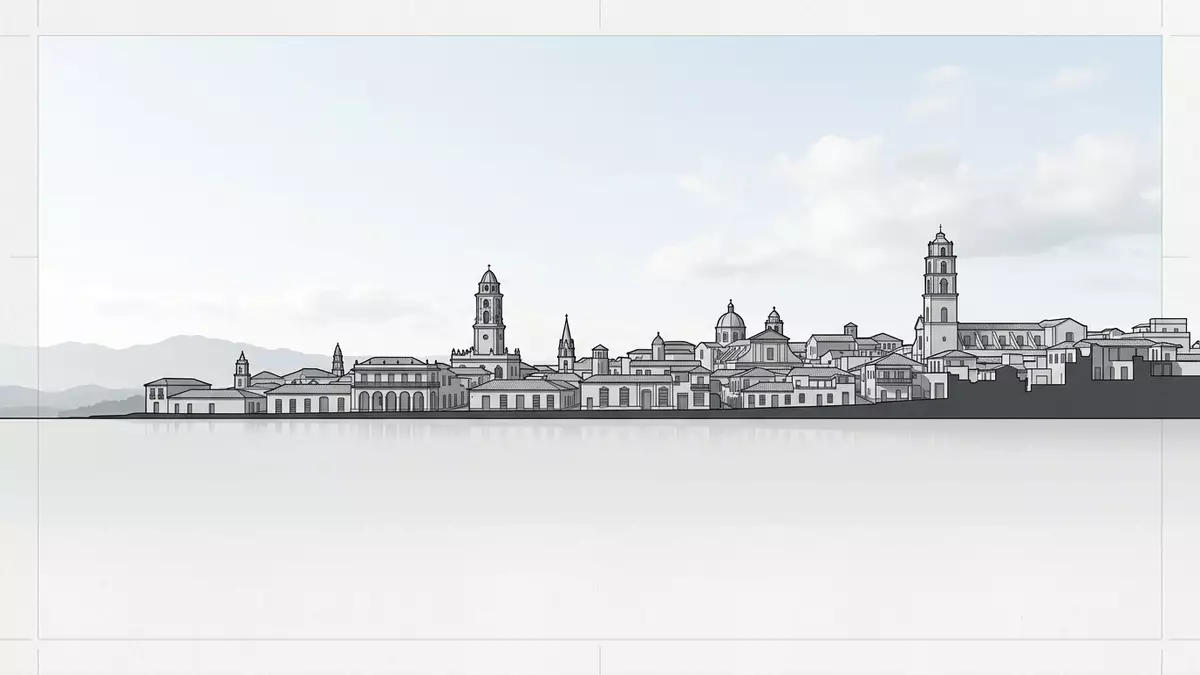
In Trinidad’s historic centre on Cuba’s southern coast, cobbled streets, pastel houses and sugar-era mansions come together as a remarkably intact colonial cityscape. The old town, recognised by UNESCO alongside the nearby Valley de los Ingenios, preserves an 18th- and 19th-century urban ensemble shaped by the sugar trade in central Cuba.
Plaza Mayor and the colonial core
The clearest way into Trinidad’s story is Plaza Mayor, the compact formal square that forms the heart of the historic centre. Only a few square blocks in size, this area concentrates many of the town’s most significant buildings, giving it the character of an open-air museum of Spanish colonial architecture.Only a few square blocks Around the square, streets are paved with cobblestones and lined with low-rise houses in pastel colours, their façades protected by wrought-iron grilles that frame doorways and windows.
UNESCO inscribed the Historic Centre of Trinidad and the Valley de los Ingenios as a World Heritage Site in 1988, recognising both the town’s intact colonial fabric and its role as a centre of sugar production in the Caribbean during the eighteenth and nineteenth centuries.Historic Centre of Trinidad and the Valley de los Ingenios Plaza Mayor itself is landscaped as a sequence of fenced gardens, each with palm trees and ornamental details, and edged by a low balustrade that separates greenery from the surrounding paving.fenced-in gardens with palms
Mansions and museums around the square
The buildings around Plaza Mayor tell Trinidad’s sugar-era history in stone and stucco. On one side stands Palacio Brunet, a former residence of a wealthy family whose preserved interiors offer a sense of domestic life during the town’s golden age. The house today functions as Museo Romántico, where furniture, decorative objects and architectural details are presented as part of Trinidad’s 19th-century heritage.Museo Romántico in a colonial mansion
Nearby, the neoclassical Palacio Cantero houses the municipal history museum, tracing the development of Trinidad and the surrounding Valley de los Ingenios through maps, objects and period rooms.neoclassical Palacio Cantero The square is also framed by the tower of the former Convento de San Francisco, a landmark that rises above the surrounding roofs, and by the Iglesia de la Santísima Trinidad, the main church of the town.Convento de San Francisco and Iglesia de Santísima Trinidad Taken together, these buildings illustrate how religious institutions, civic authorities and private families shared the central space of the colonial city.
From sugar valleys to cobbled streets
Trinidad was founded in the early 16th century in what is now Sancti Spíritus Province, but the period that left the clearest mark on its built fabric was the sugar boom from the late eighteenth to the late nineteenth centuries.late 18th to late 19th century sugar industry During this era, plantations and sugar mills in the nearby Valley de los Ingenios generated wealth that flowed into townhouses, churches and public spaces, many of which survive with their original forms substantially intact.
The connection between town and valley is central to Trinidad’s identity. The World Heritage inscription encompasses both the urban centre and the valley landscape, reflecting the way in which agricultural production and mercantile trade shaped the town’s streets and squares.UNESCO site with Valley de los Ingenios In the historic centre, cobbled streets link Plaza Mayor with surrounding blocks of single-storey and two-storey houses, their rooftops forming a continuous horizontal line broken only by occasional church towers and bell towers.
Visiting Trinidad: what travellers from Western Europe should know
- Trinidad lies in Sancti Spíritus Province on Cuba’s southern coast, in the central part of the island, with the historic centre clustered around Plaza Mayor.
- Walking in the old town involves uneven cobblestone streets and short slopes, so sturdy footwear helps when moving between the square and surrounding lanes.
- The historic centre sits between the Sierra del Escambray mountains inland and the Caribbean Sea along the nearby coastline, linking urban exploration with accessible coastal and hillside landscapes.
- The official language is Spanish and the currency is the Cuban peso.
- Entry requirements depend on your nationality; UK travellers can check the FCDO travel advice at gov.uk/foreign-travel-advice, Irish travellers the Department of Foreign Affairs at ireland.ie.
Searching for Trinidad on social platforms
These links open searches for Trinidad on each platform.
Frequently asked questions about Trinidad
Where is Trinidad’s historic centre located?
Trinidad’s historic centre lies in Sancti Spíritus Province on Cuba’s southern coast, in the central part of the island, with Plaza Mayor at its core.
What should visitors expect on a first walk through the old town?
Visitors encounter cobbled streets, pastel houses with wrought-iron grilles and a compact colonial square surrounded by churches, mansions and small museums.
What makes Trinidad distinctive among Caribbean towns?
Trinidad stands out for its well-preserved 18th- and 19th-century urban ensemble, recognised as a UNESCO World Heritage Site together with the nearby Valley de los Ingenios.


