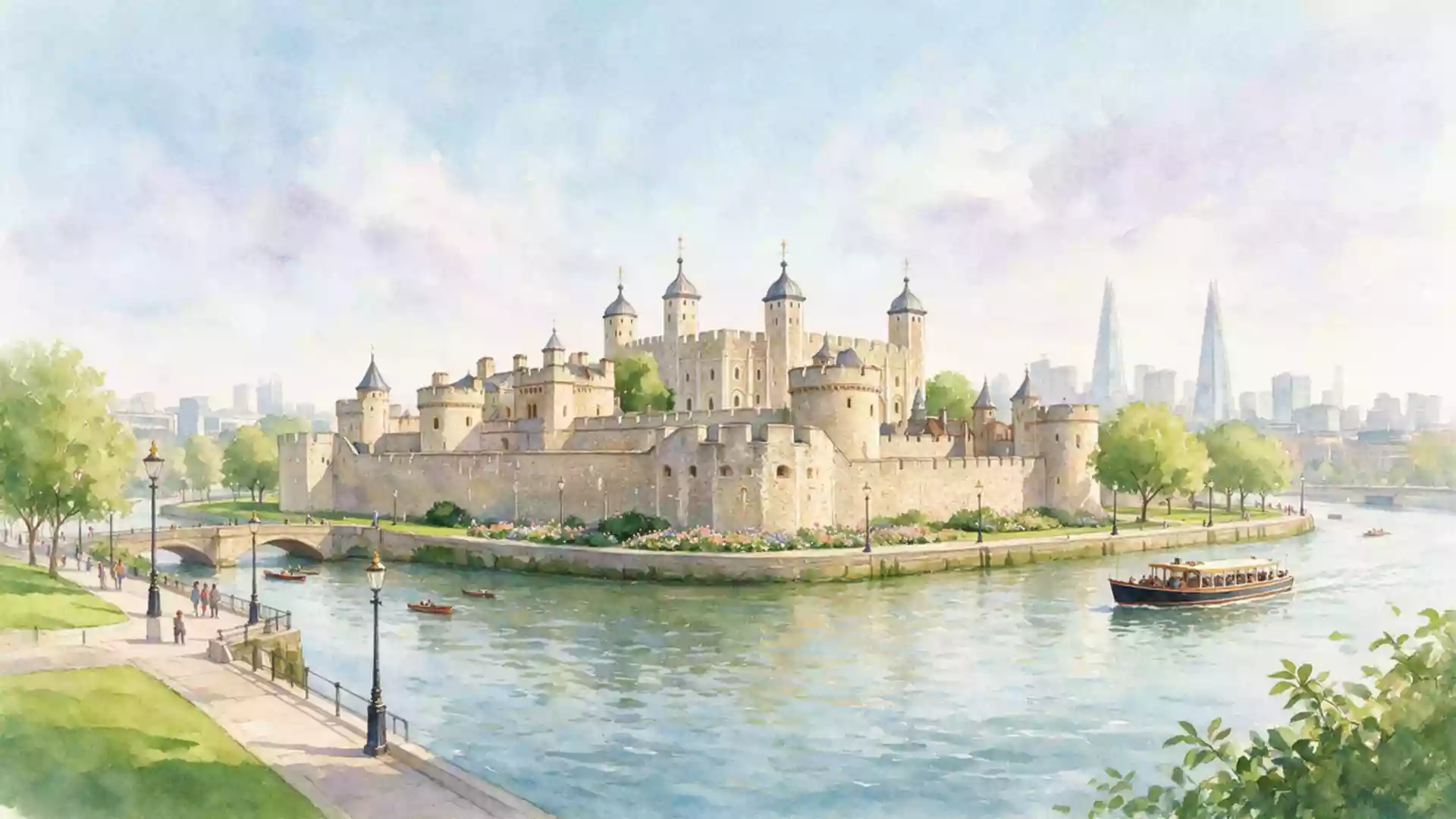
Tower of London and the White Tower's Norman core
Published on 09/14/2026 at 17:47 | Editorial responsibility: Rafael Müller, Editor-in-Chief AD HOC NEWS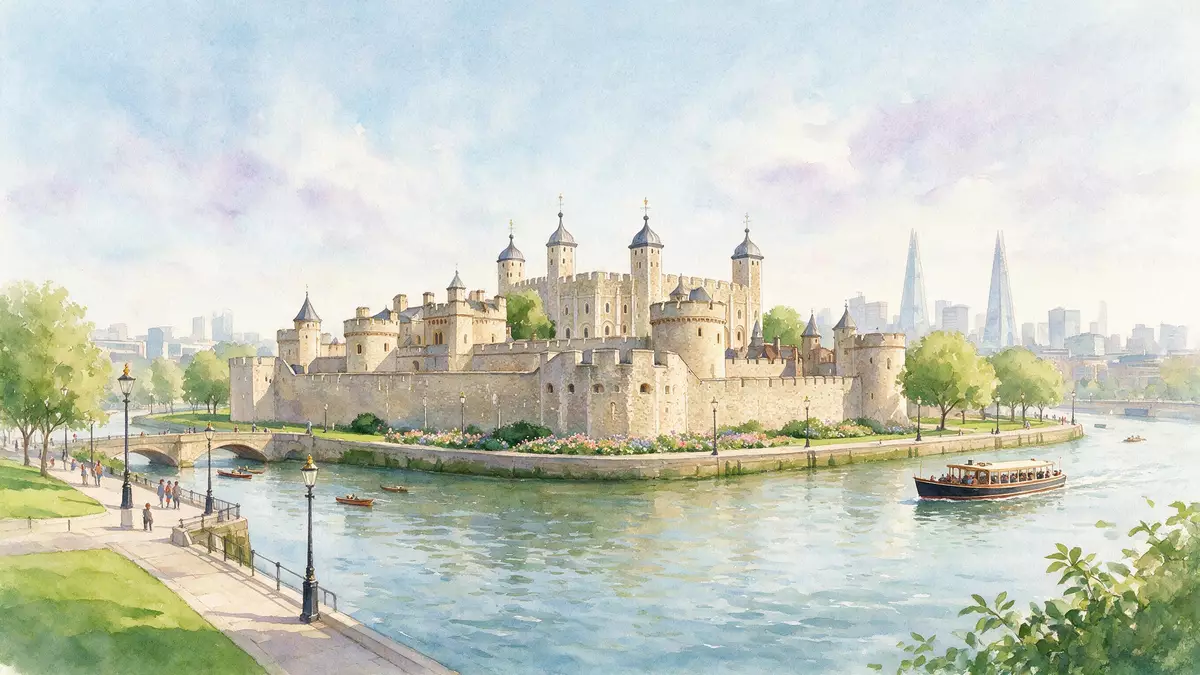
Tower of London is a Norman fortress complex on the north bank of the River Thames in London. Its oldest core is the White Tower, begun by William the Conqueror in the late eleventh century, and the site was inscribed as a UNESCO World Heritage Site in 1988.
The White Tower at the centre
The White Tower gives the whole place its name and remains the most clearly legible part of the complex. It is a stone keep, broad and compact, with thick walls and a fortress profile that still dominates the inner precinct.
The structure belongs to the reign of William I, and its later additions extend the site beyond the original keep. That layered plan is part of its identity, and the ensemble remains tied to the development of Norman rule in England.
Royal power in stone
The Tower has served as a royal residence, a prison, an arsenal, a treasury and a place of record-keeping. Those roles are part of its historical meaning, and they explain why the site reads as both fortress and courtly precinct.
The UNESCO listing recognises its importance as an 11th-century fortress palace and as a monument associated with the monarchy. The White Tower is described in that context as an especially complete survival of its type in Europe.
A fortress that changed role
The surviving buildings show how a military stronghold became a complex royal site with ceremonial, administrative and defensive functions. The Crown Jewels are kept within the wider Tower precinct, linking the historic fortress to one of the best-known symbols of the British monarchy.
The site also preserves the memory of major episodes in English history, including royal imprisonment and execution. That historical weight is visible in the fabric of the walls, the gates and the enclosed wards.
Visiting Tower of London: what travellers from Western Europe should know
- The Tower stands beside the River Thames in central London, on the north bank close to the City of London. It is reached through the city street network and the Underground.
- The site is a large enclosed complex with wards, gates and a keep of heavy masonry. Stone steps and uneven historic surfaces appear throughout the older parts.
- The official language is English and the currency is the pound sterling.
- The grounds include major medieval structures as well as later additions, so the architectural character changes from one part of the precinct to another.
- The Tower is a UNESCO World Heritage Site, and its Norman core remains one of the most important medieval monuments in England.
Searching for Tower of London on social platforms
These links open searches for Tower of London on each platform.
Frequently asked questions about Tower of London
Where is Tower of London?
It stands on the north bank of the River Thames in London, close to the City of London. The complex sits within a dense historic district and is easy to place within the city centre.
What does a visit involve?
A visit means moving through a large medieval precinct with the White Tower at its core. Expect stone stairways, gated enclosures and later historic buildings alongside the earliest keep.
What makes Tower of London distinctive?
Its Norman origins, World Heritage status and long sequence of royal uses make it distinctive. The White Tower remains the strongest visual anchor, both as architecture and as a historical symbol.