
Tower of London and the White Tower in London
Published on 09/19/2026 at 06:24 | Editorial responsibility: Rafael Müller, Editor-in-Chief AD HOC NEWS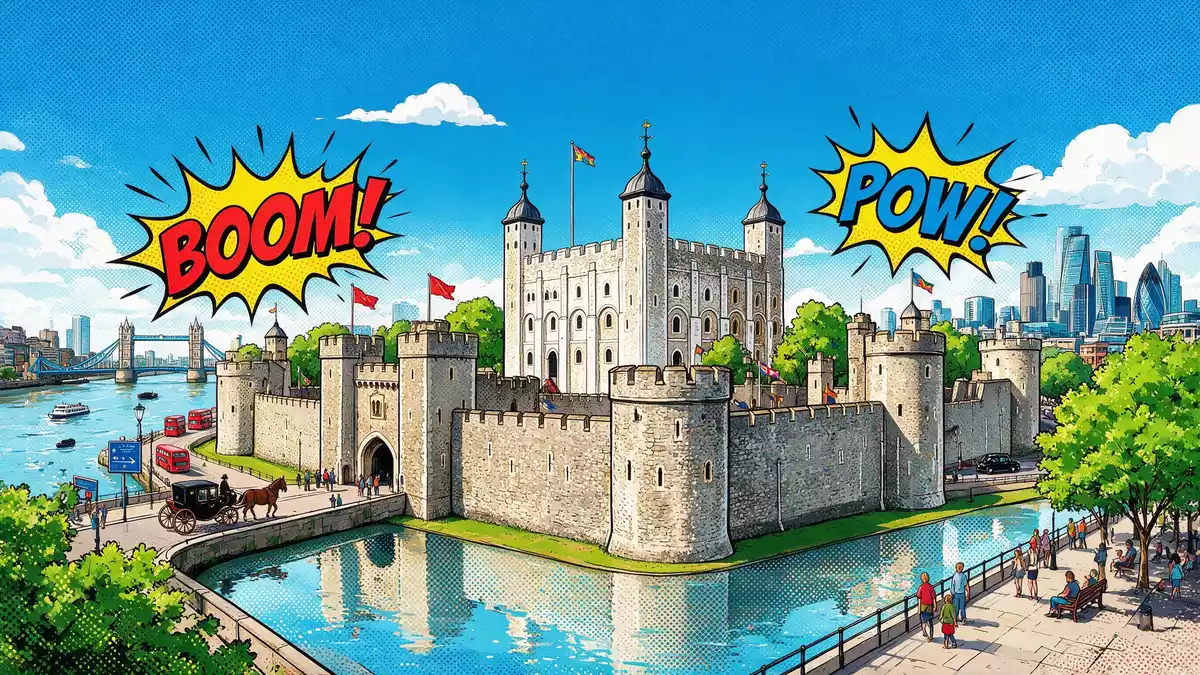
Tower of London is a Norman fortress on the north bank of the River Thames in central London. Its core is the White Tower, begun by William the Conqueror in 1078 and linked to the site’s UNESCO World Heritage status.
The White Tower and the Norman core
The White Tower is the oldest and most recognisable part of the complex. It is a stone keep of Romanesque character, with thick walls, small openings, and a severe exterior that still dominates the inner ward.White Tower
William the Conqueror ordered the tower after the Norman conquest of England, and the building belongs to the late eleventh century. Its long history as a royal stronghold begins with that foundation, and the White Tower remains the place where the whole ensemble is easiest to read.late eleventh century
Layers of walls, wards and ceremonial space
The fortress grew around the original keep into a complex of walls, wards and gatehouses. The result is not a single tower but a group of buildings that preserves a layered medieval plan, with the White Tower at its centre.
That layered form is one reason the site reads as both castle and royal complex. The ensemble is closely associated with English monarchy, state power and the symbolic weight of London itself.royal complex
A fortress with many uses
Over the centuries the Tower held royal lodgings, armour, documents and the Crown Jewels. It also served as a prison and as a place where major state and court events left a deep mark on English history.Crown Jewels
That mixture of functions gives the place its lasting interest. A medieval castle, a royal palace and a repository of regalia all survive in one setting, and the stonework still carries the story of those overlapping roles.medieval castle
Visiting Tower of London: what travellers from Western Europe should know
- The fortress stands beside the River Thames in central London, close to Tower Hill and Tower Gateway. It is reached by Underground and rail services in the City of London.
- The ground plan is irregular, with enclosed courtyards, stone walls and changes in level. The White Tower rises above the inner ward, and the medieval fabric remains prominent.
- The official language is English and the currency is the pound sterling.
- The site is part of a UNESCO World Heritage Site, and Historic Royal Palaces manages it. That makes the Tower one of London’s major historic ensembles rather than a single monument.
Searching for Tower of London on social platforms
These links open searches for Tower of London on each platform.
Frequently asked questions about Tower of London
Where is Tower of London?
It stands on the north bank of the River Thames in central London, within the City of London. The setting places it between the river and the city’s dense historic core.
What does a visit reveal?
The site presents a stone fortress with walls, wards and the White Tower at its heart. The rooms and courtyards show its long life as a castle, palace and place of custody.
What makes it distinctive?
The White Tower is a leading example of Norman military architecture, and the whole complex preserves a rare medieval sequence of buildings. Its association with William the Conqueror and with royal power gives it unusual historical depth.


