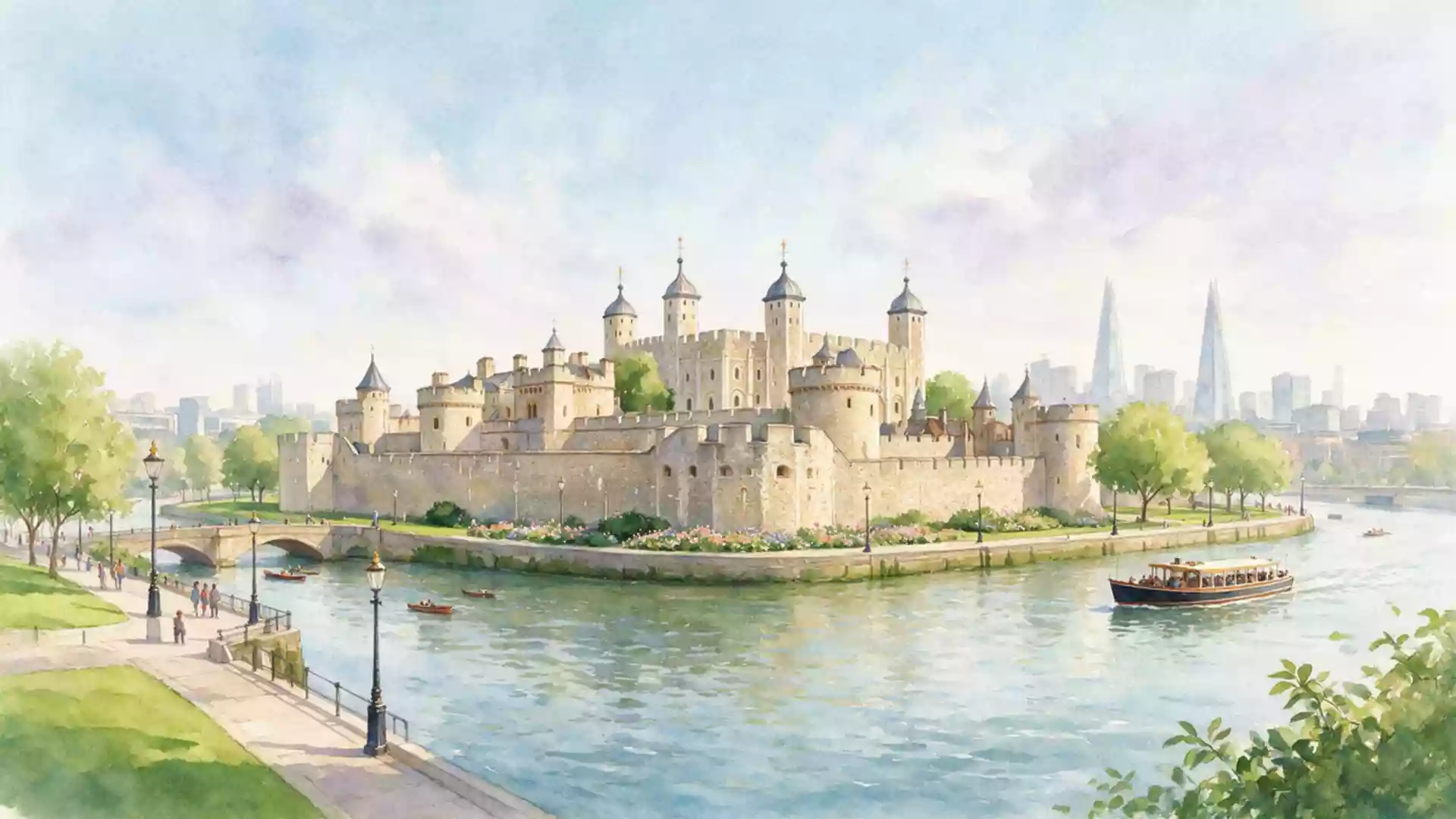
Tower of London, a stone fortress on the Thames
Published on 09/09/2026 at 22:10 | Editorial responsibility: Rafael Müller, Editor-in-Chief AD HOC NEWS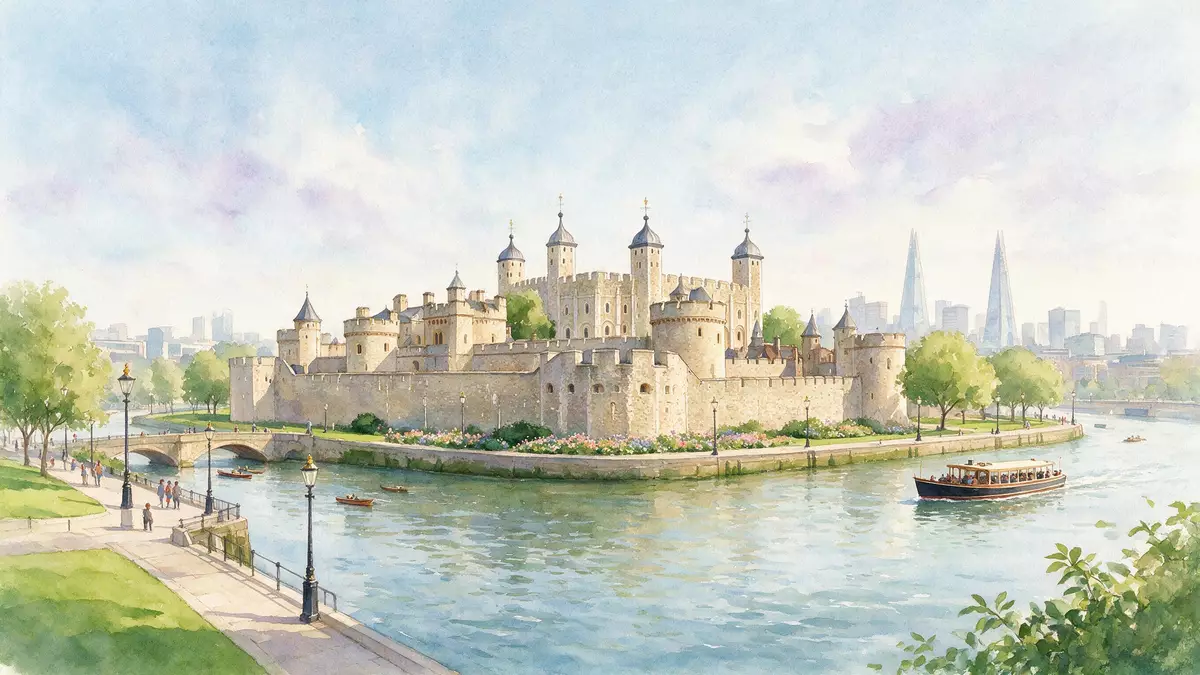
The Tower of London is a medieval fortress palace on the north bank of the River Thames in London, England, its stone walls enclosing centuries of royal power and state history.medieval fortress palace Rising beside Tower Hill and the edge of the historic City of London, the complex is best known for the Norman White Tower founded in the eleventh century during the reign of William the Conqueror.
Norman power in stone: the White Tower and its setting
At the heart of the site stands the White Tower, a rectangular keep in pale stone that gave the complex its name and formed the core of an early Norman royal castle.White Tower is the oldest part William the Conqueror ordered this keep to be built in the late eleventh century as part of his consolidation in England, creating a fortified residence that combined defensive walls with halls, chambers and a chapel.William the Conqueror built the White Tower The White Tower stands close to a bend in the Thames, linked with other curtain walls, towers and outer defences that together form an enclosed fortress above the river frontage.
The wider complex occupies ground within the London Borough of Tower Hamlets, immediately beside the boundary with the City of London and separated from it by the open space known as Tower Hill.north bank of the River Thames Within the walls, later medieval monarchs extended the stronghold with additional towers, a moat and precinct buildings, creating a layered ensemble where the stout Norman keep is surrounded by successive rings of stone defences.
From royal residence to fortress palace complex
Over the centuries the Tower of London developed from an early Norman residence into a fully fledged fortress palace, combining royal lodgings with strong military architecture.royal fortress and London landmark Its position on the Thames made it a secure site for royal accommodation, but also for guarding approaches to the city, with its concentric walls, bastions and gatehouses reflecting advances in defensive design between the eleventh and fourteenth centuries.late 11th-century Norman military architecture The White Tower, with thick masonry and elevated floors, is widely recognised as one of the best preserved examples of an eleventh-century fortress palace in Europe.
The complex has housed a sequence of functions closely tied to English and later British monarchy, including royal accommodation and secure storage for arms and important state objects.arsenal, royal mint, records office Within its walls stood buildings for an armoury, a royal mint and record-keeping, along with spaces once used as royal apartments and administrative offices. The Tower’s dense cluster of stone towers, yards and passages reflects this long institutional history, in contrast with the more open riverbank outside its curtain walls.
World Heritage status and the Crown Jewels
The Tower of London is recognised as a cultural UNESCO World Heritage Site, inscribed in 1988 for its outstanding example of Norman military architecture and its role in European history.inscribed as a World Heritage Site in 1988 The nomination highlights the completeness of the White Tower and its later medieval additions, presenting the ensemble as a major reference point for medieval fortress design and royal power in the United Kingdom.UNESCO cultural site number 488
Within the precinct stands a nineteenth-century range known as the Waterloo Barracks, whose secure vaults house the Crown Jewels of the United Kingdom.Waterloo Barracks houses the Crown Jewels The combination of the medieval fortress, the later barracks and the continued presence of ceremonial regalia reinforces the Tower’s position as both a historic stronghold and an active symbol of the monarchy.
Visiting Tower of London: what travellers from Western Europe should know
- The fortress stands on the north bank of the River Thames beside Tower Bridge, reached easily by London Underground services to Tower Hill station and by riverside walks.
- Within the complex, movement between levels involves staircases inside towers and steps across uneven historic surfaces, reflecting the medieval layout of the site.
- The Tower of London is in England; the official language is English and the currency is the pound sterling.
Searching for Tower of London on social platforms
These links open searches for Tower of London on each platform.Frequently asked questions about Tower of London
Where is Tower of London located?
It stands on the north bank of the River Thames in the London Borough of Tower Hamlets, beside Tower Hill and close to the City of London.
What should visitors expect inside the fortress?
Visitors encounter a compact complex of stone towers, curtain walls and historic courtyards, centred on the Norman White Tower and including barracks and secure vaults.
What makes Tower of London distinctive among European castles?
It combines an eleventh-century fortress palace, later medieval defences and the modern role of housing the Crown Jewels, recognised through UNESCO World Heritage status.