
Tower Bridge and its twin towers over the Thames
Published on 09/19/2026 at 13:56 | Editorial responsibility: Rafael Müller, Editor-in-Chief AD HOC NEWS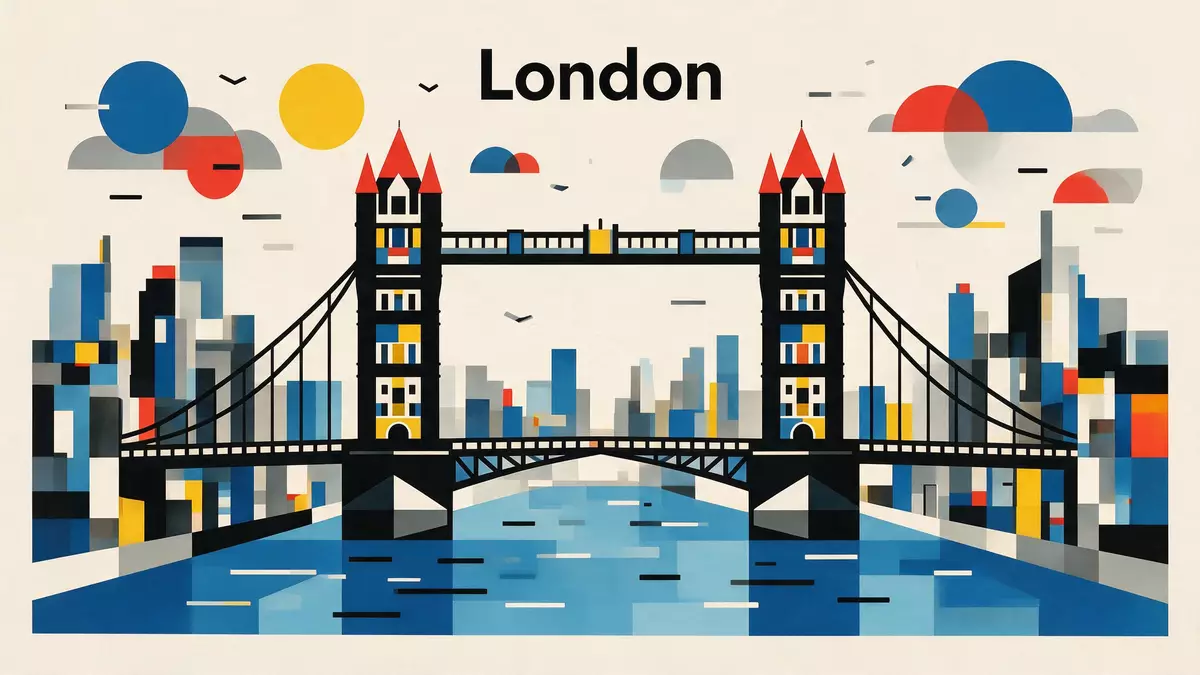
Tower Bridge stands beside the Tower of London as a Victorian river crossing where engineering and architecture are carried by two castle-like towers and a roadway that can still lift for ships. Built between 1886 and 1894 and designed by City Architect Sir Horace Jones with civil engineer Sir John Wolfe Barry, it crosses the Thames at the eastern edge of central London and has become one of the city’s most recognisable silhouettes.built between 1886 and 1894
Victorian ambition in stone and steel
Tower Bridge is a combined bascule and suspension bridge, a type chosen in the nineteenth century to let tall-masted ships pass upriver without blocking street traffic at river level.combined bascule and suspension bridge Two main towers rise from massive river piers, housing the machinery and counterweights that raise and lower the central roadway leaves so vessels can continue towards the Pool of London.
The bridge’s frame is a skeleton of iron and steel, clad in Cornish granite and Portland stone that give it the character of a medieval fortress on the river.clad in Cornish granite and Portland stone The towers carry turrets and decorative arches arranged in a Gothic Revival style that echoes the nearby Tower of London and the Houses of Parliament upstream.Gothic Revival style
People and dates behind the bridge
Plans for a river crossing at this point emerged in the late nineteenth century as London’s population grew eastwards and the city needed a new Thames crossing that would not obstruct river traffic. Parliament passed the Tower Bridge Act in 1885, clearing the way for construction, and work began the following year under Horace Jones and John Wolfe Barry.Tower Bridge Act in 1885 Jones, already known for markets such as Smithfield, brought the architectural vision, while Barry took charge of the engineering and later oversaw completion after Jones’s death in 1887.completed after Jones’s death in 1887
The bridge opened to traffic on 30 June 1894, with ceremonial duties led by the Prince of Wales, the future King Edward VII.opened on 30 June 1894 Behind the scenes, the project involved a team that included Henry Marc Brunel as assistant engineer and Sir William Arrol, whose firm supplied the iron and steel making up the bridge’s internal structure.iron and steel internal structure
Walking the towers and looking along the Thames
Seen from the Thames Path, Tower Bridge frames the river with its twin towers and suspended roadway, forming a clear boundary between the commercial districts around the City of London and the redeveloped docks further east. The central roadway section, formed by two bascules, can still rise when required, and the sight of a large vessel passing through the open span continues the bridge’s original river role.
High-level walkways link the tops of the towers above the carriageway, giving views along the Thames towards landmarks including the Tower of London and the City’s modern office clusters.high-level walkways Inside the towers, permanent displays explain the bridge’s construction and the operation of the lifting mechanism, while former engine rooms on the south side contain preserved machinery from the era when hydraulic power, fed by steam-driven accumulators, raised the bascules.
Visiting Tower Bridge: what travellers from Western Europe should know
- Tower Bridge stands over the River Thames immediately downstream from the Tower of London in central London, reached on foot from the surrounding riverside streets and from nearby Underground and railway stations.
- Approaching the bridge on foot involves stairways and ramps on both the north and south banks, and the internal tower spaces are connected by staircases and lifts.
- On the north side of the river the bridge meets the Tower Hill area, while the south bank connects to the riverside streets of Bermondsey and the edge of Shad Thames.
- The official language is English and the currency is the pound sterling.
Searching for Tower Bridge on social platforms
These links open searches for Tower Bridge on each platform.
Frequently asked questions about Tower Bridge
Where is Tower Bridge in London?
Tower Bridge crosses the River Thames beside the Tower of London at the eastern edge of central London, linking Tower Hill on the north bank with Bermondsey on the south.
What can visitors expect at Tower Bridge?
Visitors encounter a working road and footbridge with twin towers, high-level walkways and historic engine rooms that explain how the bascules were raised for shipping in the Victorian period.
What makes Tower Bridge distinctive among London’s bridges?
Tower Bridge combines a bascule and suspension structure with Gothic Revival stone cladding and twin towers, making it both an industrial Thames crossing and a landmark with a castle-like outline.


