Tour Eiffel: an iron tower that reshaped Paris
Published on 09/12/2026 at 07:39 | Editorial responsibility: Rafael Müller, Editor-in-Chief AD HOC NEWS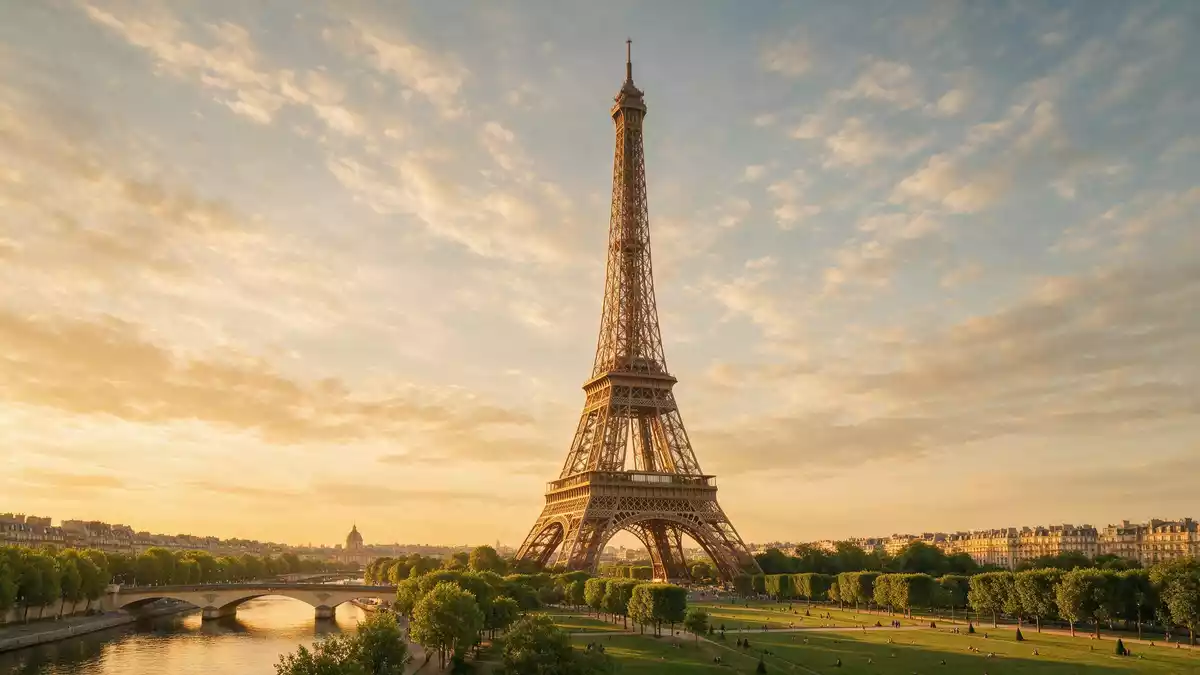
Tour Eiffel, known in English as the Eiffel Tower, is an iron lattice tower that rises above the Champ de Mars on the Left Bank of the Seine and has become one of the defining structures of Paris. Conceived and realised in the late nineteenth century for a world’s fair, it outlasted its original concession and remains a landmark of wrought-iron engineering and urban spectacle.
Iron, height and the new skyline of Paris
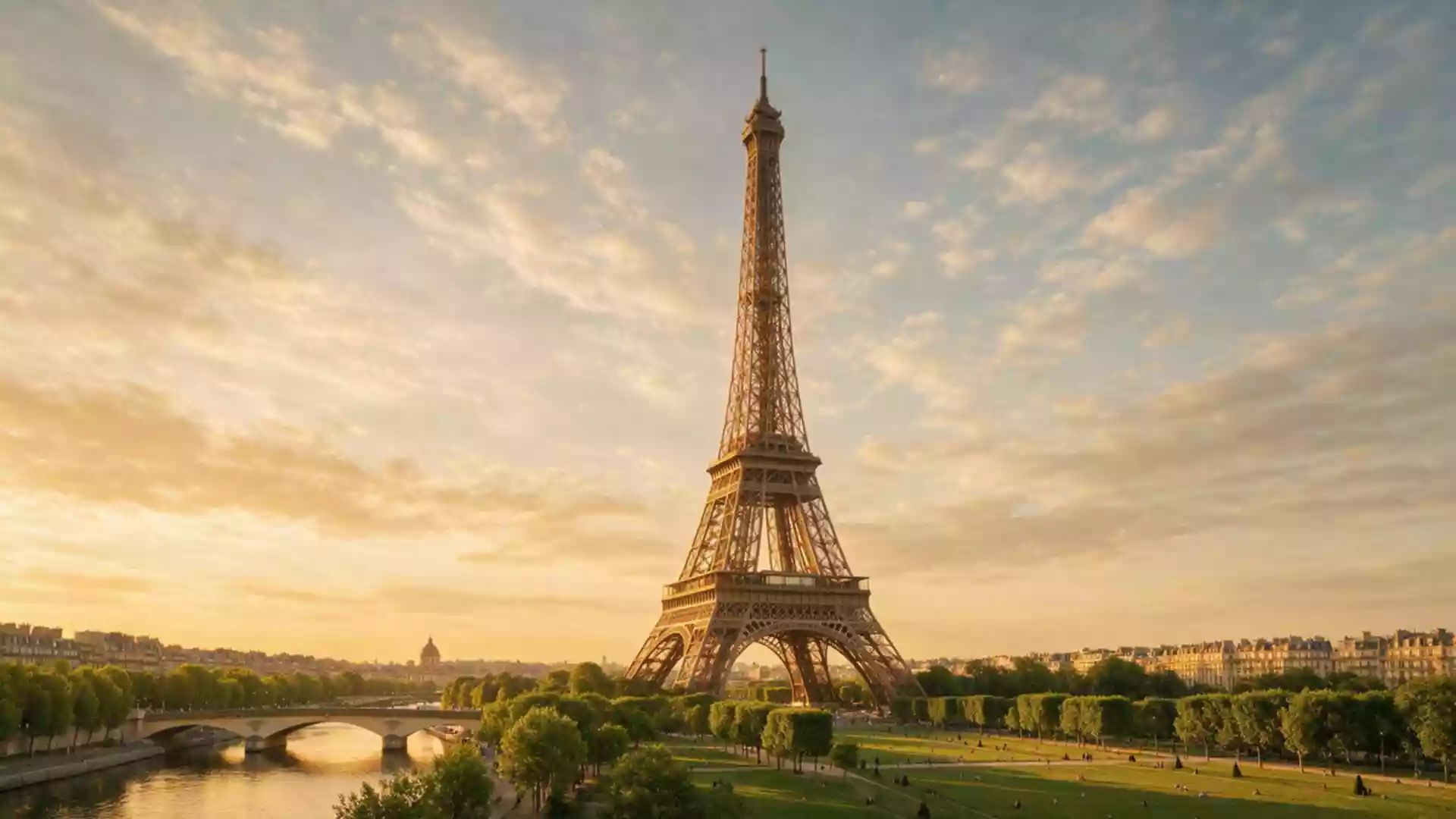
Tour Eiffel stands on the open lawns of the Champ de Mars, a former parade ground laid out between the Seine and the École Militaire, where its iron framework contrasts with the more classical stone architecture nearby.Champs de Mars The tower takes the form of a tapering open-lattice structure built of wrought iron, rising on four separate supports that flare outwards at the base before narrowing into a single vertical shaft.
When construction finished on 31 March 1889, the tower reached around 300 m (about 980 ft) in height, a figure that made it the tallest human-made structure of its time and far higher than the stone monuments of central Paris.the tower is 324 metres The wrought-iron lattice gives the structure a filigree appearance at a distance, yet the scale is evident as the supports rise from wide concrete foundations, linked by arches and platforms that carry restaurants, viewing terraces and technical spaces.
From competition entry to World’s Fair centrepiece
The origins of Tour Eiffel lie in the International Exposition of 1889, a world’s fair organised to mark the centenary of the French Revolution, for which more than a hundred proposals were submitted for a monumental entrance structure.International Exposition of 1889 The design adopted was prepared within the office of French engineer Gustave Eiffel, whose company specialised in large metal structures and whose name the finished tower now bears.whose company designed and built the tower
Work on site began in January 1887 and continued for just over two years, a rapid programme for an iron tower of this scale in the late nineteenth century.digging work started on the 26th January 1887 The structure was formally completed on 31 March 1889 and opened to visitors in May 1889 as the main vertical accent and entrance gateway of the Exposition Universelle on the Champ de Mars, giving guests views over the exhibition grounds and the rooftops of Paris.completed on March 31, 1889
A nineteenth-century structure with a long second life
Tour Eiffel carried an initial concession of around twenty years, and in the early twentieth century its future as a permanent feature of the Paris skyline was uncertain.Only intended to last 20 years Its height and iron framework, however, made it suitable for mounting aerials and technical equipment, and experimental radio transmissions at the turn of the century helped secure a continuing role for the tower.
Over the decades that followed, antenna installations on the upper platforms allowed Tour Eiffel to serve as a support for telegraphy and then radio and television broadcasting, extending its function beyond that of a fairground structure.used for telegraphy The combination of technical use and panoramic terraces turned the iron tower into both an engineering asset and a destination, with successive repainting campaigns preserving the metalwork against corrosion and giving the structure its characteristic brown tones.
Visiting Tour Eiffel: what travellers from Western Europe should know
- Tour Eiffel stands on the Champ de Mars in the 7th arrondissement of Paris, close to the Seine; the nearest métro stations include Bir-Hakeim and École Militaire.
- The tower rises above a wide paved forecourt and lawns, and visiting the upper levels involves climbing or taking lifts through an intricate iron framework with exposed beams and platforms.
- The official language is French and the currency is the euro (EUR).
- From the upper viewing platforms, the layout of central Paris is clearly visible, including the Seine, the Louvre, the Arc de Triomphe and the business district at La Défense.
Searching for Tour Eiffel on social platforms
These links open searches for Tour Eiffel on each platform.Frequently asked questions about Tour Eiffel
Where is Tour Eiffel located in Paris?
Tour Eiffel stands on the Champ de Mars beside the Seine in the 7th arrondissement of Paris, with its official address on Avenue Anatole France.
What should visitors expect on a visit to Tour Eiffel?
Visitors encounter an open forecourt leading to iron supports, lifts and stairways that rise through platforms at different levels, ending in viewing terraces above the Paris rooftops.
What makes Tour Eiffel distinctive among Paris landmarks?
Its wrought-iron lattice structure, considerable height for a nineteenth-century tower and origin as the centrepiece of the 1889 Exposition Universelle together give Tour Eiffel a character distinct from the city’s stone monuments.