
Tour Eiffel: an iron lattice landmark above Paris
Published on 09/17/2026 at 07:50 | Editorial responsibility: Rafael Müller, Editor-in-Chief AD HOC NEWS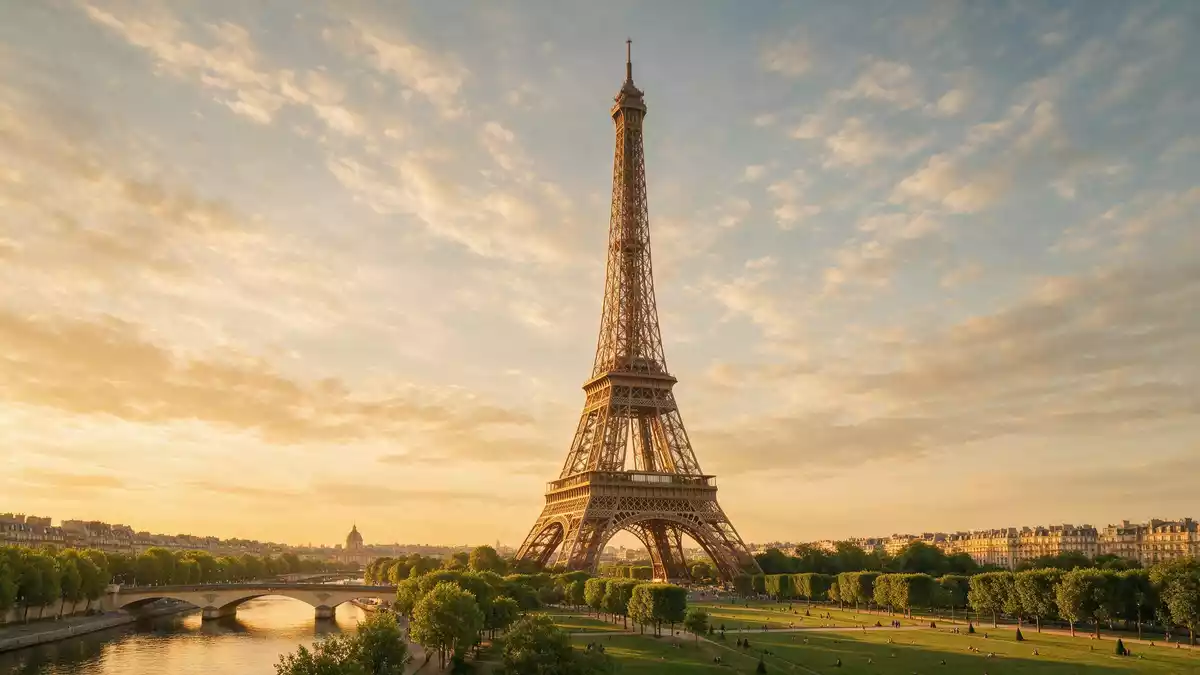
Tour Eiffel in Paris is a wrought-iron lattice tower that rises over the Champ de Mars and has become the best-known structure on the city’s horizon. Built in the late nineteenth century for the Exposition Universelle, it stands around 330 m (1,083 ft) tall today when its antenna is included, and is named after the engineer Gustave Eiffel, whose company oversaw its construction.
An iron tower built for the 1889 Exposition Universelle
The idea of a “300 m tower” took shape in the 1880s, when Gustave Eiffel’s firm developed a proposal for a tall iron structure for the Exposition Universelle of 1889, which marked the centenary of the French Revolution.Exposition Universelle of 1889 Construction work on Tour Eiffel began in January 1887 and the tower was completed on 31 March 1889 after just over two years of work by engineers and metalworkers.construction work began in January 1887
The structural design was developed by engineers Maurice Koechlin and Émile Nouguier, with architect Stephen Sauvestre contributing to the tower’s architectural appearance, under the leadership of Gustave Eiffel.original designers and architect When it was first presented at the 1889 exposition, Tour Eiffel was known simply as the 300 m tower, a demonstration of wrought-iron engineering at a scale not previously seen, standing about 300 m (984 ft) without later antenna extensions.known as the 300 m tower
Structure, levels and latticework above the Champ de Mars
Tour Eiffel rises on four lattice iron legs that spread outwards at the base over the Champ de Mars, then taper as they climb to meet in a single vertical tower above the upper platform.platform resting on four supports The tower reaches an architectural height of about 300 m (984 ft) and, with antenna, around 330 m (1,083 ft), making it the tallest structure in Paris and one of the most recognisable silhouettes in Europe.330 metres tall Its iron framework forms a dense pattern of cross-bracing, riveted connections and open trusses, which give the tower its characteristic lattice appearance.
The tower is organised into three main levels reachable by lifts and stairs within the legs and central structure.three principal floors The first level stands dozens of metres above the ground and hosts exhibition spaces and viewing platforms integrated into the iron girders. The second level, higher above the Champ de Mars, offers broader views over Paris and includes restaurants and terraces set among the structural members. Above these, the third level sits near the top of the architectural tower, reached by lifts, with enclosed viewing areas positioned within the narrowing frame beneath the antenna mast.
Tour Eiffel in the Paris cityscape
Tour Eiffel stands at the western end of the Champ de Mars, a long rectangular park that stretches towards the École Militaire and acts as a foreground to the tower’s base. Across the River Seine to the north-west, the Trocadéro gardens and terraces face the tower directly, creating one of the clearest long views of its full height over the water. From river level, the legs of the structure rise above quays and roadways, with bridges such as Pont d’Iéna linking the tower side of the river to the opposite bank.
Within the wider cityscape, Tour Eiffel’s iron form contrasts with the stone façades of nineteenth-century Parisian avenues and the lower rooflines of surrounding arrondissements. It provides an elevated vantage point from which landmarks such as the Arc de Triomphe, the dome of Les Invalides and the towers of Notre-Dame can be seen in relation to the Seine’s curves. At ground level, the open area beneath the tower and the lawns of the Champ de Mars frame its legs and supports, and the tower’s lattice structure allows views through the ironwork towards the city beyond.
Visiting Tour Eiffel: what travellers from Western Europe should know
- Tour Eiffel stands on the Champ de Mars on the Left Bank of the River Seine in the 7th arrondissement of Paris, south-west of the Trocadéro gardens and west of the École Militaire.
- The site is reached by city streets and riverside quays, and nearby stations on the Paris transport network, with approaches that include paved surfaces, steps and the ascent within the tower’s legs.
- The tower’s viewing levels are high above ground and involve enclosed and open-air areas at altitude, with lifts inside the structure and stairways that cover significant height differences.
- The official language in France is French and the currency is the euro.
Searching for Tour Eiffel on social platforms
These links open searches for Tour Eiffel on each platform.
Frequently asked questions about Tour Eiffel
Where is Tour Eiffel located in Paris?
Tour Eiffel stands on the Champ de Mars in the 7th arrondissement on the Left Bank of the River Seine, close to the Trocadéro across the river.
What can visitors expect during a visit to Tour Eiffel?
Visitors encounter a tall wrought-iron lattice tower with viewing levels accessed by lifts and stairs, alongside indoor and open-air platforms above the Champ de Mars.
What makes Tour Eiffel distinctive among tall structures?
Tour Eiffel combines late nineteenth-century iron engineering, a three-level tower form and a height of about 330 m (1,083 ft), rising as the tallest structure in Paris.


