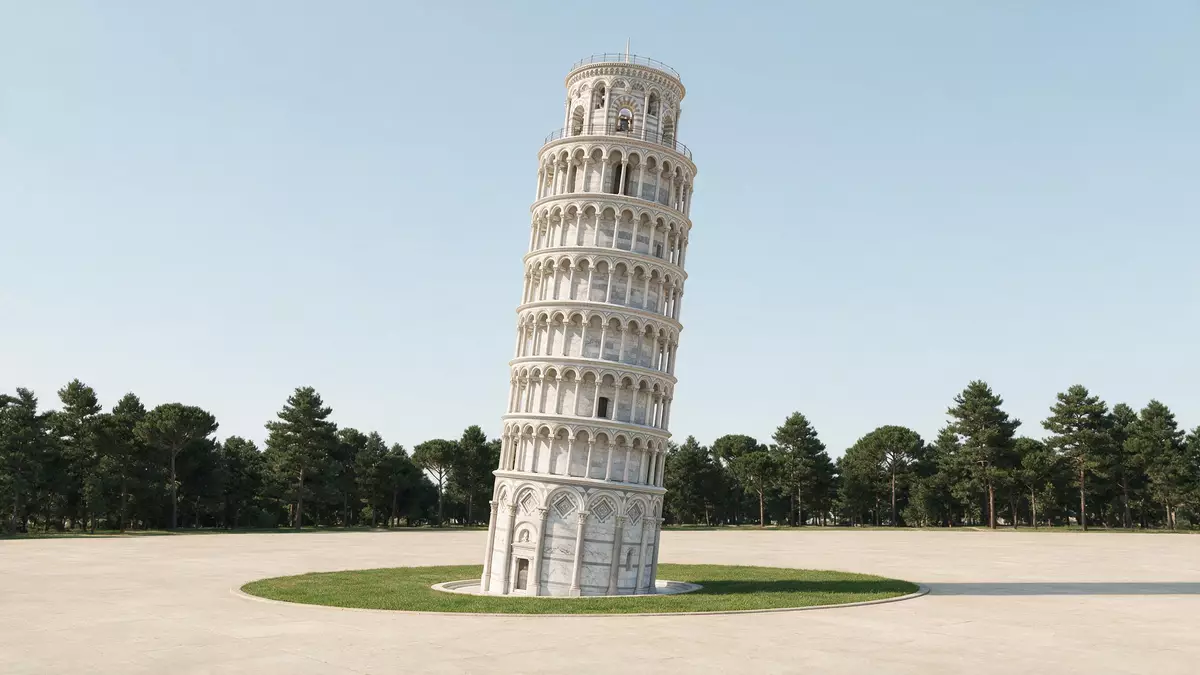
Torre di Pisa and the tilted campanile in Pisa
Published on 08/10/2026 at 15:13 | Editorial responsibility: Rafael Müller, Editor-in-Chief AD HOC NEWS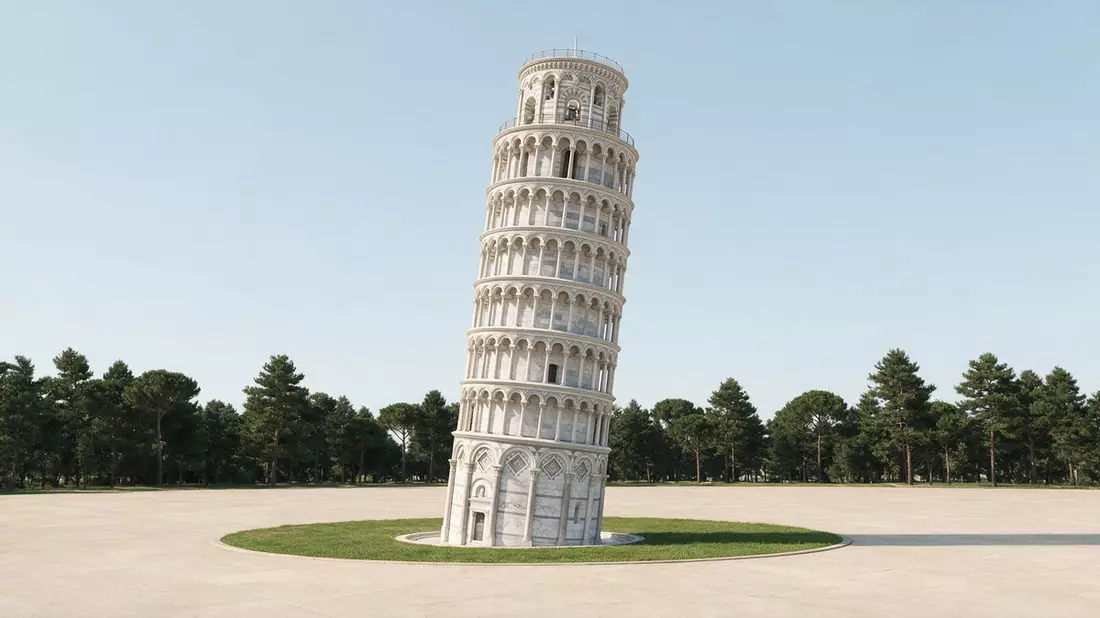
Torre di Pisa rises as the bell tower of Pisa Cathedral, a white-marble campanile in the Piazza dei Miracoli. Its lean is the feature most people recognise first, but the tower also belongs to a wider Romanesque ensemble with the cathedral, baptistery and cemetery.
The leaning campanile beside Pisa Cathedral
The tower stands apart from the cathedral yet remains part of the same ecclesiastical group. Its circular shaft, arcaded galleries and pale stone give it a measured, vertical rhythm even as the line of the structure tilts away from true vertical.
Construction began in 1173 and continued in stages over generations, with the building taking on its present form in the thirteenth and fourteenth centuries. The tower is associated with the city’s medieval religious centre and with the long civic history of Pisa, once a maritime republic in the western Mediterranean.
Marble, arcades and the Piazza dei Miracoli
The tower is built in white marble and stands among open lawns and other monumental buildings. Its exterior is wrapped in blind arches and open loggias, details that repeat around the shaft and mark each level with steady horizontal bands.
From close by, the structure reads as a stone cylinder with stacked galleries and a bell chamber at the top. The arrangement is simple in outline and elaborate in surface, which makes the tower easy to identify from across the square.
A medieval monument with a long civic life
Torre di Pisa has served as the bell tower of Pisa Cathedral for centuries. The building is part of the Cathedral of Santa Maria Assunta complex, and its survival through changing tastes and preservation work has kept it central to the city’s image.
The tower is also a record of Romanesque craft in Tuscany. Its form, material and setting connect it to the city’s religious architecture, while the visible tilt gives the whole square a distinctive visual centre.
Visiting Torre di Pisa: what travellers from Western Europe should know
- The site is in Pisa and is reached by road and rail within the city, with the Piazza dei Miracoli as the key destination.
- Admission arrangements and opening hours are set by the site's operator and change with the season; the official website is the only binding source.
- Spring and early autumn suit a visit for milder weather and steadier light across the square.
- The tower involves steps and a narrow internal route, and the surrounding square is open and level underfoot.
- Local payment is in euros, and English is understood in many visitor-facing settings, though Italian remains the default language.
- Entry requirements depend on your nationality. UK travellers should check the FCDO travel advice at gov.uk/foreign-travel-advice; Irish travellers the Department of Foreign Affairs at ireland.ie; EU and EEA citizens their own national foreign ministry.
Searching for Torre di Pisa on social platforms
These links open searches for Torre di Pisa on each platform.
Frequently asked questions about Torre di Pisa
Where is Torre di Pisa?
It stands in Pisa, in the Piazza dei Miracoli, beside Pisa Cathedral and the other monumental buildings of the square.
What should visitors expect?
Expect a stone tower with internal steps, a bell chamber at the top and a visit shaped by the surrounding cathedral complex.
What makes it distinctive?
The leaning profile is the defining feature, together with its marble arcades and its place within Pisa’s Romanesque religious ensemble.