
Torre de Belem and Lisbon’s Manueline river tower
Published on 08/30/2026 at 12:04 | Editorial responsibility: Rafael Müller, Editor-in-Chief AD HOC NEWS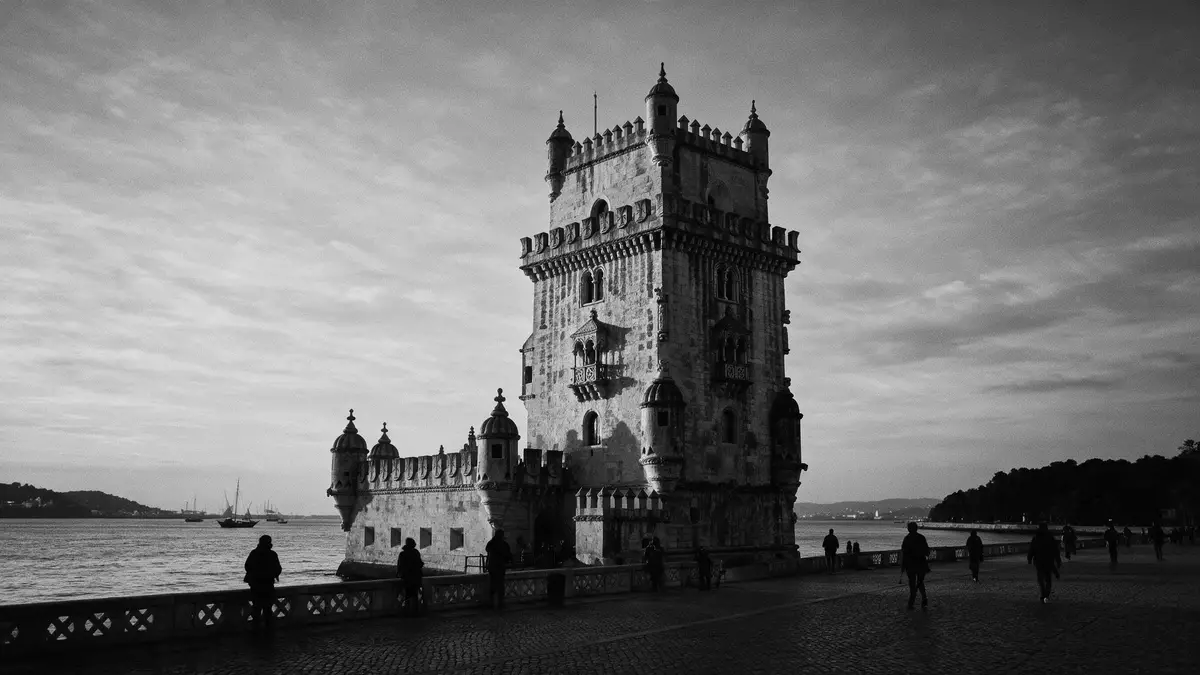
Torre de Belem stands on the riverfront of Lissabon as a Manueline tower of pale limestone and carved detail. Designed by Francisco de Arruda during the reign of Manuel I, it belongs to the group of monuments on the Tagus shore linked to the UNESCO World Heritage designation and the city’s maritime identity. Its mass reads as both tower and bastion, with a compact profile that makes the stone work easy to study from close range.
A Manueline tower on the Tagus shore
The tower was built in the early sixteenth century, when Lisbon was tied to ocean travel, trade and royal display. Its decorative surface belongs to the Manueline style, a Portuguese form of late Gothic that mixes military mass with elaborate ornament.
The name Francisco de Arruda matters here because the tower is one of his best-known works in Lisbon. The setting beside the Tagus places the building in the Belém district, where the river edge remains part of its identity.
Stonework, bastion and riverfront profile
The building combines a tall tower with a lower bastion, so its silhouette changes as the viewer moves along the riverbank. The limestone surface carries ropes, crosses and carved forms that sit on the walls rather than disappearing into them.
The official museum page describes the structure as having been built between 1514 and 1519, and that date range fits the tower’s early-sixteenth-century character. The monument is also part of Lisbon’s wider historic river frontage, which includes the Jerónimos area and the harbour side of Belém.
From fortified landmark to heritage monument
Torre de Belem is identified with the Manuel I period and with the Portuguese Renaissance. It also carries the name Torre de São Vicente in formal usage, which links it to Lisbon’s patron saint.
The tower’s place in Lisbon is reinforced by its status within the World Heritage property shared with the Jerónimos Monastery. That listing places the building in a documented historic ensemble rather than treating it as an isolated object.
Visiting Torre de Belem: what travellers from Western Europe should know
- The tower stands in Belém, west of central Lisbon, beside the Tagus riverfront. Av. Brasília runs nearby, and the monument is linked to the district’s harbour edge.
- The building rises on a compact river setting with a lower bastion and a tower above it. Its stone stairs and tight interior rooms are part of the visit.
- The official language is Portuguese and the currency is the euro.
- Entry requirements depend on your nationality; UK travellers can check the FCDO travel advice at gov.uk/foreign-travel-advice, Irish travellers the Department of Foreign Affairs at ireland.ie.
Searching for Torre de Belem on social platforms
These links open searches for Torre de Belem on each platform.
Frequently asked questions about Torre de Belem
Where is Torre de Belem?
It stands in Belém, a river district in western Lissabon, on the north bank of the Tagus. The tower faces the water and sits within Lisbon’s historic harbour landscape.
What should travellers expect?
The monument is a compact stone tower with a bastion, narrow internal spaces and decorative Manueline details. Its layout is vertical and close-set, with the riverfront location shaping the first impression.
What makes it distinctive?
Torre de Belem combines military form with ornamented Renaissance detail, and that mixture is visible in the stonework itself. Its association with Francisco de Arruda, Manuel I and the 1514 to 1519 building phase gives it strong historical identity.


