
Topkapi Sarayi and the layered courtyards of Ottoman power
Published on 08/31/2026 at 07:18 | Editorial responsibility: Rafael Müller, Editor-in-Chief AD HOC NEWS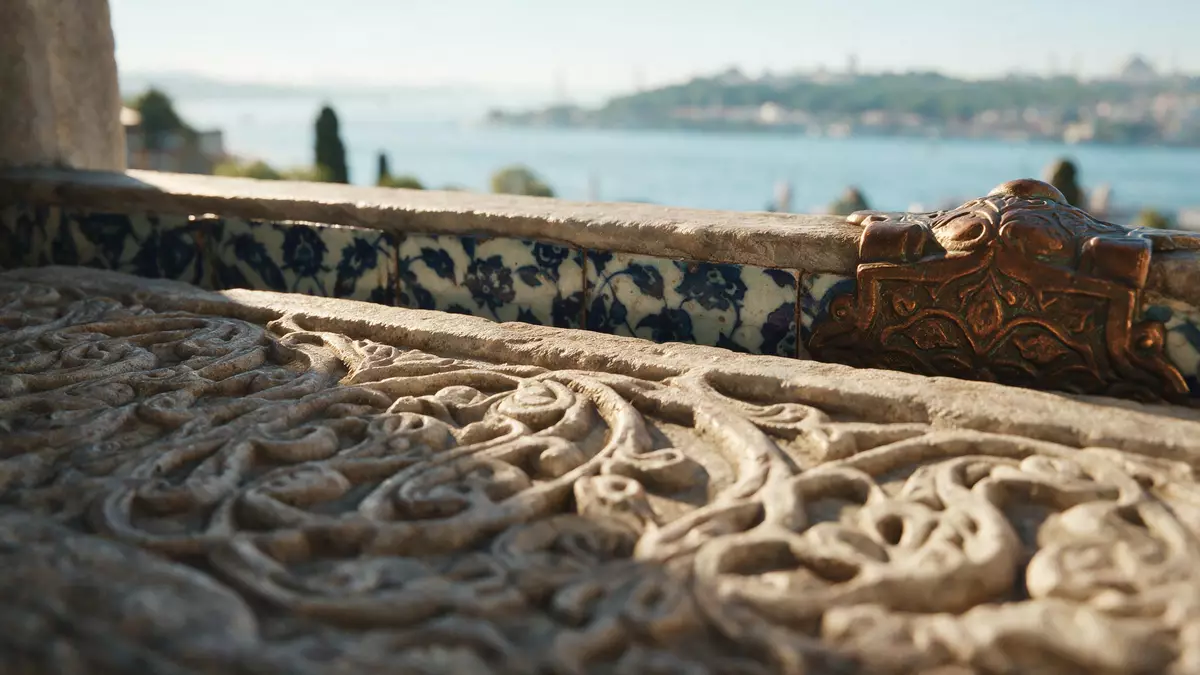
Topkapi Sarayi, known in English as Topkapi Palace, occupies a headland on Istanbul’s Historic Peninsula where the Golden Horn, the Bosphorus and the Sea of Marmara meet, and turns that site into a long sequence of courts and gardens for imperial life in the fifteenth to nineteenth centuries.The peninsula position carries an entire imperial residence, built for Sultan Mehmed II after his conquest of Constantinople in 1453 and later adapted as a museum in 1924 under the new Republic of Turkey.
From imperial residence to museum complex
Construction of Topkapi Sarayi began under Mehmed II in the fifteenth century, with work recorded from 1459 and significant completion dates in the 1470s, when the complex became the principal residence and working palace for the Ottoman sultans.Mehmed II’s second palace was originally known as the New Imperial Palace and only later took on the name Topkapi Sarayi, derived from “Cannon Gate Palace”. Over the following centuries, successive rulers expanded and rebuilt parts of the complex, especially after fires, but the overall scheme of linked courts, service ranges and residential quarters remained.
For roughly 400 years Topkapi Sarayi served as the administrative centre of the Ottoman Empire and the stage for its dynastic ceremonies, until Sultan Abdülmecid I shifted the main residence to Dolmabahçe Palace in the mid-nineteenth century.The palace’s long role continued in a different form after the empire ended: in 1924, a decree of the new Turkish government turned the complex into a museum, opening its courts, collections and former private spaces to visitors while retaining much of the original layout.
Courtyards as a map of Ottoman court life
Topkapi Sarayi is not a single block but a complex of successive courtyards, each with a distinct function that visitors can trace on foot as a physical map of Ottoman court life and governance.The palace’s courtyard sequence begins with an outer court once used for processions and service buildings and leads into inner courts devoted to council chambers, treasury rooms, kitchens and the inner school for training officials. The layered organisation separates formal state business from private residence, with the progression inward marking increasing levels of access.
In the innermost areas, gardens and kiosks stand above terraces looking towards the Bosphorus and the city, while enclosed halls contain ceremonial chambers and collections.Descriptions of these inner terraces refer to small pavilions such as Baghdad and Revan kiosks, which were built in the seventeenth century and decorated with tiles and inscriptions. Moving between the courts, a visitor crosses stone pavements, passes arcaded porticoes and glimpses domed service ranges that supplied the palace from kitchens to armouries, all laid out along a ridge between water on three sides.
The harem, treasury and sacred collections
Within the complex, the harem occupies a distinct group of courtyards and apartments that formed the private living area of the sultan, the Valide Sultan and members of the dynasty, separated from the outer courts by gates and corridors.The harem apartments contain richly decorated halls, tiled chambers and passages that show changes in Ottoman domestic architecture from the sixteenth to the nineteenth centuries. Their spaces once housed upper-class women of the harem, attendants and guards, and they now stand as part of the museum route.
Elsewhere in Topkapi Sarayi, the treasury and the Chamber of Holy Relics house collections that reflect the palace’s role as both seat of power and spiritual centre of the empire.The Chamber of Holy Relics preserves objects associated in tradition with Islamic history, while the treasury displays ceremonial arms, jewellery and regalia. Together with the council chambers and audience rooms, these interiors give the complex its character as both museum and former working palace, connecting artefacts, architecture and the setting above the water.
Visiting Topkapi Sarayi: what travellers from Western Europe should know
- Topkapi Sarayi stands on the Sultanahmet ridge in the Fatih district of Istanbul, on the tip of the Historic Peninsula between the Bosphorus and the Golden Horn; it is reached via city streets and tram routes serving Sultanahmet and nearby stops.
- The complex occupies uneven ground on a hilltop with stone pavements, garden paths and staircases between levels, including steps in towers and inner courts.
- In winter, cold winds from the Marmara and Bosphorus reach the terraces and exposed courtyards, while in summer the stone surfaces and gardens sit under strong sun.
- The official language is Turkish and the currency is the Turkish lira.
- Entry requirements depend on your nationality; UK travellers can check the FCDO travel advice at gov.uk/foreign-travel-advice, Irish travellers the Department of Foreign Affairs at ireland.ie.
Searching for Topkapi Sarayi on social platforms
These links open searches for Topkapi Sarayi on each platform.
Frequently asked questions about Topkapi Sarayi
Where is Topkapi Sarayi in Istanbul?
Topkapi Sarayi stands in the Sultanahmet area of the Fatih district, on the eastern tip of the Historic Peninsula above the Bosphorus and the Golden Horn.
What should visitors expect on a visit?
Visitors move through multiple courtyards, gardens and former palace interiors, including council chambers, treasury rooms and, with separate entry, the harem apartments.
What makes Topkapi Sarayi distinctive among palaces?
Rather than one monumental block, Topkapi Sarayi spreads across a headland as a chain of courtyards and pavilions, combining imperial residence, government buildings and museum collections.


