
Tokyo Tower, a steel lattice giant above Shiba in Tokio
Published on 09/18/2026 at 06:06 | Editorial responsibility: Rafael Müller, Editor-in-Chief AD HOC NEWS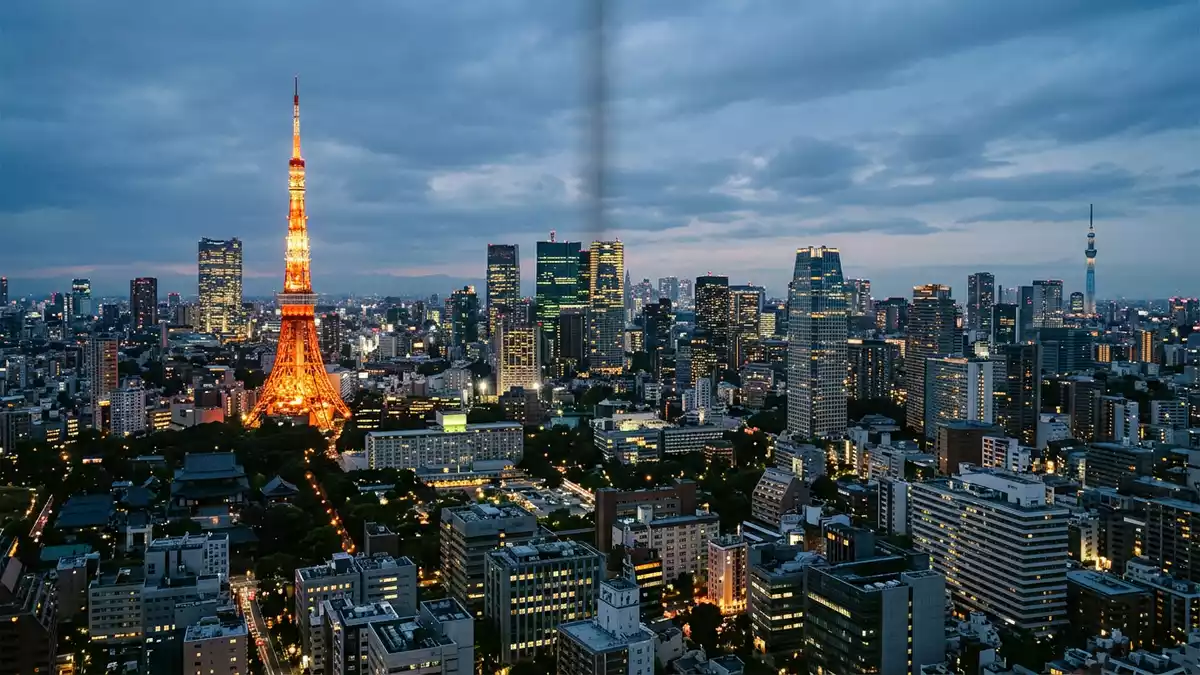
Tokyo Tower rises above the Shiba district of Minato in Tokio as a red-and-white steel lattice tower completed in 1958, combining communications infrastructure with stacked viewing platforms for the city. Standing 333 m (1,093 ft) high and designed by structural engineer Tachu Naito, it has long been a prominent vertical marker in Japan’s capital skyline.
A post-war steel landmark with European echoes
Tokyo Tower stands in Shiba-koen, a district of Minato in southern Tokio, on a site surrounded by city streets and temple grounds, its four steel legs planted on substantial concrete foundations that spread the load into the urban fabric.Shiba-koen in Minato Conceived and built in the late 1950s as a general radio tower for television and other signals, it was completed in December 1958 after an intensive construction period beginning in June 1957.opened to the public on 23 December 1958
The structure takes obvious inspiration from the Eiffel Tower in Paris, adopting a tapered lattice form with platforms set at different heights, yet it extends this profile to 333 m (1,093 ft), exceeding the French tower’s original figure by several metres.332.9 metres tall Painted in contrasting bands of international orange and white to comply with aviation visibility requirements, the tower’s colour scheme reinforces its presence against the mixed grey and glass tones of the surrounding business district.
Structure, platforms and the experience of height
At its core Tokyo Tower is a freestanding steel lattice structure, carrying an antenna spire above its highest viewing platform and stabilised by diagonal bracing that runs through its legs and central shaft.freestanding communication tower The tower reaches an architectural height of 333 m (1,093 ft), with the tip of the antenna spire slightly below that figure in some measurements, and for decades it ranked as Japan’s tallest tower before the completion of Tokyo Skytree in 2012.tallest tower in Japan until 2012
Visitors ascend through a multi-level base building into the tower proper, reaching a main observation deck roughly midway up the structure and, above it, a higher deck that started life as a maintenance platform before opening as an observatory in 1967.Top Deck opened as an observatory in 1967 From these platforms the city stretches out in all directions, with the nearby temple precincts and low-rise streets of Shiba and neighbouring districts sitting visibly below the lattice legs, while further away the denser clusters of central Tokio form a layered backdrop to the steelwork.
From broadcasting tower to cultural emblem
Tokyo Tower was originally known by its official name Japan Radio Tower and served as a major broadcasting site for television and radio across the wider Kanto region, carrying antennas that distributed signals from a single tall structure.Japan Radio Tower As newer towers such as Tokyo Skytree took over much of this role, Tokyo Tower retained communications functions while consolidating its identity as an observation tower and recognisable landmark within the everyday cityscape.
Construction in the late 1950s involved extensive manual calculation of loads and joints in an era before widespread computer use, contributing to its reputation as an example of Japanese steel engineering in the decades after the Second World War.220,000 workers and ¥2.8 billion The tower’s regular illumination patterns and occasional special light schemes have become part of the visual rhythm of Tokio at night, and its appearance in films, television programmes and promotional imagery reinforces the way its lattice form and twin observation decks stand as shorthand for the city’s vertical modernity.
Visiting Tokyo Tower: what travellers from Western Europe should know
- Tokyo Tower stands in Shiba-koen in the Minato ward of Tokio, south of the core business districts, and is reached by city rail lines stopping at stations nearby.
- The approach runs through an urban park and paved streets, and once inside the base building visitors encounter escalators, lifts and stairways before reaching the observation platforms.
- Temple precincts, office blocks and residential areas surround the tower, so a visit combines time in the steel structure with views over mixed neighbourhoods and historic sites.
- The official language is Japanese and the currency is the yen.
- Entry requirements depend on your nationality; UK travellers can check the FCDO travel advice at gov.uk/foreign-travel-advice, Irish travellers the Department of Foreign Affairs at ireland.ie.
Searching for Tokyo Tower on social platforms
These links open searches for Tokyo Tower on each platform.
Frequently asked questions about Tokyo Tower
Where is Tokyo Tower located in Tokio?
Tokyo Tower stands in the Shiba-koen district of Minato, a ward in southern Tokio, with its legs set within an urban park and neighbouring temple grounds.
What can visitors expect during a visit to Tokyo Tower?
Visitors pass through a multi-level base building with lifts and escalators before ascending to observation decks that offer extensive views over central Tokio and its surrounding neighbourhoods.
What makes Tokyo Tower distinctive among towers in Japan?
Tokyo Tower is distinctive for its 333 m (1,093 ft) height, red-and-white steel lattice structure designed by Tachu Naito, and its dual identity as both communications tower and city observation landmark.


