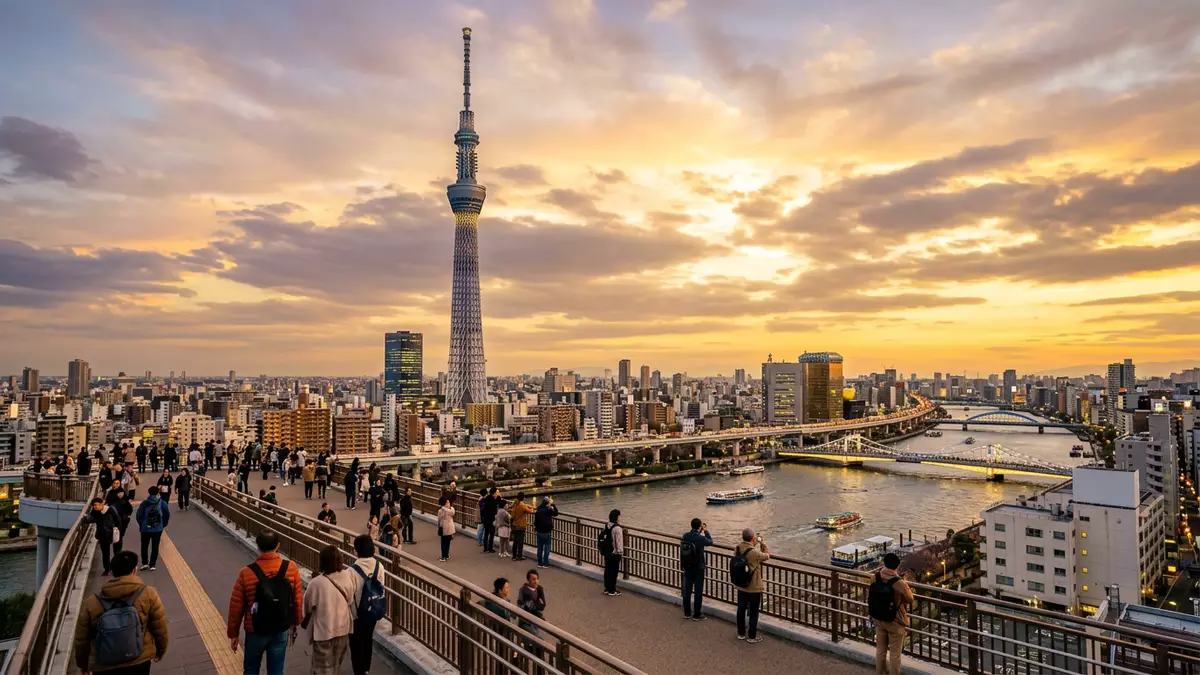
Tokyo Skytree and the tall ring of Tokio
Published on 08/10/2026 at 15:07 | Editorial responsibility: Rafael Müller, Editor-in-Chief AD HOC NEWS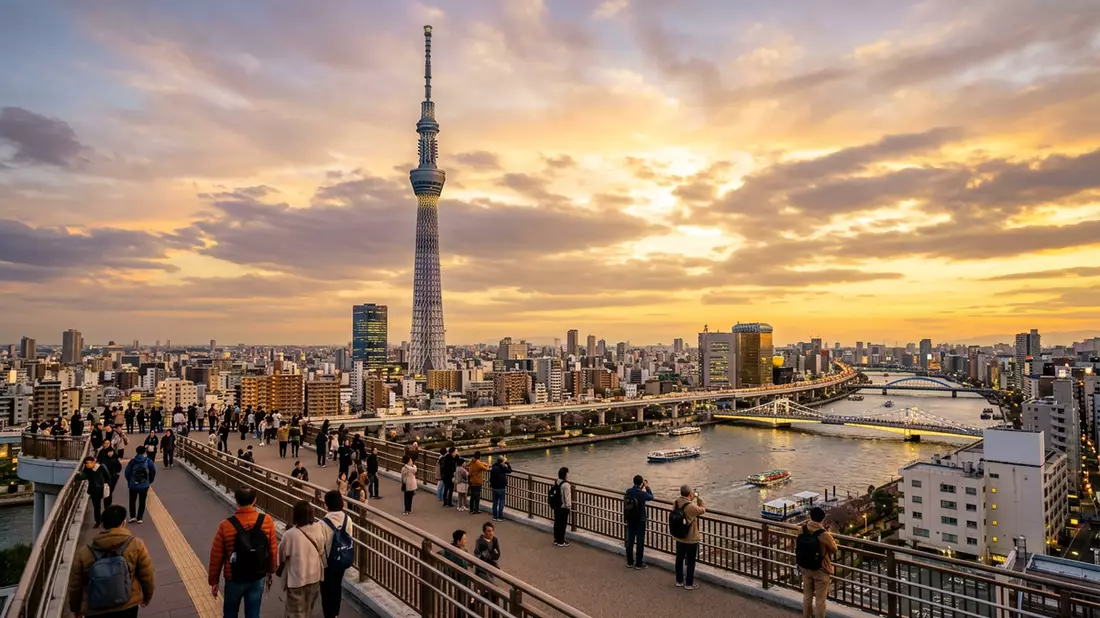
Tokyo Skytree rises from Tokio as a 634 m (2,080 ft) broadcasting tower with a distinctive ringed profile and observation decks above the city. Completed in 2012, it is one of the most recognisable modern structures in the Japanese capital.
A slender tower with a broad base
The tower’s white shaft narrows as it climbs, while the lower section opens into a wider triangular base. That change in form gives Tokyo Skytree a different profile from the dense blocks around it, and the contrast is visible from many parts of the river side.
The structure combines steel and a central reinforced concrete core. Its height places it among the tallest towers in the world, and the scale is part of its appeal even before the decks are reached.
From broadcasting mast to city landmark
The tower serves broadcasting and telecommunications, with public observation spaces added high above the city. Its presence links engineering, media and sightseeing in one structure, and that mix defines how it is used.
Tokyo Skytree opened in 2012 and became a key part of the Sumida district skyline. It stands as a contemporary symbol of Tokio’s vertical development, framed by low-rise streets, rail lines and the wider city beyond.
The view from above the Sumida district
The observation areas look out over the Sumida area and across central Tokio, with the city spreading in all directions. On clear days, Mount Fuji is visible from the upper levels, adding a distant mountain line to the urban field below.
The tower also forms a major reference point for navigation in the eastern part of the city. Its illuminated exterior makes it easy to pick out after dark, when the structure reads as a bright vertical marker above the surrounding neighbourhoods.
Visiting Tokyo Skytree: what travellers from Western Europe should know
- The tower is in Sumida, east of central Tokio, and is reached by rail and by local transport connections in the area.
- Admission arrangements and opening hours are set by the site's operator and change with the season; the official website is the only binding source.
- Late afternoon and evening often suit visitors who want both daylight views and the city lights below.
- The visit involves lifts and high-level observation spaces rather than long walking routes, but the tower itself rises to an extreme height.
- Japanese is the main language on site, and cashless payment is widely used alongside cash.
- Entry requirements depend on your nationality. UK travellers should check the FCDO travel advice at gov.uk/foreign-travel-advice; Irish travellers the Department of Foreign Affairs at ireland.ie; EU and EEA citizens their own national foreign ministry.
Searching for Tokyo Skytree on social platforms
These links open searches for Tokyo Skytree on each platform.
Frequently asked questions about Tokyo Skytree
Where is Tokyo Skytree?
It stands in the Sumida district of Tokio, on the eastern side of the city. The tower is a major vertical marker in the capital’s landscape.
What should visitors expect?
Expect a tall tower experience with lifts, observation areas and broad city views. The visit is centred on height, outlook and the building’s clean modern profile.
What makes it distinctive?
Its height, its broadcasting role and its ringed silhouette set it apart. The combination of utility and public viewing space gives it a clear identity within Tokio.