
Todai-ji and the vast wooden hall of Nara
Published on 09/24/2026 at 09:26 | Editorial responsibility: Rafael Müller, Editor-in-Chief AD HOC NEWS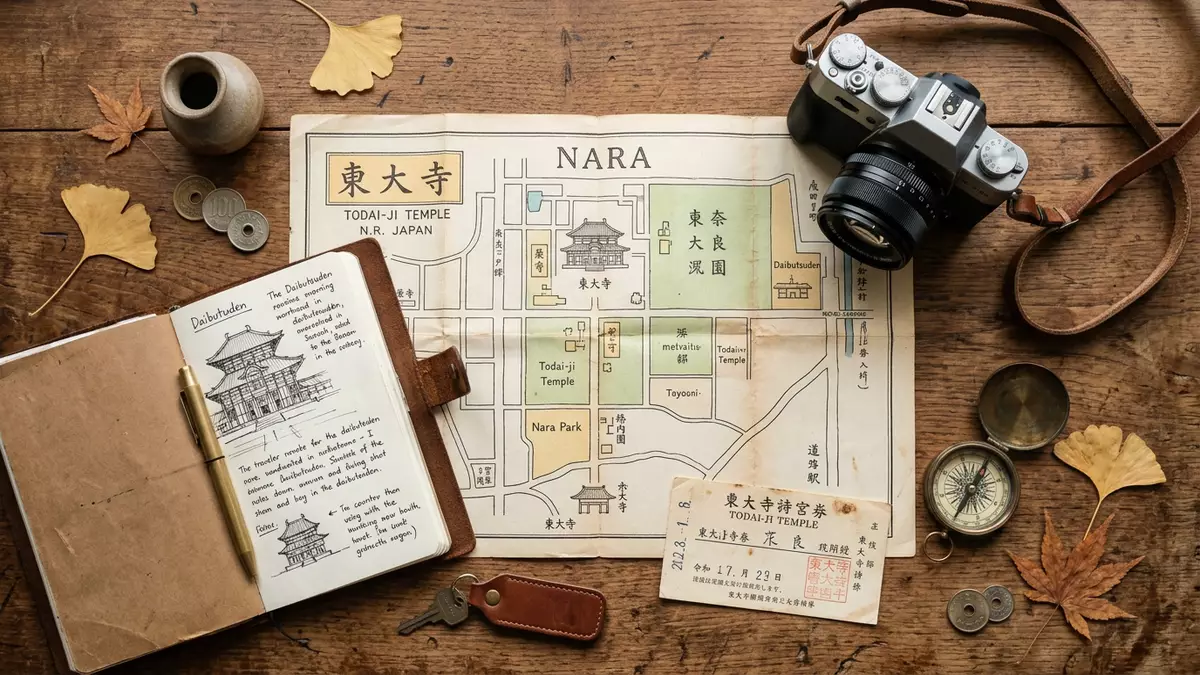
Todai-ji in Nara is defined by a remarkable pairing: a vast timber hall and a monumental bronze Buddha seated within it. The temple’s main buildings belong to the Nara period, while the present Great Buddha Hall dates from 1709.
Todai-ji: timber and bronze on a monumental scale
The Great Buddha Hall, or Daibutsuden, is the visual centre of Todai-ji. Its broad wooden structure contains the seated Vairocana Buddha, known in Japanese as Daibutsu. The statue rises to 14.98 metres, while its ears measure 2.54 metres. The Great Buddha’s dimensions give the interior a clear human scale.
The present hall measures about 57 metres long, 50 metres wide and 47 metres high. It is smaller than the original building, although its height and depth remain comparable. The hall’s timber frame, tiled roof and repeated bays create a calm architectural rhythm around the bronze image.
From Emperor Shomu to the Edo-period hall
Todai-ji belongs to the political and religious landscape of eighth-century Japan. Emperor Shomu issued a proclamation for a Great Buddha image in 743, and work on the Vairocana began in Nara. The image was completed in 749 and consecrated in 752. Todai-ji’s early history connects the temple directly with the Nara period, when Buddhism held a central place in public life.
The Great Buddha Hall has been destroyed by fire twice, in 1180 and 1567. The present structure was built during the Edo period under the direction of the monk K?kei, and the hall was dedicated in 1709. The present Great Buddha Hall has seven bays across its front, compared with eleven bays in the original hall.
The Daibutsu within Nara’s temple landscape
Todai-ji is a Buddhist temple complex in eastern Nara. Its grounds include the Great Buddha Hall and other historic structures, with paths, gates and wooded areas linking the buildings. Deer are associated with Nara Park, which extends around the temple precincts.
The temple forms part of the UNESCO World Heritage property Historic Monuments of Ancient Nara. The property includes Buddhist temples, a Shinto shrine, the Nara Palace Site and the Kasugayama Primeval Forest. The Ancient Nara heritage property places Todai-ji within a wider cultural landscape rather than treating it as an isolated monument.
Inside the hall, the bronze Vairocana remains the central presence. The statue represents the cosmic Buddha of the Kegon tradition, and the surrounding architecture gives it a formal setting of timber columns, roofed space and devotional images. The contrast between dark wood and polished metal is visible throughout the main interior.
Visiting Todai-ji: what travellers from Western Europe should know
- Todai-ji stands in Nara, east of the city centre, within the wider Nara Park area. The temple can be reached by local bus, on foot from Nara’s railway districts, or from nearby Kintetsu Nara Station.
- The approach crosses a large temple precinct with gates, paved paths and historic buildings. The Great Buddha Hall is a substantial timber structure, and the interior contains a monumental seated bronze image.
- Nara is in Japan, where the official language is Japanese and the currency is the Japanese yen.
- Entry requirements depend on your nationality; UK travellers can check the FCDO travel advice at gov.uk/foreign-travel-advice, Irish travellers the Department of Foreign Affairs at ireland.ie.
Searching for Todai-ji on social platforms
These links open searches for Todai-ji on each platform.Frequently asked questions about Todai-ji
Where is Todai-ji?
Todai-ji is in Nara, Japan, within the Nara Park area. The temple lies east of the central urban districts and forms part of the historic landscape of the former capital.
What can visitors see at Todai-ji?
The principal sight is the Great Buddha Hall, a large wooden building containing a seated bronze Vairocana. The wider precinct includes gates, paths, wooded spaces and additional Buddhist buildings.
What makes Todai-ji distinctive?
Todai-ji brings together an eighth-century Buddhist foundation, a present hall completed in 1709 and a 14.98-metre bronze Buddha. The contrast between monumental timber architecture and metal sculpture defines the temple’s character.


