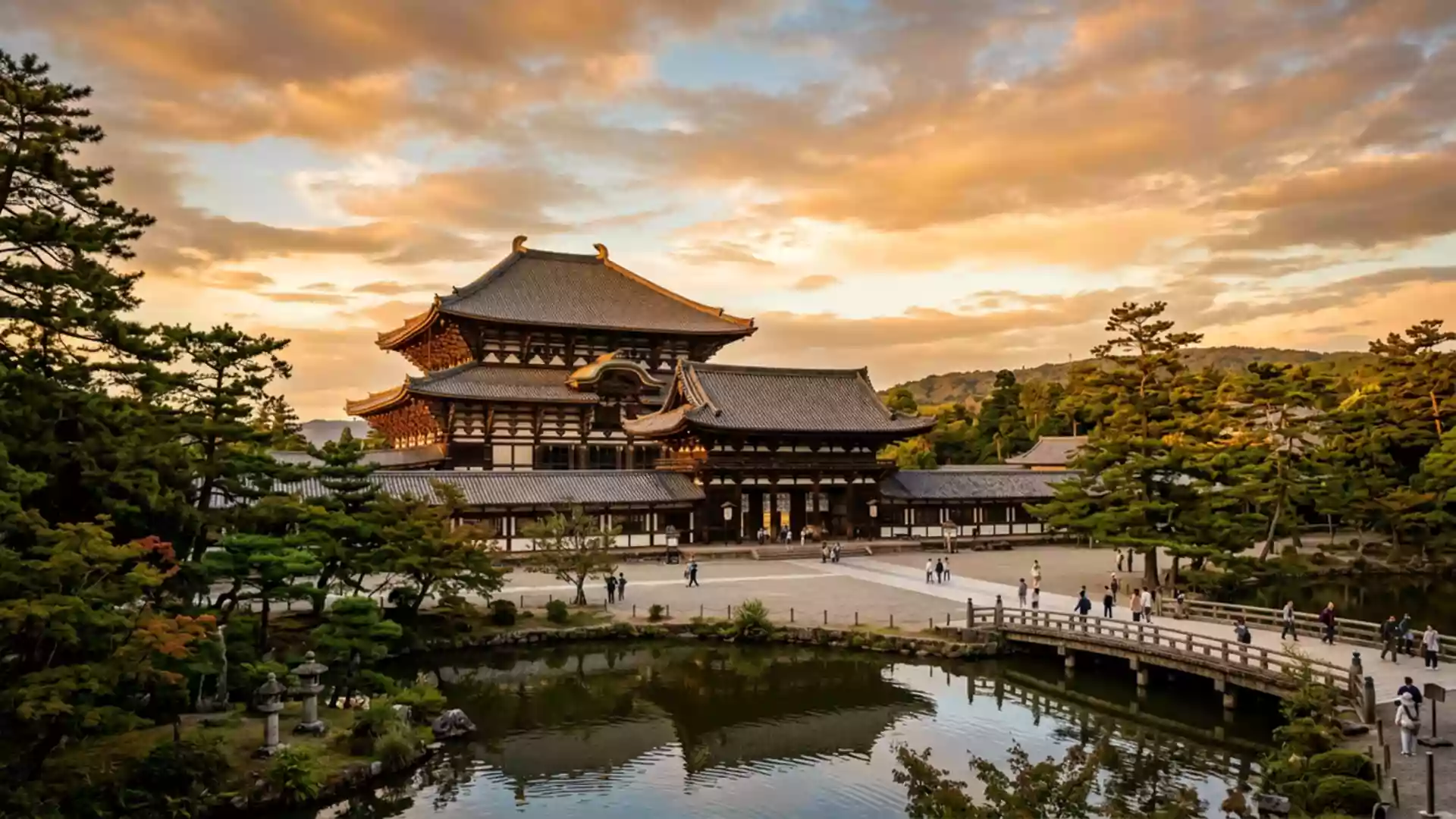
Todai-ji and the vast wooden hall of Nara
Published on 09/02/2026 at 06:39 | Editorial responsibility: Rafael Müller, Editor-in-Chief AD HOC NEWS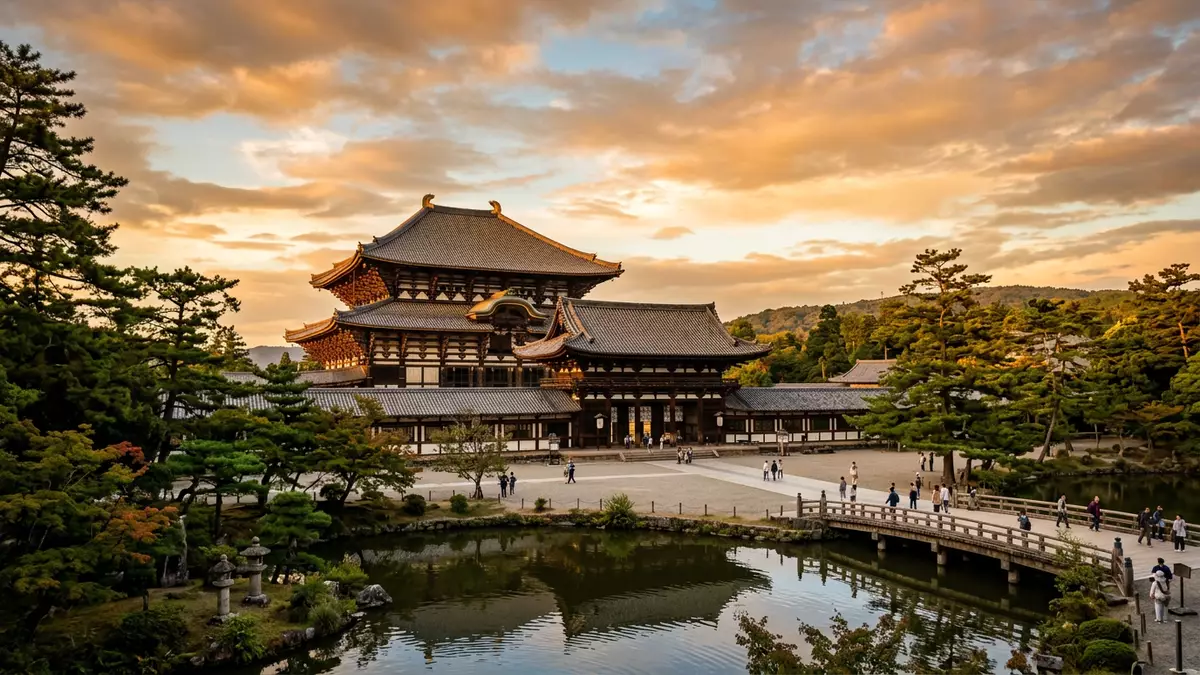
Todai-ji in Nara is a temple complex shaped by the Nara period and by the scale of its Great Buddha Hall. Its history reaches back to Emperor Sh?mu and the eighth century, and its present form remains tied to that long rebuild-and-repair tradition.eighth century
Todai-ji’s Nara-period foundations
The temple’s origins lie in the reign of Emperor Sh?mu, with early foundations placed in the 720s and 740s. That early phase links Todai-ji to the making of imperial Nara and to the spread of Buddhist institutions across the country.Emperor Sh?muhistory of T?dai-ji
Todai-ji belongs to the Historic Monuments of Ancient Nara, a UNESCO World Heritage property inscribed in 1998. The designation groups the temple with the historic landscape of Nara and underlines its place among the city’s major surviving religious sites.Historic Monuments of Ancient Nara
The Great Buddha Hall at the centre
The best-known building is the Great Buddha Hall, or Daibutsuden, a monumental wooden hall that houses the great bronze Buddha image. The hall stands as the visual centre of the complex, with its broad timber structure dominating the precinct in a way that smaller temple buildings do not.Great Buddha Hall
The hall you see was completed in 1709, after earlier buildings on the site had been lost and rebuilt. That long sequence gives Todai-ji a layered appearance: the temple reads as an ancient foundation, yet its main hall belongs to an Edo-period rebuilding.completed in 1709main buildings
Todai-ji as a temple landscape
Beyond the hall, Todai-ji includes other named temple buildings and monastic spaces that give the site its spread across Nara. The complex is associated with the Kegon school of Buddhism and with a monastic role that reached beyond a single sanctuary building.Kegon sectHokked?
The temple’s layout rewards a slow look at scale and material. Timber, bronze and open forecourts define the experience, and the great hall gives the complex its clearest silhouette against the wooded precincts of Nara.wooden hall
Visiting Todai-ji: what travellers from Western Europe should know
- Todai-ji lies in Nara, within easy reach of the city’s rail network and the walk from central Nara stations. The temple precinct is set within a broader historic district rather than a detached monument.
- The site spreads across open ground, with major buildings set apart from each other. Walking here means moving between courtyards, gates and halls rather than following a single enclosed route.
- The official language is Japanese and the currency is the yen.
- Conditions in the temple grounds change with the seasons; the surrounding parkland and the temple buildings create a different atmosphere across the year.
- The complex includes buildings of different periods, so the fabric ranges from Nara-period origins to an Edo-period main hall. That mixture is part of Todai-ji’s character.
Searching for Todai-ji on social platforms
These links open searches for Todai-ji on each platform.
Frequently asked questions about Todai-ji
Where is Todai-ji?
Todai-ji stands in Nara, Japan, within the city’s historic centre. It belongs to the group of historic monuments recognised by UNESCO in 1998.
What does a visit involve?
The visit centres on the Great Buddha Hall and the surrounding temple buildings. The site is spacious, with open approaches between the major structures.
What makes Todai-ji distinctive?
Its scale, its Nara-period origins and its rebuilt Great Buddha Hall define it. The temple also carries the history of Buddhism’s institutional role in imperial Japan.