Tiwanaku and the stone geometry of an Andean capital
Published on 08/30/2026 at 13:17 | Editorial responsibility: Rafael Müller, Editor-in-Chief AD HOC NEWS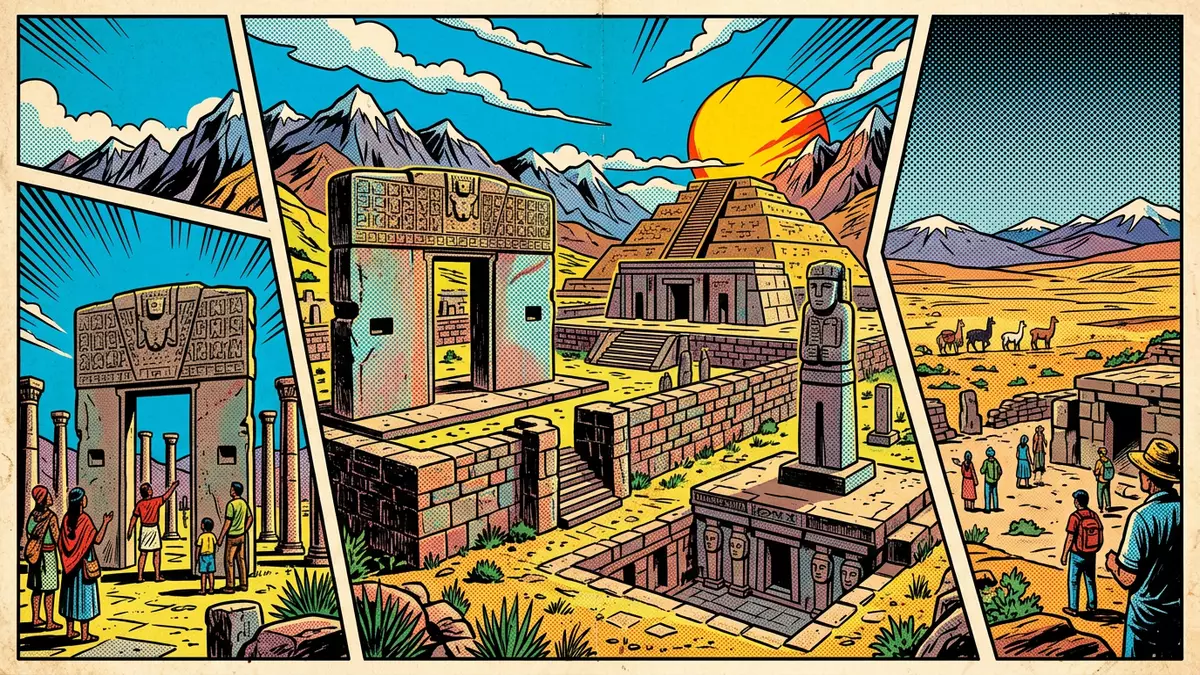
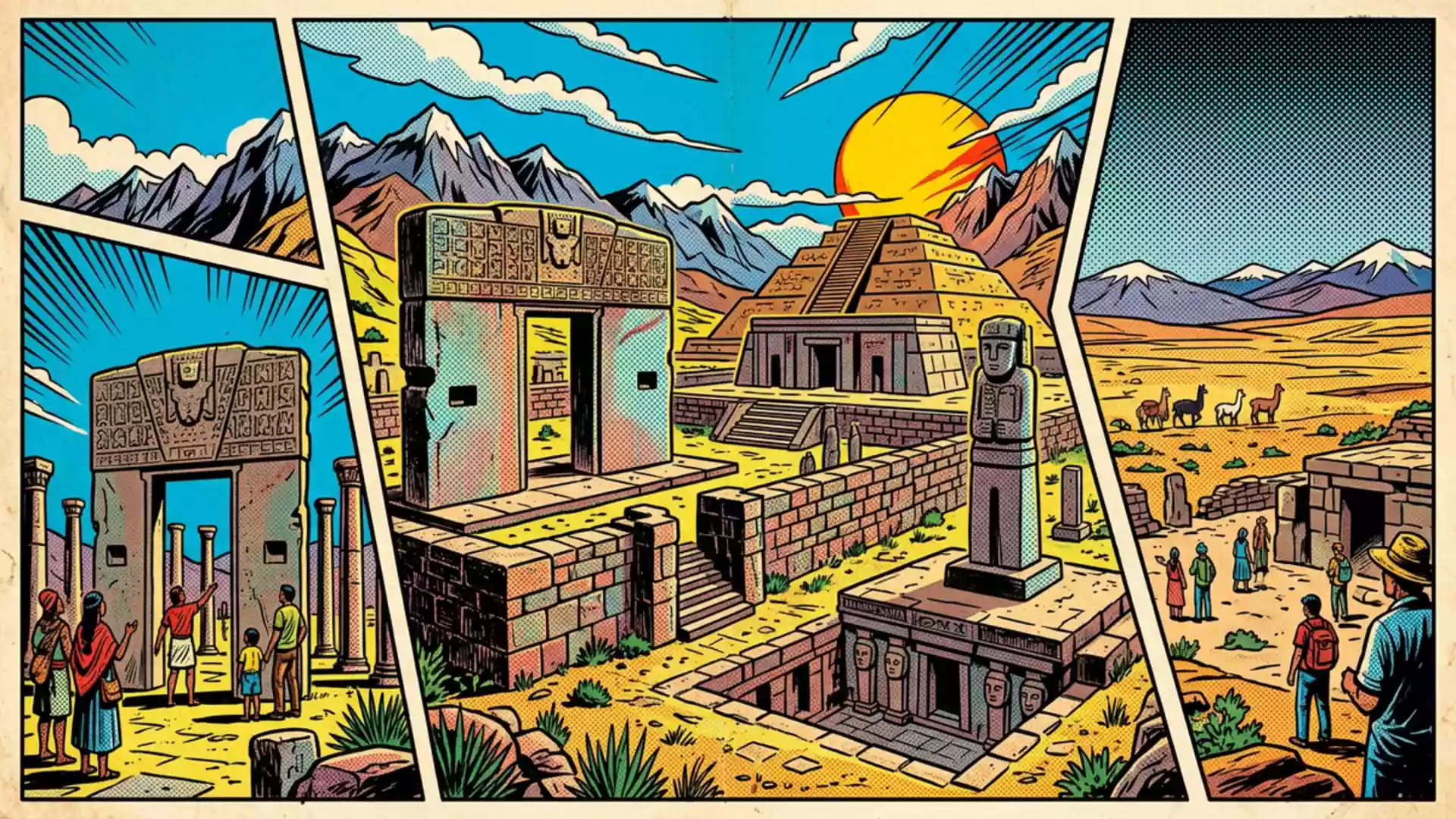
On the Bolivian Altiplano, Tiwanaku sets out an ancient city in stone, where stepped platforms, sunken courts and monoliths still define a pre-Columbian capital against the highland sky. The site lies near Lake Titicaca in the Department of La Paz and formed the ceremonial and political centre of the Tiwanaku culture between about the fifth and ninth centuries AD, a period when its influence reached across large parts of the southern Andes.Spiritual and political centre
Stone platforms on the high Altiplano
Tiwanaku stands at an altitude of around 3,800 m (about 12,500 ft), on the Bolivian Altiplano close to the southern shores of Lake Titicaca, with the monumental core laid out on open highland terrain.Altitude on the Altiplano The ruins lie in the Province of Ingavi, west of La Paz, where the dry plateau and distant mountain ridges form a wide setting around the stone structures.Location west of La Paz
The ceremonial centre brings together stepped platforms, walled enclosures and sunken courts built from large worked blocks, some weighing many tonnes.Megalithic stonework Archaeological surveys describe a planned city whose monumental core covers several hectares, with much of the wider settlement once formed in adobe that has blended into the present-day town.Planned urban layout
A pre-Columbian capital in carved stone
Occupation at Tiwanaku is traced back roughly two millennia, and the city reached a flourishing phase between about AD 500 and 900, when it acted as the capital of a state projecting power across areas of present-day Bolivia, Peru, Chile and Argentina.Apogee between 500 and 900Capital of the Tiwanaku empire Archaeologists estimate that during this period thousands of inhabitants lived in and around the monumental core, making Tiwanaku one of the principal urban centres in the Andean highlands at that time.Pre-Columbian city scale
The site forms an important chapter in Andean cultural history that is distinct from Inca constructions built centuries later.Pre-Inca civilisation In recognition of this significance, the property “Tiwanaku: Spiritual and Political Centre of the Tiwanaku Culture” was inscribed on the UNESCO World Heritage List in 2000 under cultural criteria, highlighting both the state-level organisation it represents and the quality of its monumental architecture.UNESCO World Heritage inscription
Temples, monoliths and sunken courts
Visitors walking through the core of Tiwanaku encounter a sequence of named structures, each built with a distinct form but all aligned within the broader ceremonial plan. The Akapana, a stepped platform sometimes described as a pyramid, rises above the plaza on a broad base of stone-faced terraces, while nearby the Kalasasaya forms a raised rectangular enclosure bordered by upright monoliths and accessed by monumental stairways.Akapana and Kalasasaya
Set slightly apart is the Semi-subterranean Temple, a sunken courtyard whose stone walls carry sculpted heads projecting inwards, with free-standing monoliths positioned within the floor of the space.Semi-subterranean Temple South-west of the main complex lies Pumapunku, a separate platform assembly known for precisely cut stone blocks with interlocking profiles, now scattered across the ground but still showing the care taken in working and joining the andesite and sandstone elements.Pumapunku stonework
Visiting Tiwanaku: what travellers from Western Europe should know
- Tiwanaku lies west of La Paz in the Department of La Paz, near the southern shore of Lake Titicaca, reached by road across the Bolivian Altiplano from the direction of the capital.Location near Lake Titicaca
- The archaeological core is set on exposed highland terrain at about 3,800 m (around 12,500 ft), and moving between the monumental platforms, courtyards and museums involves walking on uneven ground at altitude.High-altitude setting
- Lake Titicaca and the modern town of Tiwanaku lie nearby, so a visit to the ruins can be combined with views of the lake and explorations of the surrounding Altiplano settlements.Proximity to Lake Titicaca
- The official language is Spanish and the currency is the Bolivian boliviano.
- Entry requirements depend on your nationality; UK travellers can check the FCDO travel advice at gov.uk/foreign-travel-advice, Irish travellers the Department of Foreign Affairs at ireland.ie.
Searching for Tiwanaku on social platforms
These links open searches for Tiwanaku on each platform.Frequently asked questions about Tiwanaku
Where is Tiwanaku and how is it situated?
Tiwanaku lies west of La Paz in the Bolivian Department of La Paz, on the Altiplano near the southern shore of Lake Titicaca at high elevation.
What can visitors expect to see at Tiwanaku?
Visitors encounter stepped platforms, walled enclosures, sunken courts and carved monoliths, with named structures such as Akapana, Kalasasaya, the Semi-subterranean Temple and Pumapunku.
What makes Tiwanaku distinctive among Andean archaeological sites?
Tiwanaku combines a planned ceremonial city layout, finely worked megalithic stone architecture and a documented role as capital of a major pre-Columbian highland state.