Tiwanaku and the high plateau of ancient Bolivia
Published on 09/03/2026 at 18:24 | Editorial responsibility: Rafael Müller, Editor-in-Chief AD HOC NEWS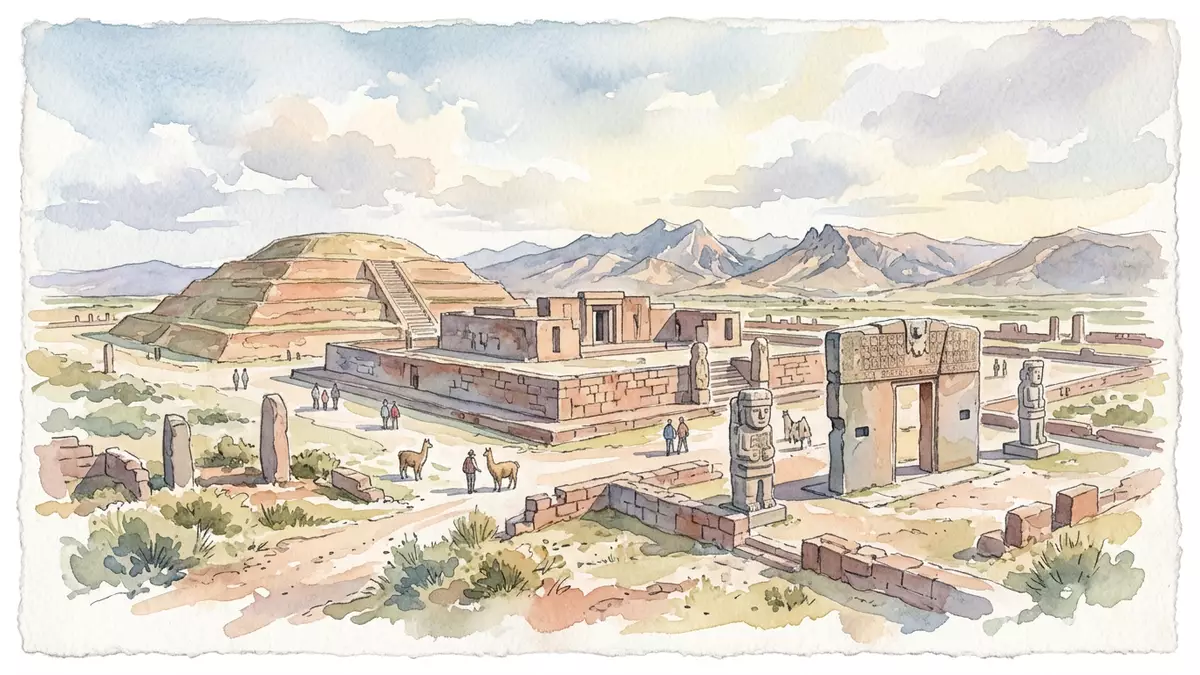
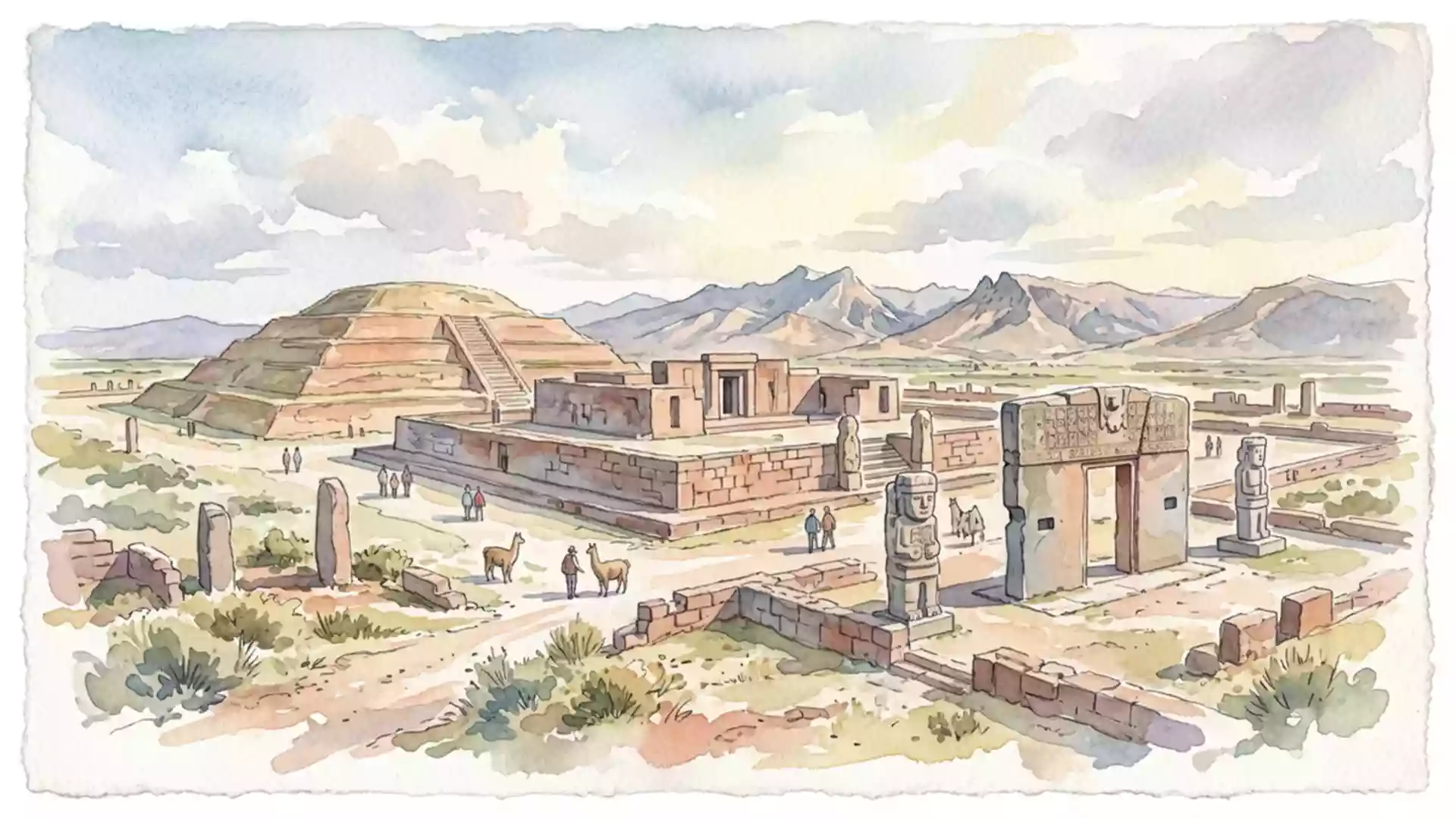
Tiwanaku rises on the Bolivian Altiplano near the southern shores of Lake Titicaca. Its stone monuments belong to a pre-Hispanic centre that reached its apogee between 500 and 900 AD.pre-Hispanic centre
Stone architecture on the Altiplano
The site combines monumental architecture with open ceremonial spaces and carved blocks. The name Tiwanaku is tied to a culture that left a compact, recognisable landscape of platforms, temples and standing figures.carved figures
Among the best-known remains are the Sun Gate and the stepped platforms that survive in the main archaeological core. The setting on the high plateau, close to Lake Titicaca, gives the ruins a broad horizon and a sense of scale that suits their form.
A capital of the Tiwanaku culture
Tiwanaku was the capital of a powerful pre-Hispanic polity whose influence extended across a large part of the southern Andes. The site is one of the formal World Heritage properties of Bolivia, inscribed in 2000 under the title World Heritage Tiwanaku: Spiritual and Political Centre of the Tiwanaku Culture.
The World Heritage listing places it in Province of Ingavi, Department of La Paz, at about 3,850 m. The altitude is part of its identity: this is an Andean archaeological landscape rather than a lowland ruin field.
Traces of a monumental ceremonial centre
The remains include freestanding sculpture, cut-stone walls and large terraces. Their surfaces and alignments give the site a measured, geometric character that distinguishes it from many smaller Andean settlements.large terraces
The best known stone figures belong to a ceremonial vocabulary shared across the wider Tiwanaku world. Together with the platforms and gateways, they preserve the feel of a planned ceremonial centre rather than an isolated monument.
Visiting Tiwanaku: what travellers from Western Europe should know
- The site lies west of La Paz in the Department of La Paz. Road access links the archaeological area with the city and the lakeshore plain.
- The high altitude is the main physical factor on site. The Altiplano setting gives the ruins an exposed, open character.
- The formal heritage area covers the core archaeological remains and their immediate surroundings. The principal monuments are spread across a broad open area.
- Tiwanaku is an archaeological site rather than a single building. The visit centres on stone platforms, gateways, sculpture and wall fragments.
Searching for Tiwanaku on social platforms
These links open searches for Tiwanaku on each platform.
Frequently asked questions about Tiwanaku
Where is Tiwanaku?
Tiwanaku is in western Bolivia, on the Altiplano near Lake Titicaca. It lies in the Department of La Paz, within the Province of Ingavi.
What does a visit involve?
The site presents an archaeological landscape of stone platforms, gateways and sculpture. It is an open-air historic place with monuments spread across a broad area.
What makes Tiwanaku distinctive?
Its importance lies in the scale of its pre-Hispanic remains and its role as a political and ceremonial centre. The stonework and the high-altitude setting give it a strong, recognisable presence.