Tiwanaku and its carved stone monuments
Published on 08/06/2026 at 20:08 | Editorial responsibility: Rafael Müller, Editor-in-Chief AD HOC NEWS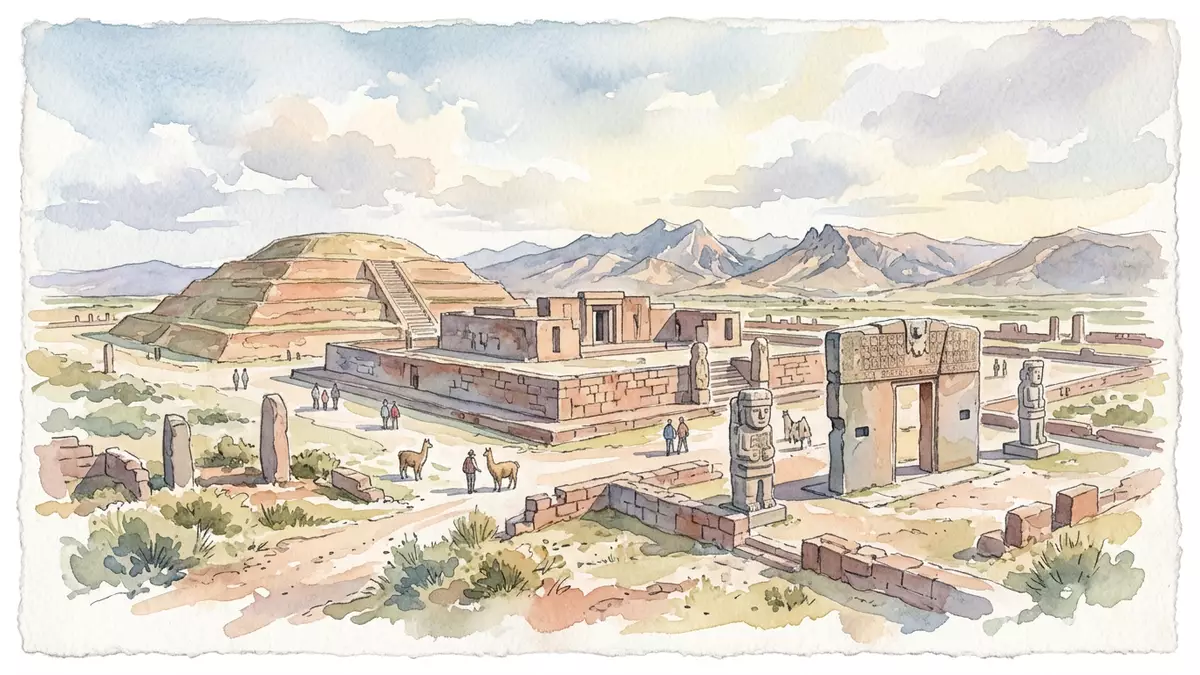
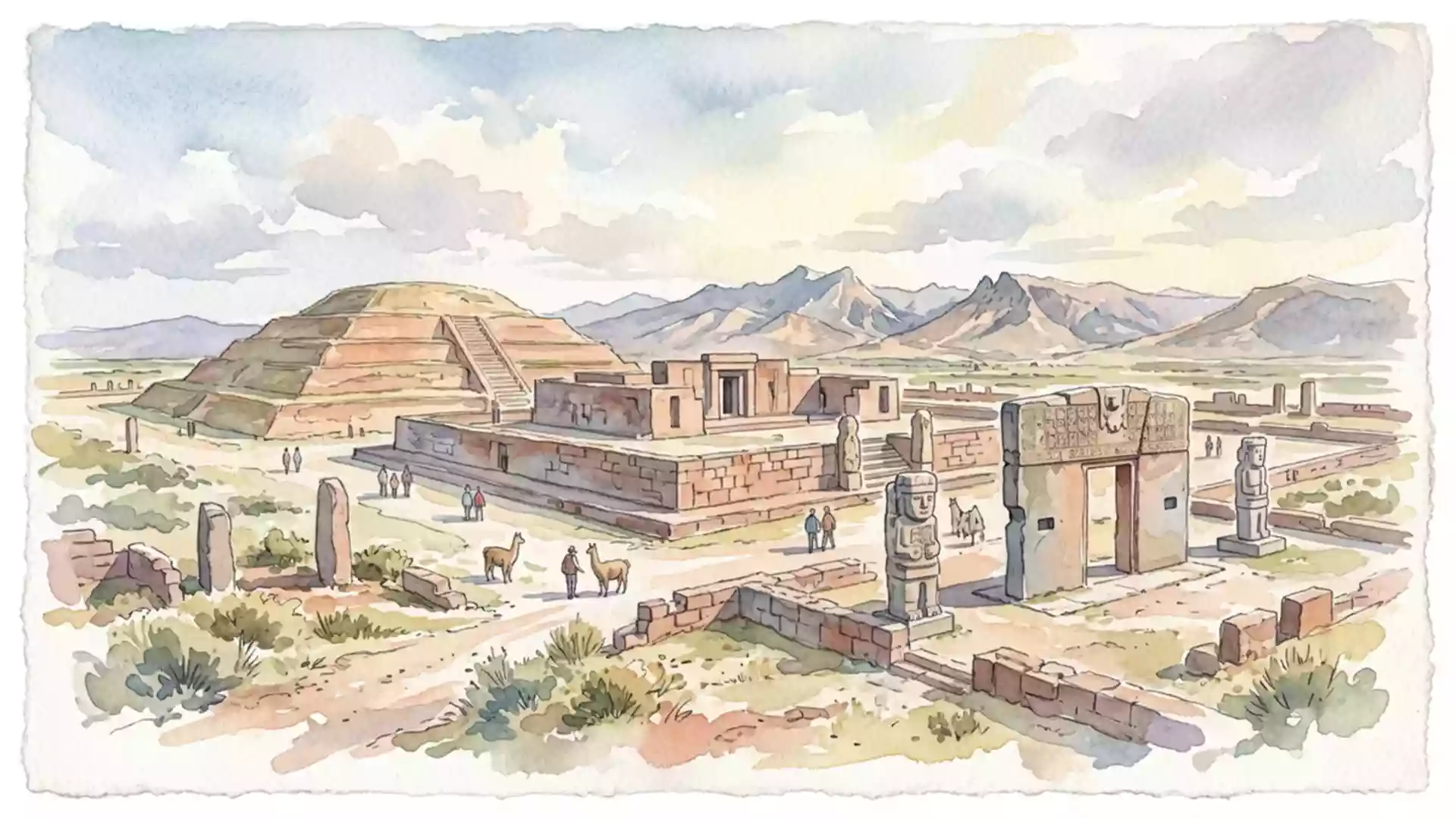
Tiwanaku in Bolivia is an archaeological landscape of dressed stone, monoliths and ceremonial architecture spread across the high plateau near Lake Titicaca. Its monuments belong to the Tiwanaku civilisation, which flourished long before the Inca empire and left a compact but varied stone repertoire.
Stone gateways and standing figures
The best-known structures are the carved gateways and the freestanding monoliths. The Gateway of the Sun is cut from a single block of andesite, with a band of relief figures across its upper section, while the nearby statues show human forms in a severe, upright style.
These works give the place its strongest visual character. Some blocks are small enough to read as sculptural fragments, while others retain a monumental scale that keeps the site from feeling like a collection of ruins alone.
Temples, platforms and engineered masonry
Tiwanaku also includes sunken courts, platforms and walls built from carefully fitted stone. The Kalasasaya complex and the semi-subterranean temple are among the most familiar names linked with the site, and both show the disciplined use of large blocks and recessed spaces.
The masonry ranges from rougher fieldstone structures to finely cut ashlar work. That variation suggests a long building history across different phases of Tiwanaku’s rise, and the surviving fabric remains one of the clearest signs of its urban importance.
An Andean centre before the Inca world
The city reached its height in the first millennium AD and later declined before Spanish arrival in the Andes. Its name survives through the ruins, the surrounding region and the modern town, which keeps the site anchored in a lived landscape rather than an isolated museum setting.
Because the place combines open-air architecture, sculpture and broad horizons, it rewards slow looking. The visitor sees a civic and ceremonial centre in fragments, yet the fragments remain coherent enough to show the ambition of the original settlement.
Visiting Tiwanaku: what travellers from Western Europe should know
- The site lies in western Bolivia, reached from La Paz by road.
- Admission arrangements and opening hours are set by the site's operator and change with the season; the official website is the only binding source.
- The dry season gives clearer light and firmer ground; morning visits usually suit the plateau climate.
- The site sits at high altitude, and much of it is exposed, with uneven ground and stretches to cover on foot.
- Spanish is the usual language in the area, and local payments are often handled in cash.
- Entry requirements depend on your nationality. UK travellers should check the FCDO travel advice at gov.uk/foreign-travel-advice; Irish travellers the Department of Foreign Affairs at ireland.ie; EU and EEA citizens their own national foreign ministry.
Searching for Tiwanaku on social platforms
These links open searches for Tiwanaku on each platform.
Frequently asked questions about Tiwanaku
Where is Tiwanaku?
Tiwanaku is an archaeological site in western Bolivia, near Lake Titicaca and within reach of La Paz by road.
What should a visitor expect?
Expect open-air ruins, carved stone, wide spaces and exposed ground at high altitude. The site reads best at a measured pace.
What makes Tiwanaku distinctive?
Its carved monoliths, monumental gateways and finely fitted masonry give it a strong visual identity. The place also preserves one of the major ceremonial landscapes of the ancient Andes.