
Tivoli turns Copenhagen’s centre into a garden of stages
Published on 09/24/2026 at 08:13 | Editorial responsibility: Rafael Müller, Editor-in-Chief AD HOC NEWS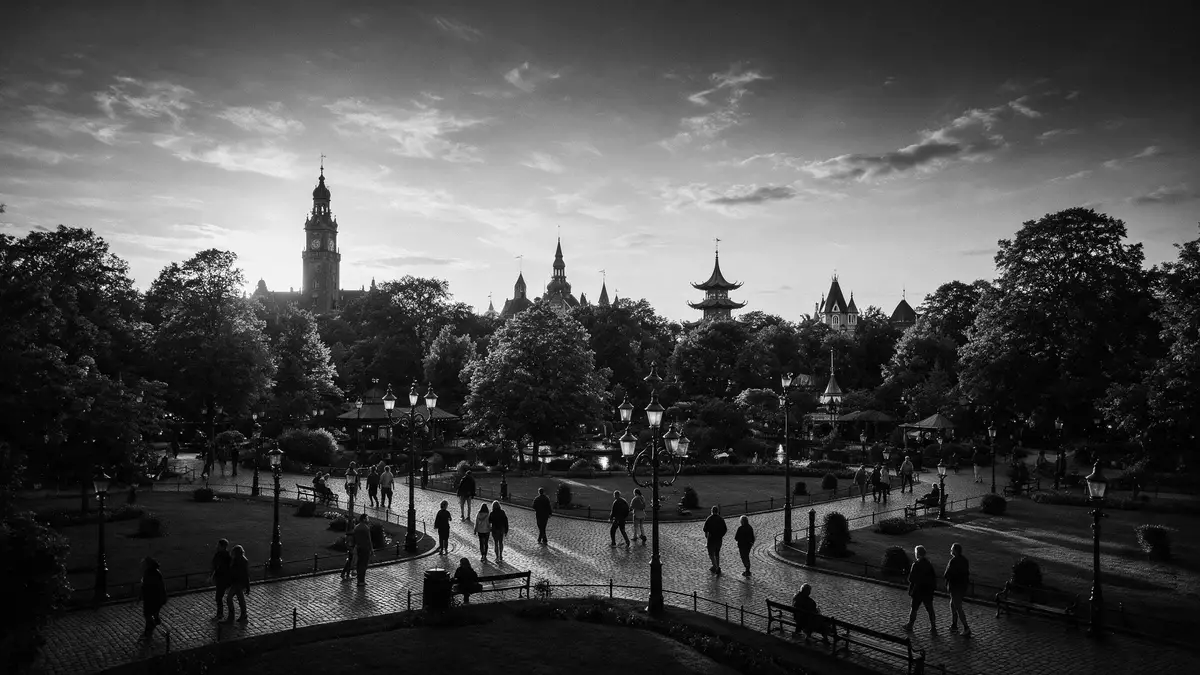
Tivoli is a pleasure garden and amusement park in central Copenhagen, where flower beds, concert spaces, restaurants and rides occupy one enclosed setting. Georg Carstensen opened it on 15 August 1843, creating a place whose visible character still rests on the meeting of cultivated landscape and public entertainment.
Tivoli began as a nineteenth-century pleasure garden
Carstensen was a writer and organiser who received permission from King Christian VIII to establish Tivoli outside Copenhagen’s Vesterport. The park opened during the nineteenth century’s expansion of public leisure, when gardens, music and theatrical entertainments formed a single cultural world.
The first Tivoli occupied ground beside the old city fortifications. A remnant of the former moat became a lake for boating, while paths, planting, pavilions and performance spaces formed the setting. The original name was Tivoli and Vauxhall, linking the Copenhagen garden with European pleasure-garden traditions.
Buildings, music and rides share one landscape
Tivoli does not separate its cultural programme from its gardens. The Pantomime Theatre, concert venues, restaurants and amusement rides stand within the same park, producing a sequence of contrasting spaces rather than a single monumental building.
The Pantomime Theatre is associated with the park’s historic architectural character. Its stage tradition belongs to Tivoli’s nineteenth-century identity, while the Tivoli Concert Hall represents a later chapter in the site’s performance history. The park’s buildings include decorative façades, pavilions and structures connected with dining and entertainment.
Music has been part of Tivoli since its foundation. Hans Christian Lumbye conducted the orchestra during the park’s first decades and composed works connected with its audiences. The association between Tivoli and live performance therefore reaches beyond a single concert venue.
From old fortifications to Copenhagen’s cultural centre
Tivoli occupies a prominent position beside Copenhagen Central Station and Vesterbrogade. Its setting places a nineteenth-century pleasure garden directly within the capital’s urban fabric, with railway platforms and city streets close to the park’s planted paths.
The gardens combine mature planting, water, decorative lighting and buildings in several architectural idioms. The rides add movement and mechanical scale, while the older theatres and concert spaces preserve the park’s connection with music and stage entertainment.
Bombing in 1944 destroyed several Tivoli buildings, including the old concert hall. A new concert hall opened in 1956, adding a post-war layer to a site whose history includes nineteenth-century gardens, twentieth-century reconstruction and continuing cultural use.
Tivoli’s identity lies in this combination. It is a garden with amusement rides, a performance venue with restaurants, and an urban park shaped by the history of Copenhagen’s public entertainment.
Visiting Tivoli: what travellers from Western Europe should know
- Tivoli is beside Copenhagen Central Station on Vesterbrogade, in the city centre. Trains, buses and the Metro connect the surrounding central districts.
- The grounds combine planted paths, paved routes, bridges and areas beside a lake. Rides, theatres, restaurants and gardens are distributed across the enclosed park.
- The official language is Danish and the currency is the Danish krone.
Searching for Tivoli on social platforms
These links open searches for Tivoli on each platform.Frequently asked questions about Tivoli
Where is Tivoli?
Tivoli is in central Copenhagen beside Copenhagen Central Station and Vesterbrogade. The park stands within the capital’s urban centre, close to rail and city transport.
What can visitors find inside Tivoli?
The grounds contain gardens, a lake, restaurants, concert spaces, theatres and amusement rides. These elements share one enclosed landscape rather than separate attractions across the city.
What makes Tivoli distinctive?
Its distinctive character comes from the combination of a nineteenth-century pleasure garden and a functioning amusement park. Georg Carstensen opened Tivoli in 1843, and music remains part of its cultural identity.


