
Tivoli in Kopenhagen: a nineteenth-century garden of lights
Published on 09/15/2026 at 21:14 | Editorial responsibility: Rafael Müller, Editor-in-Chief AD HOC NEWS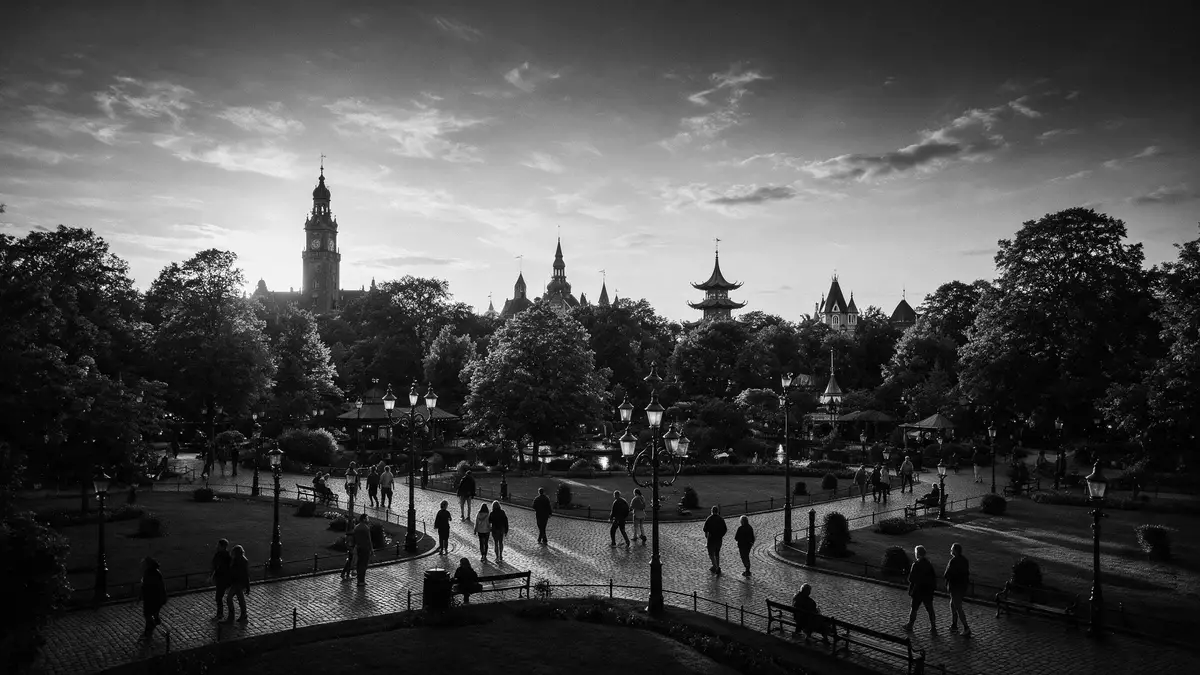
Tivoli in Kopenhagen is a compact nineteenth-century pleasure garden where amusements, theatres and flower beds share the same enclosed space in the middle of Denmark’s capital. Opened in 1843 under the direction of Georg Carstensen, it has grown into a layered landscape of rides, performance venues and ornate gateways that still trace their roots to the early decades of industrial-era Copenhagen.
A pleasure garden born in 1843
Tivoli was founded by Georg Carstensen after he secured permission from King Christian VIII to establish an amusement garden on ground just outside the old city ramparts of Copenhagen in the early nineteenth century. The park opened to the public in August 1843 as a pleasure garden combining promenades, entertainments and planting, a model that reflected wider European traditions of landscaped entertainment grounds in cities such as Paris and London.founded in 1843 under Georg Carstensen From its beginnings the garden sat on land just beyond the former Vesterport, the western gate of the historic city, using parts of the old glacis and moat as a lake and landscaped banks.opened in 1843 on the southern ramparts
The name Tivoli echoed earlier European pleasure grounds, including a Paris garden called Jardin de Tivoli and the Vauxhall Gardens in London, but the Copenhagen park developed its own blend of Danish and exotic motifs as new buildings and gardens were added. During its first decades Tivoli gained additional theatres, concert facilities and planted areas, establishing it as a cultural meeting point for residents of Copenhagen as much as an amusement venue.
Gardens, theatres and a wooden roller coaster
Walking through Tivoli reveals how entertainment and horticulture have been woven together since the nineteenth century, with flower beds, lawns and trees punctuated by rides and performance spaces. Among the oldest surviving structures in the garden are the main entrance portal and the Pantomime Theatre, dating from the 1870s, which frame the park with ornate architecture and a dedicated stage for pantomime performances.the head-entry portal and Pantomime Theatre from 1874 The Pantomime Theatre’s exotic styling and mechanical curtain reflect a taste for theatre buildings that combined spectacle with technical ingenuity in the late nineteenth century.
As amusement technology developed, Tivoli introduced mechanical rides alongside its gardens and theatres. A notable example is the wooden roller coaster known as Rutschebanen, which began operating in the early twentieth century and continues to run with its distinctive timber construction.one of the world’s oldest wooden roller coasters, operating since 1914 The combination of a historic wooden coaster, classic carousels and more recent high-rise rides gives the park a visible timeline of changing amusement engineering built into its skyline above the trees and pavilions.
A city-centre park shaped by resilience
Tivoli’s setting in the centre of Kopenhagen, opposite the main railway station on Vesterbrogade, makes it unusual among amusement parks in that visitors step almost directly from city streets and trains into a walled garden of lights and attractions.a nineteenth-century pleasure garden opposite Central Station Inside, a lake formed from a remnant of the old moat supports boating and reflects illuminated facades, while paths thread between restaurants, stages and planted areas, compressing a wide variety of uses into a relatively modest footprint.
The twentieth century brought damage as well as expansion: bombing during the Second World War destroyed buildings including an earlier concert hall, but Tivoli rebuilt, opening a new hall in the 1950s and continuing to add rides and venues.bombing in 1944 destroyed many park buildings; a new concert hall opened in 1956 Over time, its mix of planted gardens, architectural set pieces and rides influenced later amusement parks well beyond Denmark, demonstrating how a pleasure garden first laid out in the nineteenth century could adapt to modern entertainment without losing the character of its original design.
Visiting Tivoli: what travellers from Western Europe should know
- Tivoli stands in central Kopenhagen, immediately opposite the city’s main railway station on Vesterbrogade, and is reached directly from the surrounding streets and public transport.
- Within the garden, paths wind between buildings, rides and flower beds, and some attractions and viewpoints are accessed via staircases and elevated walkways rather than level ground.
- Tivoli lies in Denmark, where the official language is Danish and the currency is the Danish krone.
- Entry requirements depend on your nationality; UK travellers can check the FCDO travel advice at gov.uk/foreign-travel-advice, Irish travellers the Department of Foreign Affairs at ireland.ie.
Searching for Tivoli on social platforms
These links open searches for Tivoli on each platform.
Frequently asked questions about Tivoli
Where is Tivoli located in Kopenhagen?
Tivoli stands on Vesterbrogade in central Kopenhagen, directly opposite the city’s main railway station and alongside the former line of the old ramparts.
What can visitors expect inside Tivoli?
Visitors encounter a combination of rides, theatres, concert spaces, restaurants, planted gardens and a lake, all enclosed within a single garden that has evolved since the nineteenth century.
What makes Tivoli distinctive among amusement parks?
Tivoli is distinctive for its nineteenth-century origin under Georg Carstensen, its location in the middle of Kopenhagen and its blend of historic gardens, exotic architecture and long-running attractions such as the wooden Rutschebanen coaster.


