
Tivoli in Copenhagen where gardens and amusement share one place
Published on 09/23/2026 at 23:12 | Editorial responsibility: Rafael Müller, Editor-in-Chief AD HOC NEWS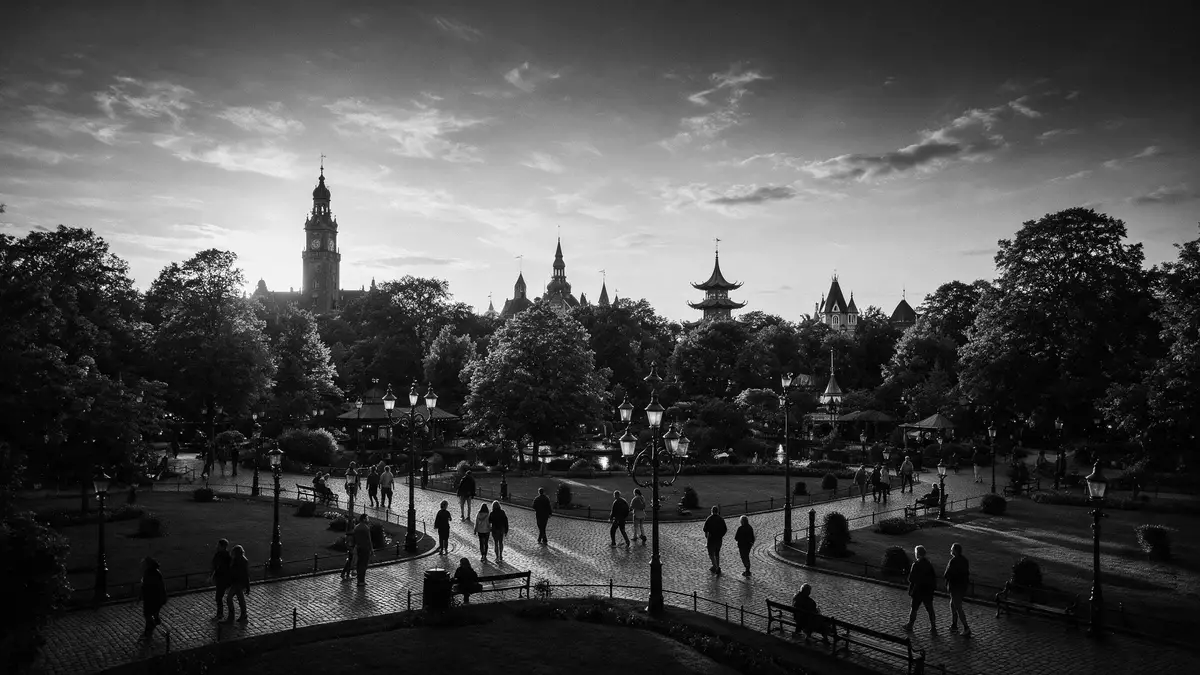
Tivoli is a Copenhagen amusement park and pleasure garden where flowerbeds, concert spaces, theatres and rides occupy one historic setting. Georg Carstensen opened it on 15 August 1843, creating a place whose identity has remained tied to both gardens and entertainment.
Tivoli begins with Georg Carstensen in 1843
Carstensen was a writer and architect who received permission from King Christian VIII to establish Tivoli outside Vesterport. The park opened on the southern ramparts of Copenhagen, close to the old city and beside what is now Copenhagen Central Station.
The opening date, 15 August 1843, places Tivoli within the nineteenth-century European tradition of pleasure gardens. Its programme joined ornamental planting with restaurants, music, theatre and amusements. Tivoli’s opening in 1843 remains the defining point in its history.
Gardens, water and buildings in Copenhagen
Tivoli is arranged as a park rather than as a collection of rides alone. Paths connect planting, pavilions, restaurants, performance venues and amusement attractions, while water forms part of the landscape. A remnant of the former moat became a lake for boating.
The buildings add several historical layers to the grounds. The Pantomime Theatre belongs to Tivoli’s nineteenth-century architectural character, while Nimb and the Tivoli Concert Hall represent later additions to the park’s cultural landscape. The result is a mixture of decorative architecture, gardens and entertainment spaces within central Copenhagen.
Music and amusement as a cultural tradition
Music has been part of Tivoli since its opening. H.C. Lumbye conducted the orchestra during the park’s first three decades, performing Viennese dance music alongside his own compositions. His association gives Tivoli a place in Denmark’s musical history as well as its leisure culture.
Rides remain visible among the gardens and performance buildings. The wooden roller coaster Rutschebanen is one of the park’s established attractions, while concerts and theatre continue the older connection between amusement and cultural programming. Tivoli’s musical history reaches back to Lumbye’s orchestra and the park’s earliest decades.
Tivoli’s setting also records the changing city around it. The gardens began beyond Copenhagen’s former West Gate, while the park is now part of the central urban fabric. The relationship between historic amusement ground and city centre is visible in the surrounding streets, station buildings and older park structures.
Visiting Tivoli: what travellers from Western Europe should know
- Tivoli lies in central Copenhagen beside Copenhagen Central Station, with entrances on Vesterbrogade and Bernstorffsgade.
- The grounds combine planted areas, paved paths, buildings, lake scenery and amusement rides, so a visit involves walking between separate parts of the park.
- The official language is Danish and the currency is the Danish krone.
- Nearby landmarks include Copenhagen Central Station, Vesterbro and the National Museum of Denmark.
Searching for Tivoli on social platforms
These links open searches for Tivoli on each platform.Frequently asked questions about Tivoli
Where is Tivoli?
Tivoli is in central Copenhagen, beside Copenhagen Central Station and close to Vesterbro. Its historic grounds occupy the area associated with the former Vesterport ramparts.
What can visitors expect at Tivoli?
The park brings together gardens, restaurants, music, theatre, water features and amusement rides. Its spaces range from planted paths and pavilions to concert venues and roller coasters.
What makes Tivoli distinctive?
Tivoli combines a nineteenth-century pleasure-garden tradition with an operating amusement park. Georg Carstensen founded it in 1843, and its identity remains connected to both horticulture and performance.


