
Tivoli in Copenhagen: a nineteenth?century garden of lights
Published on 08/26/2026 at 06:45 | Editorial responsibility: Rafael Müller, Editor-in-Chief AD HOC NEWS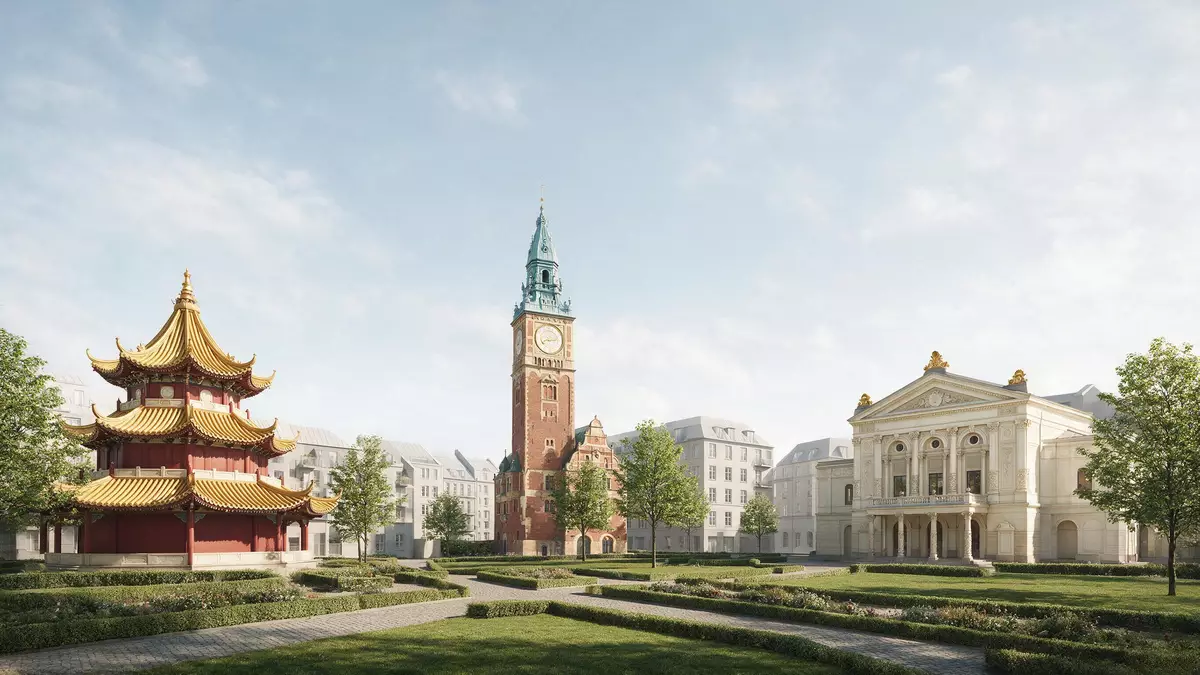
Tivoli in Copenhagen is a rare combination of nineteenth?century pleasure garden and working amusement park set beside the city’s central railway station. Opened in 1843 as Tivoli Gardens, it has grown into a compact world of rides, theatres, restaurants and flower beds framed by ornate gateways and towers.
A nineteenth?century garden in the centre of Copenhagen
Tivoli opened its gates on 15 August 1843 on ground just outside the old city ramparts of Copenhagen. The project was driven by Georg Carstensen, who received permission from King Christian VIII to establish a pleasure garden that mixed promenades, entertainments and planting in what was then a fringe district of the Danish capital.Opened in 1843 under Georg Carstensen The park’s name drew on earlier European precedents, including a Paris garden called Jardin de Tivoli, but the Copenhagen version developed its own blend of Danish and exotic motifs.
From the beginning, Tivoli combined landscaped paths and flower beds with cafés, pavilions and a concert hall, creating a setting that felt both urban and slightly theatrical. A remnant of the old city moat formed a lake within the grounds, and this sheet of water still provides a reflective centre, edged by terraces and small boats.The lake created from the former moat The scale remains intimate; rather than spreading into the suburbs, Tivoli is woven into the fabric of central Copenhagen, with the main entrance facing Vesterbrogade and another gate aligned with Copenhagen Central Station.Entrances on Vesterbrogade and Bernstorffsgade
Rides, theatres and gardens in one compact park
Tivoli is best known for the way flower beds, lawns and trees sit alongside roller coasters, stages and restaurants inside one fenced park. The gardens include formal planting, seasonal flower displays and quiet corners by the water, while the amusement side ranges from gentle carousels to faster rides that rise above the rooftops.Gardens, rides and dining in Tivoli Among the attractions is a wooden roller coaster dating from 1914, known as Rutschebanen, which is regarded as one of the oldest operating rides of its kind and continues to run with a visible structure of timber supports.The 1914 wooden coaster Rutschebanen
The theatre tradition is similarly long?standing. A concert hall operated from the early years, with composer H. C. Lumbye conducting the orchestra for around three decades in the mid?nineteenth century and writing dance music that became closely associated with the park.H. C. Lumbye’s early concerts at Tivoli Later, a pantomime theatre in a stylised Chinese idiom added another stage, and the combination of music, performance and mechanical rides helped shape the character that visitors encounter between the flower beds and lanterns.
Light, façades and a resilient landmark
By the end of the nineteenth century Tivoli had acquired the monumental main entrance that still forms its public face on Vesterbrogade, with a central arch flanked by pavilions and ornamented with sculptural details.The current main entrance from 1890 Behind this façade, the park is threaded with pathways lit by thousands of lamps and lanterns, so that illumination becomes as characteristic as the planting or the rides. After dark, façades, towers and the lake itself are outlined in light, turning the compact site into a glowing enclave within the city grid.Tivoli Gardens as an illuminated amusement park
Tivoli has also lived through some of Denmark’s more turbulent moments. During the Second World War, sabotage attacks damaged buildings within the grounds, including the original concert hall, which was later replaced by a new structure in 1956 and substantially remodelled in 2005.Wartime damage and the 1956 concert hall Yet the basic idea of a pleasure garden with music, mechanical rides and carefully tended planting endured, and the park continued to add attractions through the twentieth century, from bumper cars and carousels to more recent steel coasters rising above the trees.
Visiting Tivoli: what travellers from Western Europe should know
- Tivoli stands in central Copenhagen opposite Copenhagen Central Station, with main entrances on Vesterbrogade and Bernstorffsgade, so it fits easily into a city visit.
- The grounds are compact but layered, with paths that rise and dip, staircases at some rides and bridges over the lake, so a visit involves frequent short climbs on foot.
- The park includes open garden areas, sheltered arcades and indoor halls, and the proximity of the lake means some walkways can feel exposed in wet or windy weather.
- Tivoli is in Denmark, where the official language is Danish and the currency is the Danish krone.
Searching for Tivoli on social platforms
These links open searches for Tivoli on each platform.
Frequently asked questions about Tivoli
Where is Tivoli in Copenhagen?
Tivoli stands in central Copenhagen, Denmark, beside Copenhagen Central Station, with its main entrance facing Vesterbrogade.
What can visitors expect inside Tivoli?
Visitors find flower gardens, a lake, theatres, concert venues, restaurants and a mix of classic and modern rides within a single enclosed park.
What makes Tivoli distinctive among amusement parks?
Tivoli combines an 1843 pleasure garden layout, historic architecture and long?running attractions such as the 1914 wooden roller coaster Rutschebanen.


