
Tivoli and the layered garden park of Kopenhagen
Published on 09/21/2026 at 07:21 | Editorial responsibility: Rafael Müller, Editor-in-Chief AD HOC NEWS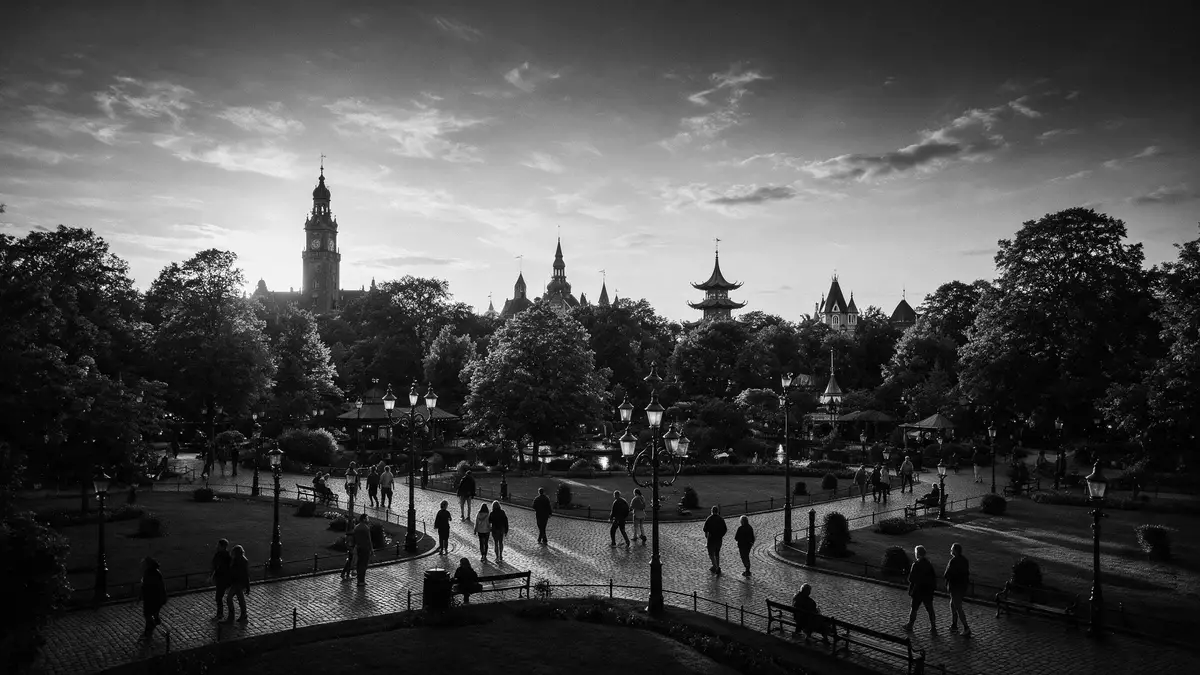
Tivoli in Kopenhagen is a pleasure garden and amusement park built around a compact mix of rides, pavilions and planted spaces. Founded in 1843 by Georg Carstensen, it remains tied to the city centre and to the long history of Copenhagen’s fortifications.
Tivoli’s 1843 garden park in Kopenhagen
Georg Carstensen received royal permission to open Tivoli, and the park opened on 15 August 1843. The name first appeared as Tivoli & Vauxhall, linking Copenhagen to European garden entertainment and the Parisian Tivoli that inspired it.1843 origin Georg Carstensen
The park’s identity rests on a layered mix of gardens, performance spaces and fairground attractions. H.C. Lumbye led the music for the first decades, and Hans Christian Andersen is among the writers linked with the gardens through visits and inspiration.H.C. Lumbye
Historic structures and changing layers
Several of Tivoli’s best-known structures belong to the nineteenth century, including the Pantomime Theatre from 1874. The theatre is the oldest standing building in the park, and its stage setting adds a strong visual counterpoint to the surrounding gardens.Pantomime Theatre
Tivoli Lake reflects another layer of the site’s history. It occupies part of the former moat line after the Copenhagen fortifications were removed, and it remains one of the park’s clearest landscape features.Tivoli Lake
The park’s buildings, music and atmosphere
The park combines Chinese, romantic and fairground elements in a single urban setting. Its buildings include the main entrance ensemble, the Japanese Pagoda and restaurant pavilions set around the lake and planted areas.
That mixture gives Tivoli a dense visual rhythm. Lanterns, façades, trees and rides sit close together, and the place reads as a garden with architecture rather than an open fairground.
Visiting Tivoli: what travellers from Western Europe should know
- Location and getting there: Tivoli lies by the centre of Kopenhagen, close to Central Station and Town Hall Square.
- What the terrain demands: the park is largely level, with paths around the lake, planted beds and built structures close together.
- The official language is Danish and the currency is the Danish krone.
- Entry requirements depend on your nationality; UK travellers can check the FCDO travel advice at gov.uk/foreign-travel-advice, Irish travellers the Department of Foreign Affairs at ireland.ie.
Searching for Tivoli on social platforms
These links open searches for Tivoli on each platform.
Frequently asked questions about Tivoli
Where is Tivoli?
Tivoli stands in central Kopenhagen, beside the main station and close to Town Hall Square.
What should visitors expect?
The place combines a garden setting with rides, pavilions, music and promenade areas. The result is a compact urban landscape rather than a single monument.
What makes Tivoli distinctive?
Its 1843 founding, Georg Carstensen’s role and the surviving nineteenth-century structures give it clear historical depth. The mixture of gardens, performance and amusement remains its defining feature.


