
Tivoli and the garden park beside Kopenhagen station
Published on 09/14/2026 at 16:59 | Editorial responsibility: Rafael Müller, Editor-in-Chief AD HOC NEWS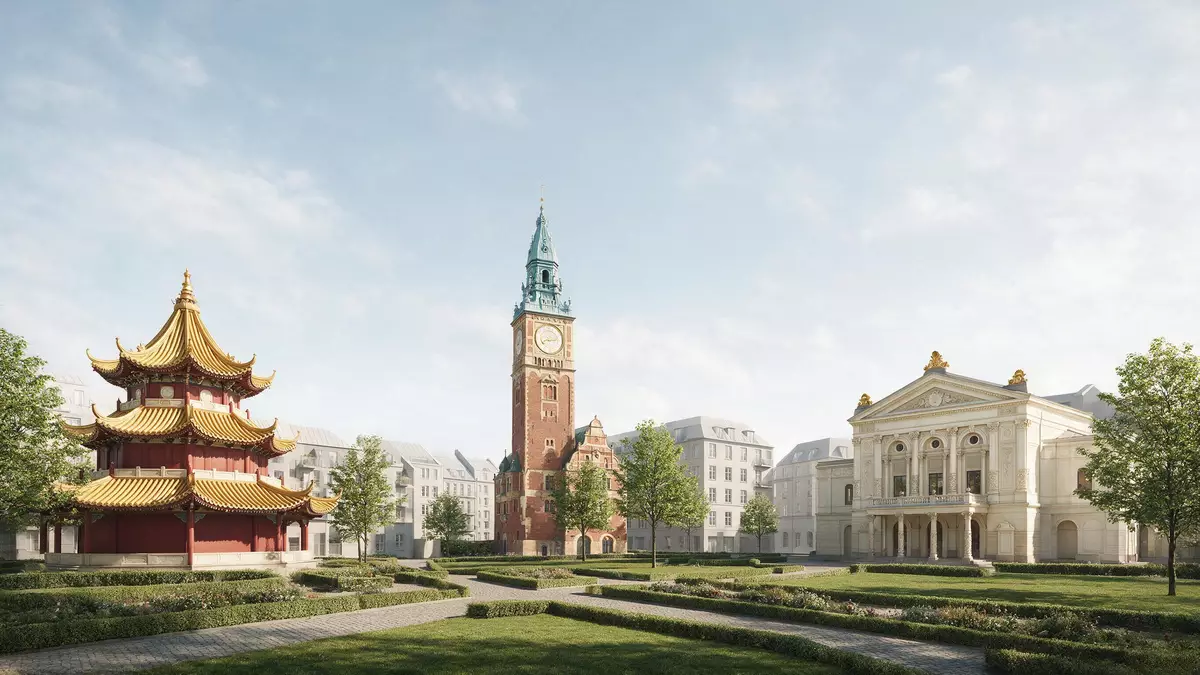
Tivoli in Kopenhagen is a pleasure garden and amusement park founded by Georg Carstensen in 1843. Its setting beside Copenhagen Central Station makes the site feel tightly woven into the city, yet its gardens, stages and rides keep their own character.
Georg Carstensen’s 1843 pleasure garden
The park opened on 15 August 1843, after Carstensen received royal permission from Christian VIII. Its early mix of flower beds, music, restaurants and mechanical amusements still shapes the place today.15 August 1843
The name Tivoli points back through European leisure culture to Tivoli near Rome, and the park first used the longer form Tivoli & Vauxhall. That older title linked it with the pleasure-garden tradition that also informed sites in Paris and London.Georg Carstensen
Gardens, stages and illuminated evenings
One of Tivoli’s enduring features is the way planted space sits beside performance space. The Pantomime Theatre dates from 1874, and its Chinese-style frontage remains one of the park’s most recognisable buildings.The Pantomime Theatre
Hans Christian Lumbye served as musical director from 1843 to 1872, which gives the park an unusually strong musical identity for a leisure garden. The Concert Hall and the open-air areas keep that connection visible, while the lake and the lamp-lit paths add a calmer layer to the park’s composition.Hans Christian Lumbye
Rides, railway edges and old wooden motion
Tivoli also remains a working amusement park, and that side of it is anchored by the wooden Rutschebanen, which opened in 1914. The coaster is part of the park’s long habit of mixing gardens with motion, noise and mechanical speed.
The park sits in central Copenhagen, next to the Central Station and close to the city centre. That position keeps Tivoli easy to place on the map, but its internal layout still reads as a separate landscape of paths, pavilions and rides.Copenhagen Central StationRutschebanen
Visiting Tivoli: what travellers from Western Europe should know
- The park lies in central Kopenhagen, beside Copenhagen Central Station and near the city’s main transport routes.
- Much of the ground is level, but the site combines paths, rides, pavilions and garden sections, so the layout changes from one area to another.
- The official language is Danish and the currency is the Danish krone.
- The Chinese-style Pantomime Theatre and the wooden Rutschebanen give the park two clear historical points of reference.
Searching for Tivoli on social platforms
These links open searches for Tivoli on each platform.
Frequently asked questions about Tivoli
Where is Tivoli?
Tivoli is in central Kopenhagen, in Denmark, beside the city’s main station.
What does a visit involve?
The park combines gardens, rides and performance spaces within a compact urban setting. Its character comes from that mixture rather than from any single building.
What makes Tivoli distinctive?
The combination of an 1843 foundation, the Pantomime Theatre, the wooden Rutschebanen and the garden setting gives Tivoli a layered identity that remains easy to read on site.


