Titanic Belfast and the shape of a shipyard story
Published on 09/03/2026 at 15:52 | Editorial responsibility: Rafael Müller, Editor-in-Chief AD HOC NEWS
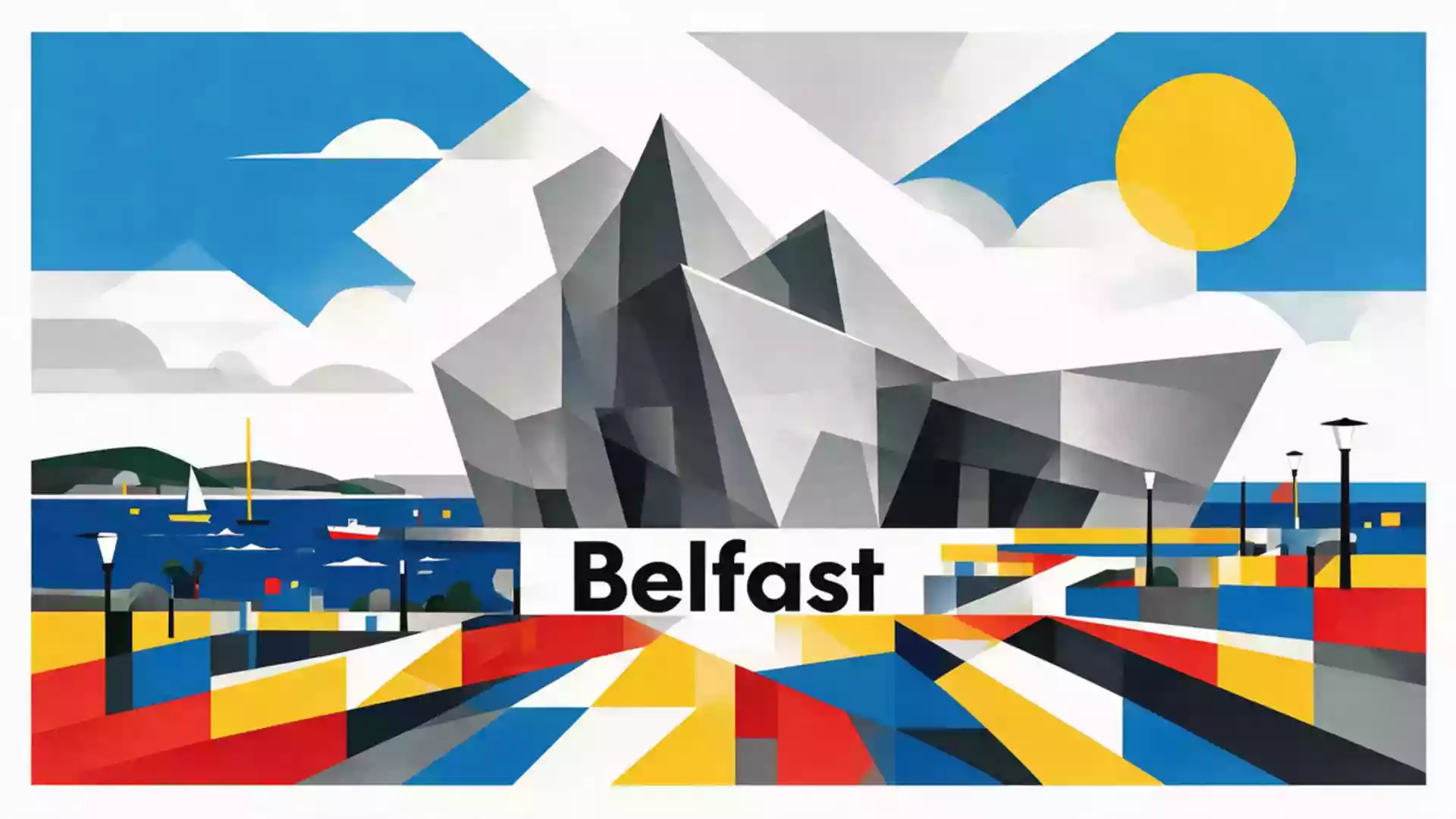
Titanic Belfast is a striking visitor attraction in Belfast’s Titanic Quarter, its multi-faceted metal-clad form echoing the prows that once dominated the Harland & Wolff shipyard skyline.
A contemporary monument on historic ground
The building stands on Queen’s Island, on the former Harland & Wolff shipyard site where RMS Titanic was constructed in the early twentieth century, surrounded by the preserved slipways and graving dock that served the ship.former Harland & Wolff shipyard site The location places the attraction within Belfast’s wider waterfront regeneration area known as Titanic Quarter, a district that brings together historic maritime structures, new housing and leisure developments.Titanic Quarter waterfront regeneration
Construction of Titanic Belfast began in May 2009, and the attraction opened to visitors on 31 March 2012 as a permanent monument to Belfast’s maritime heritage and to the ship built here that sank during its maiden voyage in April 1912.opened on 31 March 2012 The structure rises to six storeys above the ground and contains extensive exhibition floors alongside education spaces, banqueting facilities and an underground car park, all arranged around a central circulation core.six-storey building with exhibition floors
Architecture shaped by ship imagery
The architectural design of Titanic Belfast was developed by CivicArts and Todd Architects, combining a complex geometric envelope with a compact plan that fits between the original slipways.CivicArts and Todd Architects The outer walls are formed from sharply angled planes clad in metallic panels, producing a faceted surface that catches light in different ways as the day progresses. From some viewpoints the massing recalls the pointed bows of four ships rising from a dry dock, while from others it reads as a sculptural volume set against the flat expanse of the surrounding quays.
Inside, the building’s six levels stack a series of galleries, circulation routes and vantage points over the historic industrial landscape outside. Large internal volumes are contrasted with more enclosed sections where visitors move through exhibition environments, while generous openings frame views towards features such as the Harland & Wolff drawing offices and the nearby Hamilton Graving Dock.drawing offices and Hamilton Graving Dock The building’s position beside the preserved slipways anchors its contemporary architecture in the wider pattern of the shipyard structures, so that a visit combines interior interpretation with direct sightlines to the place where ocean liners were launched.
Following the story of RMS Titanic inside the galleries
At the heart of Titanic Belfast is a permanent exhibition that traces the story of RMS Titanic from Belfast’s boom years through construction and launch to the sinking in April 1912, and onwards to the ship’s subsequent place in global history.story of RMS Titanic and boomtown Belfast The galleries also address the ship’s sister vessels Olympic and Britannic, giving a wider picture of early twentieth-century transatlantic liner travel.stories of Olympic and Britannic Visitors move through a sequence of spaces that combine large-scale reconstructions, interpretive displays and multimedia elements, with sections dedicated to the shipyard, the design offices and the launch.
The exhibition extends beyond the moment of the collision and sinking to cover inquiries, the discovery of the wreck and the way Titanic has been represented in film and literature. Alongside the main galleries, tickets commonly include access to the SS Nomadic, the restored White Star Line tender moored in Hamilton Graving Dock, which offers a complementary experience on board an original vessel associated with Titanic’s passenger operations.SS Nomadic tender in Hamilton Graving Dock Between the exhibition floors and the preserved dock areas outside, the attraction connects documented maritime history with the physical infrastructure that supported transatlantic travel from Belfast.
Visiting Titanic Belfast: what travellers from Western Europe should know
- Titanic Belfast stands on Queen’s Island in Belfast’s Titanic Quarter, east of the city centre, reached by local buses and roads serving the waterfront district.
- The approach passes former shipyard land and preserved slipways, and movement inside the building involves several floors connected by lifts and staircases.
- The Harland & Wolff drawing offices, Hamilton Graving Dock and the SS Nomadic are located within walking distance, forming a compact cluster of maritime heritage sites around the attraction.
- The official language is English and the currency is the pound sterling.
Searching for Titanic Belfast on social platforms
These links open searches for Titanic Belfast on each platform.
Frequently asked questions about Titanic Belfast
Where is Titanic Belfast located within Belfast?
It is situated on Queen’s Island in the Titanic Quarter district, east of Belfast city centre, on the historic Harland & Wolff shipyard site.
What can visitors expect inside Titanic Belfast?
Visitors encounter multi-level galleries combining reconstructions, displays and multimedia that follow the story of RMS Titanic, alongside access to the restored tender SS Nomadic.
What makes Titanic Belfast distinctive among maritime attractions?
Its distinctive faceted metal-clad architecture stands directly beside preserved shipyard slipways and graving dock, tying contemporary exhibition spaces to the original industrial landscape.