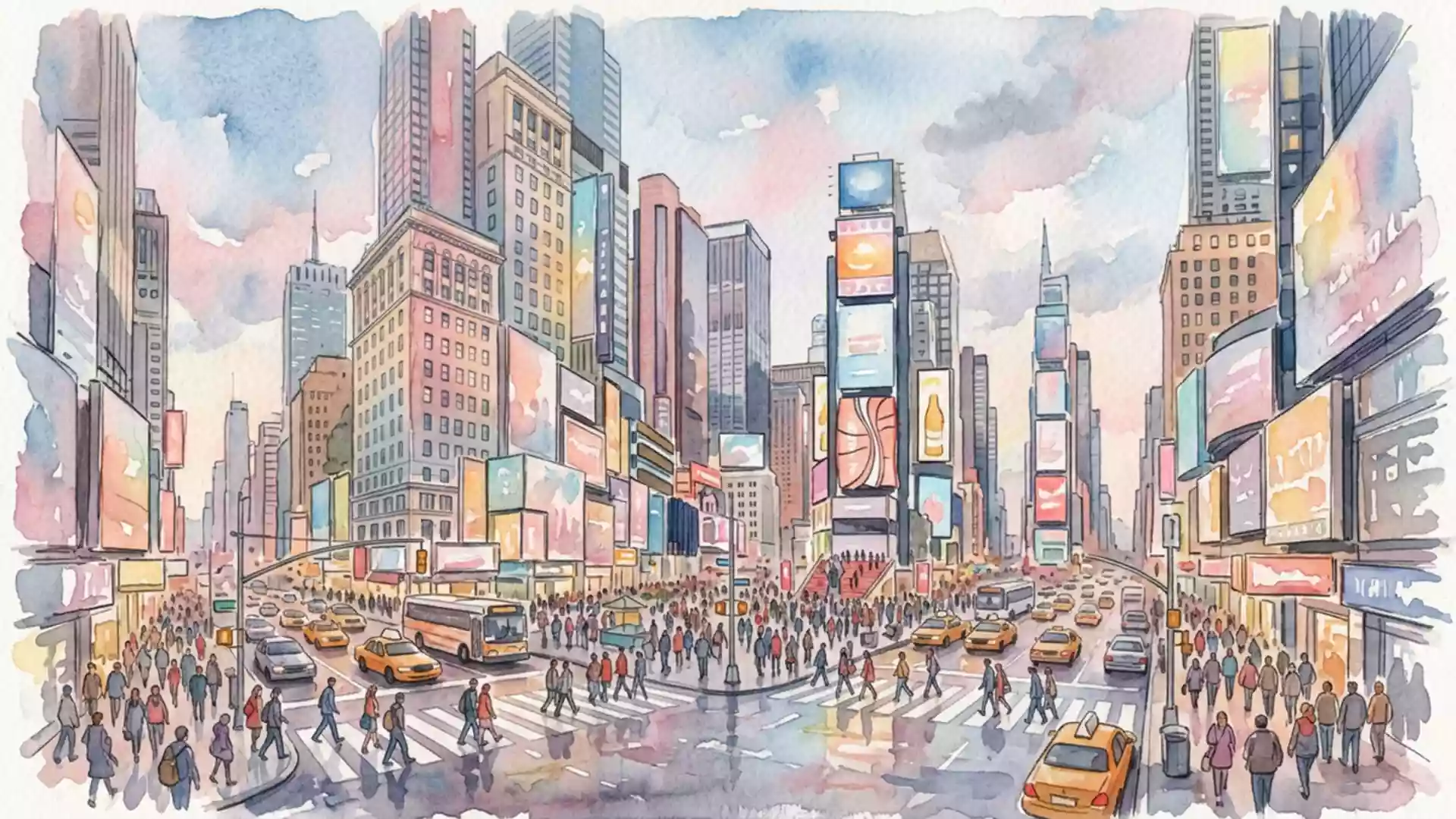
Times Square and the theatre of light in New York City
Published on 09/03/2026 at 18:56 | Editorial responsibility: Rafael Müller, Editor-in-Chief AD HOC NEWS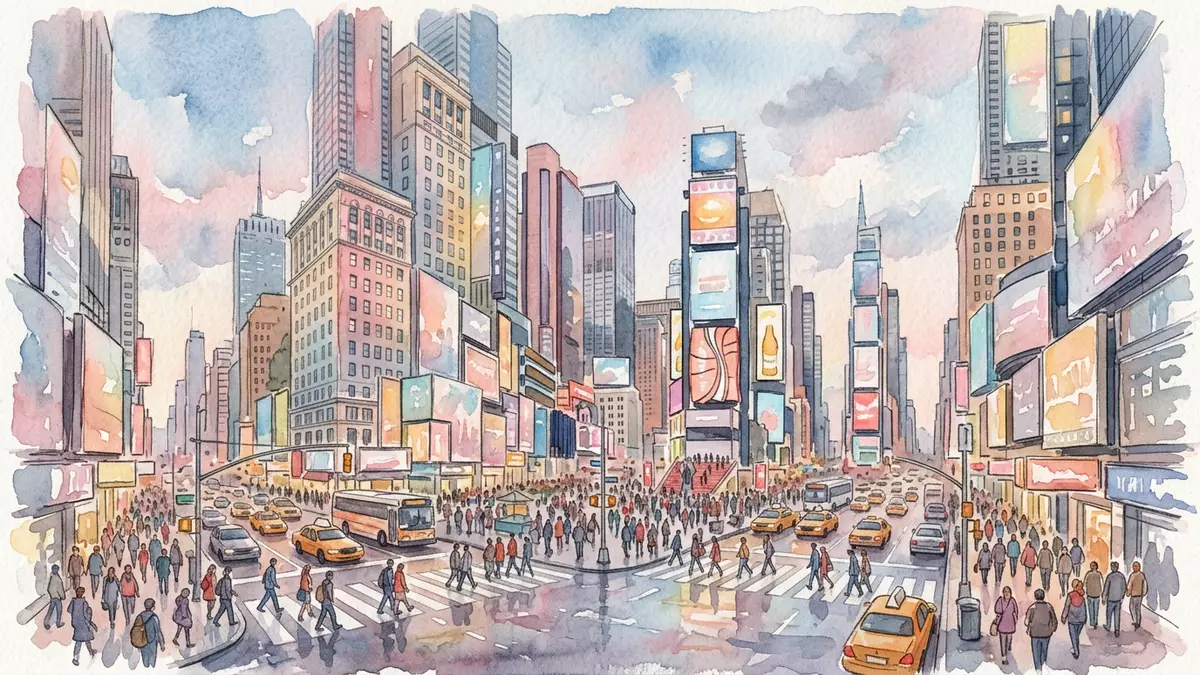
Times Square in New York City is a Midtown intersection where streets, towers and billboards combine into a continuous theatre of light and movement. It is named for The New York Times, which moved its headquarters to the Times Building at the square in 1904, giving the crossroads its present name in place of Longacre Square.
A crossroads built from streets and screens
Times Square occupies the stretch of Manhattan where Broadway meets Seventh Avenue around 42nd Street, creating a series of triangular plazas framed by tall commercial buildings and theatres. The square takes its name from The New York Times, whose move into the Times Building led the city to rename Longacre Square as Times Square in 1904, marking the area’s shift from a carriage district to a central urban landmark.Renamed in 1904 The junction has carried the nickname “Crossroads of the World” since the early twentieth century, when a major subway station beneath the square and a growing concentration of theatres and restaurants turned the area into an important entertainment district.Crossroads of the World
The buildings around Times Square carry giant illuminated signs and electronic billboards, many covering whole facades above ground-level shops and ticket booths. The best known of these towers is One Times Square, the former Times Building on Broadway at 43rd Street, which stands as a narrow skyscraper wrapped in digital advertising and news tickers.One Times Square Beneath and between the towers, a series of pedestrian plazas gives space for people to stop among the traffic lanes, street performers and street furniture, with views along Broadway in both directions.
From Longacre Square to entertainment district
In the nineteenth century the area now known as Times Square formed part of Longacre Square, named after London’s carriage-making district and associated with stables and carriage manufacturers. The change began in the early twentieth century when the Times Building rose on 43rd Street and when the city extended the subway network, creating a large transfer station beneath the square that anchored Broadway’s theatre district around 42nd Street.From Long Acre Square Broadway quickly became synonymous with American theatre, and the streets around Times Square filled with performance spaces, cinemas and entertainment halls that used illuminated signs to advertise shows.Broadway theatres on 42nd Street
The twentieth century brought cycles of glamour and decline to Times Square as theatre buildings were converted to cinemas and later to more marginal uses, giving the district a reputation for adult entertainment by the 1960s and 1970s. Large-scale revitalisation in the 1990s introduced new flagship shops, themed restaurants and renovated theatres, alongside changes to the street layout and lighting that emphasised Times Square as a place for visitors as well as commuters. The result is a district where Broadway’s history, commercial signage and transport infrastructure remain visible at once, with theatres, offices and media companies sharing the same blocks.
The New Year’s Eve ball and the vertical stage
One Times Square is also home to the Times Square Ball, a time ball mounted on the tower’s roof that forms the centrepiece of the New Year’s Eve celebration. The first ball drop took place on 31 December 1907, making the illuminated descent a feature of New Year’s Eve in the square for more than a century.New Year’s Eve Ball history The ball descended each year except in 1942 and 1943, when wartime blackouts suspended the display, and its design has changed several times as lighting technology developed from incandescent bulbs to modern systems.Times Square Ball
The square’s New Year’s Eve tradition grew from rooftop fireworks displays organised by New York Times publisher Adolph Ochs shortly after the newspaper moved into the Times Building. The illuminated ball descending the flagpole at One Times Square created a highly visible signal of the year’s change above the crossroads of Broadway and Seventh Avenue, aligning the celebration with the architecture and signage of the square itself.Adolph Ochs and celebrations Outside New Year’s Eve, the tower’s billboards and electronic displays keep the building active as a vertical stage, while theatres and commercial spaces around the plazas contribute their own marquees and lighting to the overall impression.
Visiting Times Square: what travellers from Western Europe should know
- Times Square lies in Midtown Manhattan at the junction of Broadway, Seventh Avenue and 42nd Street, reached by multiple New York City Subway lines stopping at Times Sq–42 St station.
- The area consists of busy streets and pedestrian plazas with kerbs, steps and street furniture, and visitors cross multi-lane avenues between building fronts and traffic islands.
- The Hudson River lies to the west of Times Square, while Bryant Park and the New York Public Library sit to the east along 42nd Street within walking distance.
- The official language is English and the currency is the United States dollar.
- Entry requirements depend on your nationality; UK travellers can check the FCDO travel advice at gov.uk/foreign-travel-advice, Irish travellers the Department of Foreign Affairs at ireland.ie.
Searching for Times Square on social platforms
These links open searches for Times Square on each platform.
Frequently asked questions about Times Square
Where is Times Square in New York City?
Times Square occupies the blocks around the junction of Broadway, Seventh Avenue and 42nd Street in Midtown Manhattan, forming a series of plazas and street crossings.
What should visitors expect on a visit to Times Square?
Visitors encounter tall buildings with extensive illuminated advertising, theatres, shops and pedestrian areas, together with heavy traffic flows and large crowds at most times.
What makes Times Square distinctive among city squares?
Times Square combines a major road junction with dense theatre and commercial development, a long-running New Year’s Eve ball drop and extensive illuminated signage on its surrounding towers.