
Tikal’s towering Maya temples in the forests of Guatemala
Published on 09/07/2026 at 18:37 | Editorial responsibility: Rafael Müller, Editor-in-Chief AD HOC NEWS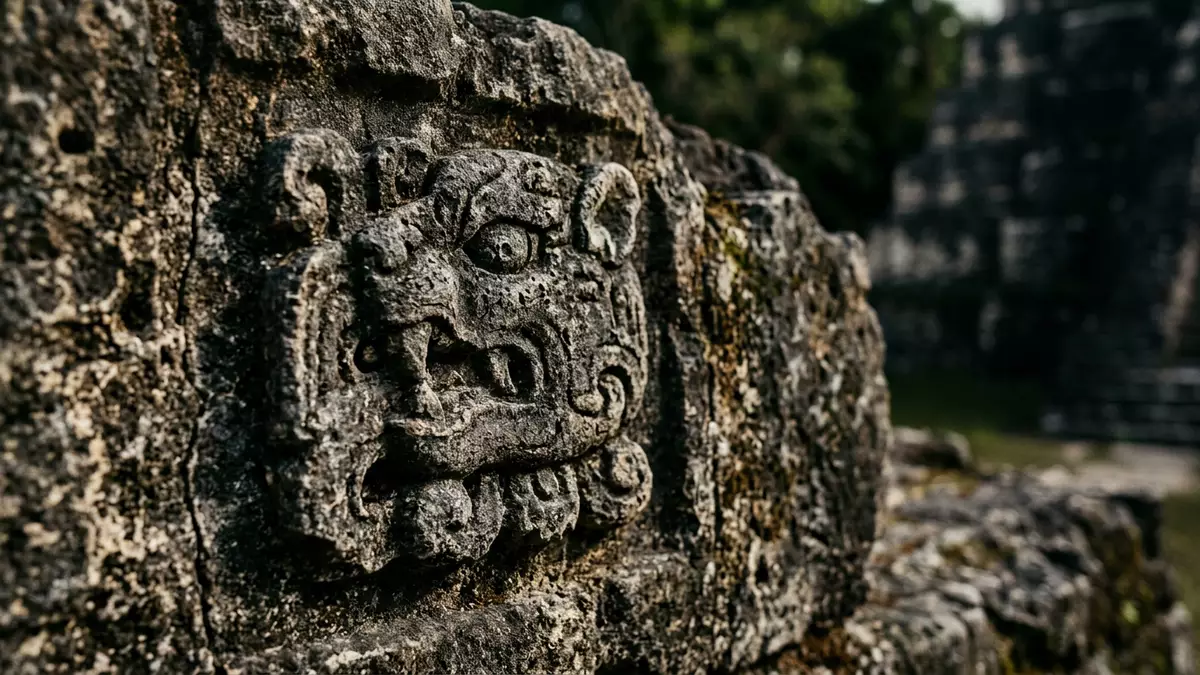
Tikal is an ancient Maya city in northern Guatemala, set within dense tropical forest north-east of Flores and preserved inside Tikal National Park. The ruins form one of the largest known urban centres of the pre-Columbian Maya world, with temple-pyramids and palaces emerging above the canopy and framing broad plazas that chart centuries of building in the Classic period.
City of the Classic Maya in the Petén forest
The archaeological site of Tikal lies in the Petén Department of northern Guatemala, within a protected forest region that extends across the borders with Mexico and Belize. The park’s location in the wider Maya Forest gives the ruined city a striking setting, with monumental stone architecture rising among broadleaf trees and low limestone ridges that once carried ancient causeways.Tikal National Park in the Petén region The site lies north-east of the town of Flores, which sits on an island in Lake Petén Itzá and serves as the modern gateway to the ruins.
Tikal began as a farming settlement on rainforest ridges above seasonal swamps in the Preclassic era and grew into a major centre of Classic Maya civilisation. Archaeological work traces significant urban development between about 300 and 800 CE, when palaces, temples, causeways and reservoirs formed a dense ceremonial and residential core.Tikal as a Classic-period centre The city was abandoned by around 900 CE, leaving its architecture to be gradually enveloped by forest until systematic investigation began in the twentieth century.
Temples, plazas and limestone pyramids
The heart of Tikal is laid out around the Great Plaza, where stepped limestone pyramids, palaces and sculpted stelae define an open ceremonial space. On the east side of this plaza stands Temple I, widely known as the Temple of the Great Jaguar, a steep pyramid rising to around 47 m (154 ft) and crowned by a tall roof-comb that once carried carved decoration.Temple I as a stepped limestone pyramid Opposite it to the west is Temple II, facing across the plaza toward the North Acropolis, a cluster of temple platforms and tombs that rose through successive building phases.
Beyond the Great Plaza, further pyramids punctuate the forest skyline. Temple IV, on the western edge of the monumental core, reaches roughly 65 m (213 ft), making it the tallest known structure at the site and one of the highest surviving Maya temple-pyramids.Temple IV at around 65 m Many buildings use the corbel vault, a characteristic Maya technique in which successive stone courses project inward to span interior spaces and support hefty roof-combs above the temple chambers. Together, plazas, pyramids and raised causeways form a dense architectural landscape that reflects both ritual and political power in the Classic Maya world.
A World Heritage park of culture and rainforest
Tikal lies inside Tikal National Park, a protected area spanning hundreds of square kilometres of lowland tropical rainforest. The park shelters a mosaic of habitats with towering trees, lianas and rich wildlife, and the ancient city occupies a central zone within this broader ecological setting.UNESCO listing for Tikal National Park The combination of monumental ruins and surrounding forest means that views from the temple tops take in both stone architecture and green canopy.
Tikal National Park was inscribed as a UNESCO World Heritage Site in 1979 for both cultural and natural significance, one of the relatively few locations recognised under this dual set of criteria.World Heritage datasheet for Tikal The park later became part of the wider Maya Biosphere Reserve, linking its protection to a broader conservation framework across northern Guatemala. For visitors, the World Heritage designation underlines both the architectural importance of the ruins and the value of the surrounding forest landscape.
Visiting Tikal: what travellers from Western Europe should know
- Tikal lies north-east of Flores in northern Guatemala, within Tikal National Park in the Petén Department, reached by road connections from the town and nearby settlements.
- The monumental core of the site is spread across undulating forest terrain, with long walking routes on earth paths and stone causeways and substantial staircases on the temple-pyramids.
- The ruins stand within lowland tropical rainforest, where humidity and shade from the canopy shape conditions along the paths and around the plazas.
- The official language is Spanish and the currency is the Guatemalan quetzal.
- Entry requirements depend on your nationality; UK travellers can check the FCDO travel advice at gov.uk/foreign-travel-advice, Irish travellers the Department of Foreign Affairs at ireland.ie.
Searching for Tikal on social platforms
These links open searches for Tikal on each platform.
Frequently asked questions about Tikal
Where is Tikal in relation to Flores and the rest of Guatemala?
Tikal is in the Petén Department of northern Guatemala, within Tikal National Park north-east of Flores and the waters of Lake Petén Itzá.
What can visitors expect when exploring the ruins?
Visitors encounter temple-pyramids, palaces, plazas and raised causeways in dense tropical forest, with substantial climbing on stone staircases and long walking routes between groups of structures.
What makes Tikal distinctive among ancient Maya sites?
Tikal combines a large concentration of Classic-period Maya architecture, including very tall pyramids such as Temple IV, with preservation inside a forested World Heritage park.


