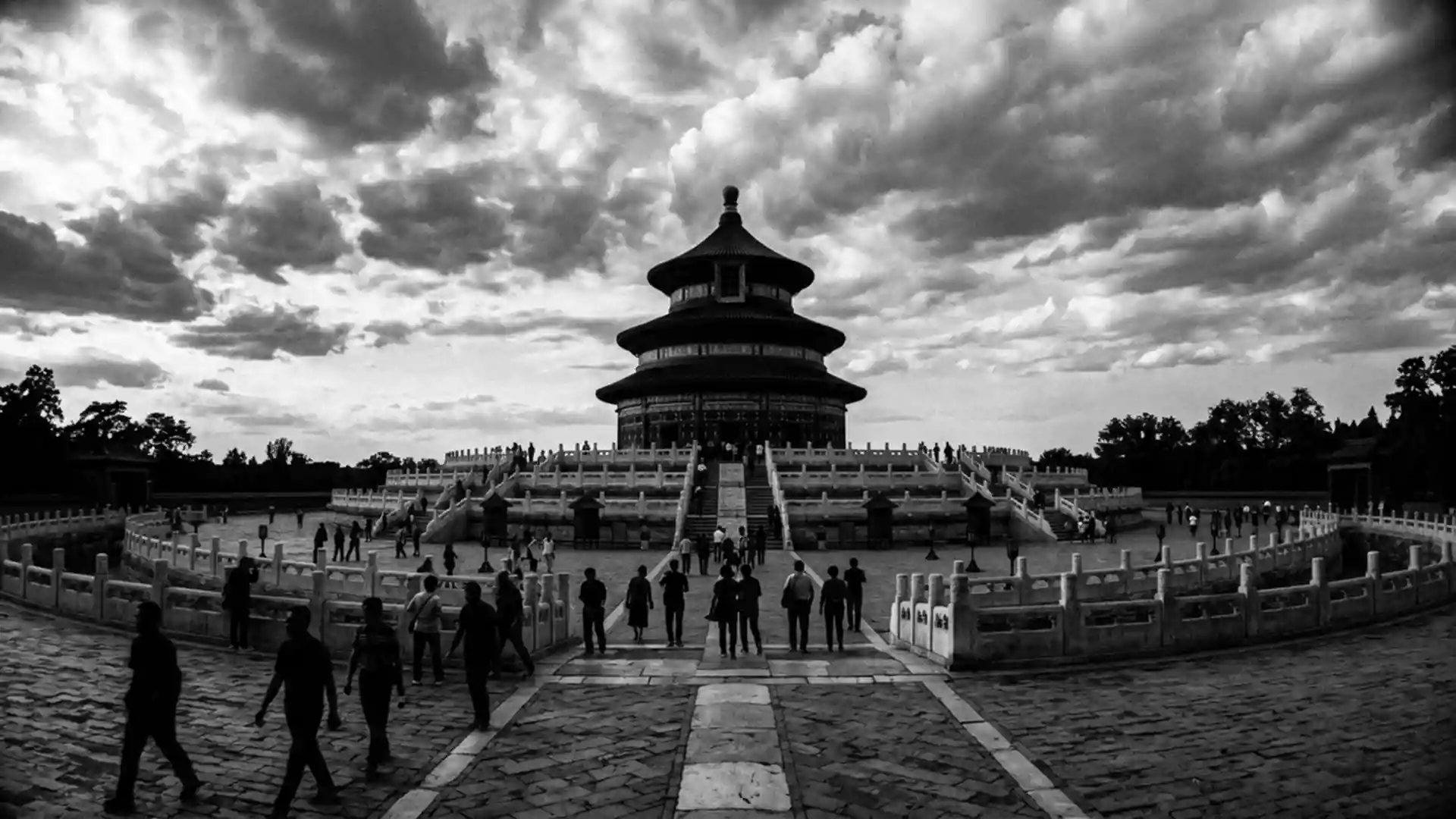
Tiantan, the Temple of Heaven’s vast ritual landscape in Peking
Published on 08/20/2026 at 19:25 | Editorial responsibility: Rafael Müller, Editor-in-Chief AD HOC NEWS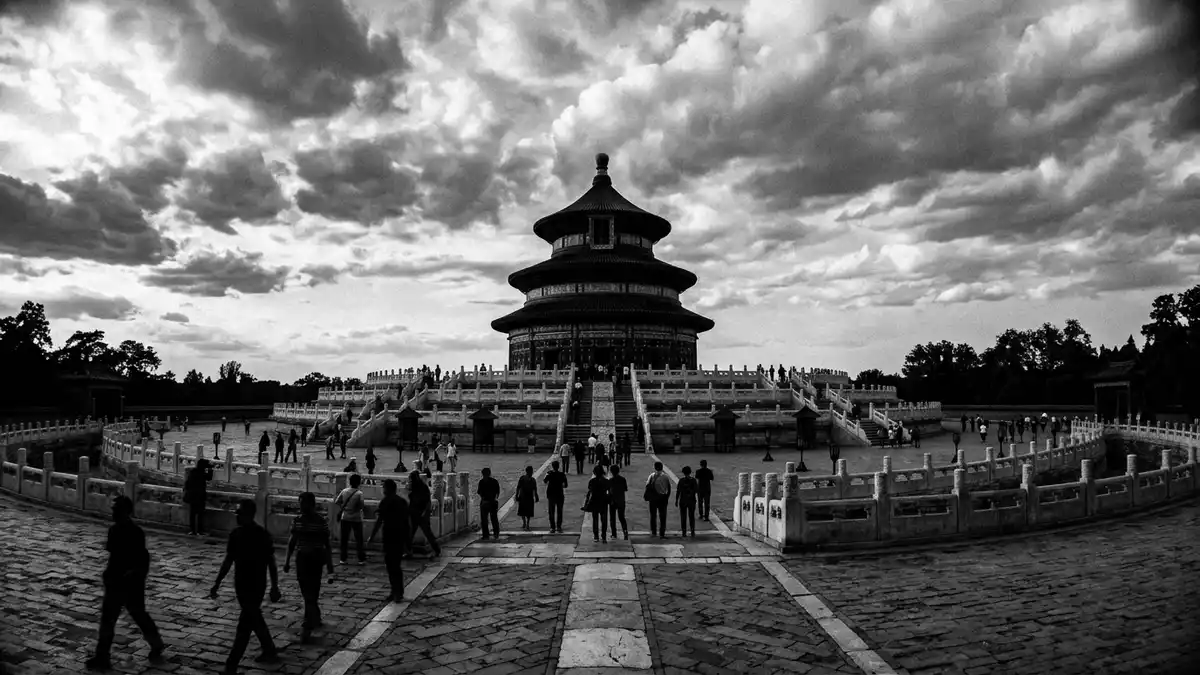
Tiantan in Peking, known to English speakers as the Temple of Heaven, is an expansive imperial ritual complex set within a broad park in the south-east of the city. Built for Ming and Qing emperors and laid out with striking geometric clarity, it brings together timber halls, altars and ceremonial spaces in a single walled precinct.
An imperial altar turned city park
The core of Tiantan was constructed in 1420, in the early fifteenth century during the reign of the Ming emperor Yongle, as the principal site where the emperor performed state rituals connected to harvests and the heavens.constructed in 1420 Over later centuries, particularly under emperors Qianlong and Guangxu of the Qing dynasty, its buildings and surfaces were repaired and rebuilt, but the overall form remained anchored in that fifteenth-century layout.
The complex stands inside Tiantan Park, a large rectangle of enclosed greenery within the Dongcheng District south of Beijing’s historic central axis.Tiantan Park in Dongcheng District Pathways run between stands of trees and open lawns, creating a calm buffer between the ritual architecture and the surrounding traffic. The park’s scale means that the ceremonial structures sit in clearings rather than being hemmed in by other buildings, giving visitors space to view them from different angles.
Geometry, timber and symbolism
At the heart of Tiantan stands the Hall of Prayer for Good Harvests, a large circular timber hall rising from a series of marble platforms, built without structural steel and supported by soaring wooden columns.Hall of Prayer for Good Harvests The hall is notable for its richly painted beams and brackets and for the way its circular form contrasts with the rectilinear walls and courtyards around it. The timber construction and layered roofs give the building a distinctive profile above the park’s trees.
South of the main hall, the ritual landscape continues with the Circular Mound Altar, an open-air platform of concentric stone rings, and the Imperial Vault of Heaven, a smaller timber hall set on its own plinth.Circular Mound Altar and Imperial Vault of Heaven These structures align along a north–south axis, reinforcing the sense of ordered geometry that runs through the site. The combination of stone terraces, balustrades and timber halls gives Tiantan a layered character: ceremonial platforms under open sky linked to enclosed spaces with painted interiors.
World Heritage status and ritual legacy
Tiantan is inscribed as a World Heritage Site under the title “Temple of Heaven: an Imperial Sacrificial Altar in Beijing”, recognised for its role in imperial ritual and for the integrity of its architectural ensemble.World Heritage inscription in 1998 The designation highlights how the altars, halls and ceremonial avenues together express a particular understanding of the relationship between earth, sky and state authority in Ming and Qing China.
Although the emperors’ sacrificial rituals no longer take place, the layout still speaks of that former use: separate precincts for different ceremonies, processional routes, and named structures such as the Fasting Palace and Divine Music Administration that formed part of a larger ritual system.ritual buildings within the complex As a public park, Tiantan now combines this historic framework with everyday use, with local residents and travellers walking, exercising and exploring among buildings that once stood at the centre of imperial ceremony.
Visiting Tiantan: what travellers from Western Europe should know
- Tiantan lies in the Dongcheng District of Beijing, south-east of the old central axis, with access from gates along Tiantan Road and Yongdingmennei Street.
It is connected to the city’s metro network at Tiantan Dongmen Station on Line 5 and Tianqiao Station on Line 8. - The main structures stand within a large walled park, and reaching the ceremonial cores involves walking along broad paved routes through tree-lined grounds.
Within the complex, some terraces and platforms are reached by flights of stone steps rather than ramps. - Beijing experiences cold winters with possible snow cover and hot summers with strong sun, so clothing for both low temperatures and heat may be needed depending on the season.
- The official language is Chinese and the currency is the renminbi (yuan).
Searching for Tiantan on social platforms
These links open searches for Tiantan on each platform.
Frequently asked questions about Tiantan
Where is Tiantan located within Peking?
Tiantan lies in the Dongcheng District in the south of Beijing, within a large park area bordered by major roads such as Yongdingmennei Street and Tiantan Road.
What should visitors expect on a visit to Tiantan?
Visitors encounter extensive parkland, paved avenues and several major ritual structures, including timber halls on stone platforms and open-air altars aligned along a north–south axis.
What makes Tiantan distinctive among Beijing’s historic sites?
Tiantan is distinctive for its combination of geometric ritual layout, large timber ceremonial halls and its recognised status as a World Heritage imperial sacrificial complex.