
Theatro Epidavrou, the stone theatre of Epidauros
Published on 09/14/2026 at 18:20 | Editorial responsibility: Rafael Müller, Editor-in-Chief AD HOC NEWS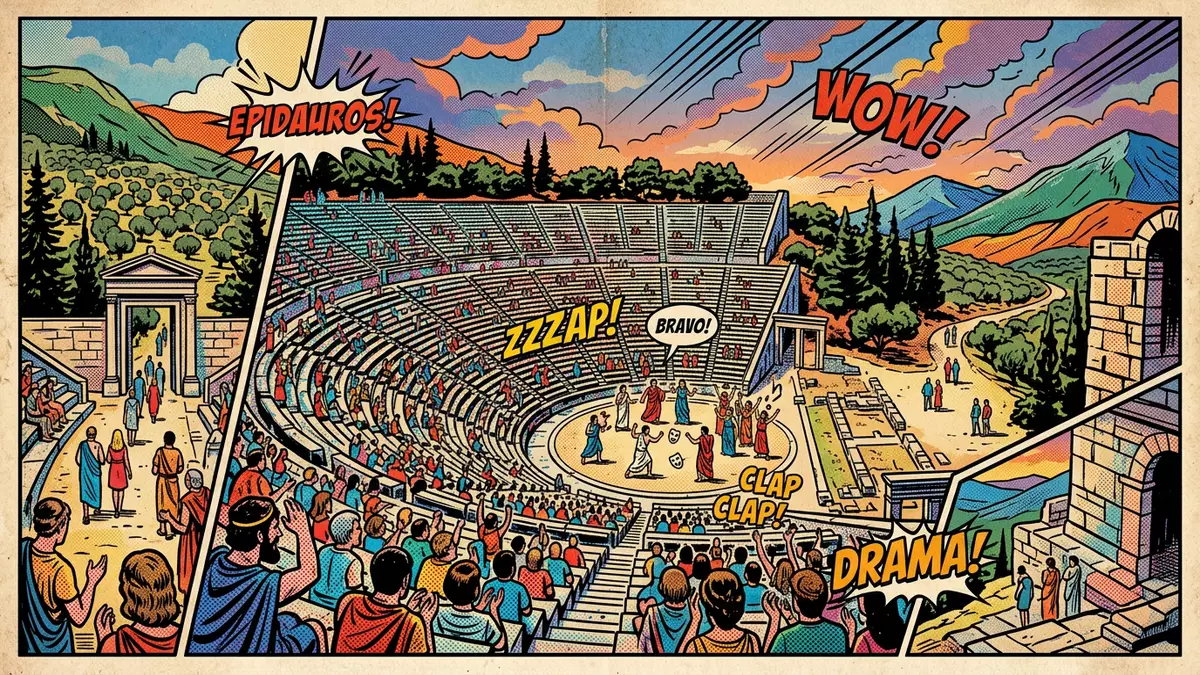
Theatro Epidavrou is the ancient stone theatre at Epidauros in Greece, laid out on the slope of Mount Kynortion within the wider Sanctuary of Asklepios in the Argolis region of the Peloponnese. Constructed in the late fourth century BC in the era of classical Greek theatre, its limestone tiers wrap around a circular orchestra and still frame a wide view over the surrounding hills.
Stone geometry on the slope of Mount Kynortion
Theatro Epidavrou occupies the south-eastern edge of the Sanctuary of Asklepios, a healing centre of antiquity where worship and medicine met in a wooded hollow of Argolis. The theatre is cut into the natural incline of Mount Kynortion, its cavea following the hillside in a broad arc that encloses the orchestra while leaving the upper edge open to the landscape.Ancient Theatre of Epidaurus The layout combines three principal parts: the concave seating area, the orchestra at ground level and the stage buildings that once rose behind it, a pattern that became characteristic of Hellenistic theatres.three part characteristic of the Greek Theatre
Traditionally dated to the late fourth century BC, the theatre is widely attributed to Polykleitos the Younger, an architect and sculptor whose work linked architecture with the high traditions of Greek art.constructed circa 340–300 BCE by Polykleitos the Younger The cavea was formed from local limestone, laid out in carefully measured wedges and rows that create a near-geometric sweep around the orchestra. The limestone benches are cut with regular profiles and low risers, and the overall width of the cavea exceeds 100 m (328 ft), so the structure occupies a substantial hollow in the hillside and creates a stone bowl above the sanctuary.north-west facing cavea measures 119 metres wide
Limestone tiers, orchestra and stage
The seating of Theatro Epidavrou is arranged in two principal zones separated by a circular walkway, with lower benches closer to the orchestra and upper seating continuing the curve farther up the slope. In its fully developed form, the theatre contained dozens of rows of seats divided into wedges by staircases, and the lower rows included backrests reserved for prominent guests.lower seating arranged with 34 rows Counts of the stone tiers differ between modern surveys and ancient descriptions, but they agree that the cavea could accommodate many thousands of spectators and that its proportions are unusually regular for an ancient theatre.seats 13,000 to 14,000 spectators
At ground level, the orchestra of Theatro Epidavrou is laid out as a full circle, a characteristic of Greek theatres that emphasised the central space used for performance. Measurements from archaeological studies give its diameter as roughly 20 m (65 ft), forming a distinct disc of packed earth or paving separate from the benches.orchestra is a full circle with a diameter of around 21 metres Behind the orchestra stood an elongated stage structure that combined a raised proscenium with an architectural backdrop decorated with Ionic columns, and side openings allowed painted scenery panels to be set into place.proscenium with an Ionic façade Ramps and entrances at the ends of the cavea linked the seating to the performance area, integrating the movement of audiences and performers within the stone layout.
A theatre in a healing sanctuary and a World Heritage site
Theatro Epidavrou forms part of the archaeological site of the Sanctuary of Asklepios at Epidauros, a place where pilgrims came for healing rituals, medical observation and religious festivals dedicated to the god of medicine. The theatre hosted dramatic performances, musical competitions and recitations that formed part of these festivals, and their programme complemented the functions of the temples, stoas and treatment buildings in the sanctuary.seat of the healer-god of antiquity Its position on the margin of the sacred area links performances directly with the healing landscape, so the stone curves face both the sanctuary buildings and the surrounding hills.
Since 1988 Theatro Epidavrou, together with the Sanctuary of Asklepios, has been recognised as a UNESCO World Heritage Site, reflecting the clarity with which the complex illustrates ancient Greek medicine and theatre.Seit 1988 gehört das antike Theater von Epidauros zusammen mit dem Asklepiostempel zum UNESCO-Weltkulturerbe The theatre has retained its overall form with limestone seating, circular orchestra and the foundations of the stage structures, making it one of the best-preserved monuments within the site.best-preserved monument in the archaeological site Performances of ancient drama continue to be held here under organised festival programmes, so Theatro Epidavrou functions both as an archaeological monument of the late classical period and as a working open-air auditorium where contemporary audiences and ancient stone share the same space.
Visiting Theatro Epidavrou: what travellers from Western Europe should know
- Theatro Epidavrou lies within the Sanctuary of Asklepios near the village of Lygourio in the Argolis region of the Peloponnese in Greece, reached by road from Epidauros and other towns.
- The theatre occupies a hillside position, and reaching the upper seating involves climbing stone steps that rise along the curve of the cavea.
- The broader site includes ruins of the sanctuary and surrounding hills, so visiting Theatro Epidavrou combines stone structures with uneven ground and open terrain.
- The official language is Greek and the currency is the euro.
Searching for Theatro Epidavrou on social platforms
These links open searches for Theatro Epidavrou on each platform.Frequently asked questions about Theatro Epidavrou
Where is Theatro Epidavrou?
Theatro Epidavrou is the ancient theatre within the Sanctuary of Asklepios near Epidauros in the Argolis region of the Peloponnese in Greece, on the slope of Mount Kynortion.
What should visitors expect at Theatro Epidavrou?
Visitors encounter a large stone theatre with curved limestone seating around a circular orchestra, set above the remains of a healing sanctuary in a rural landscape.
What makes Theatro Epidavrou distinctive among ancient theatres?
Its attribution to Polykleitos the Younger, late fourth-century BC date, wide limestone cavea and circular orchestra within a healing sanctuary give Theatro Epidavrou a distinctive combination of architecture and setting.


