
The Pearl-Qatar: Doha’s engineered waterfront city
Published on 09/17/2026 at 11:13 | Editorial responsibility: Rafael Müller, Editor-in-Chief AD HOC NEWS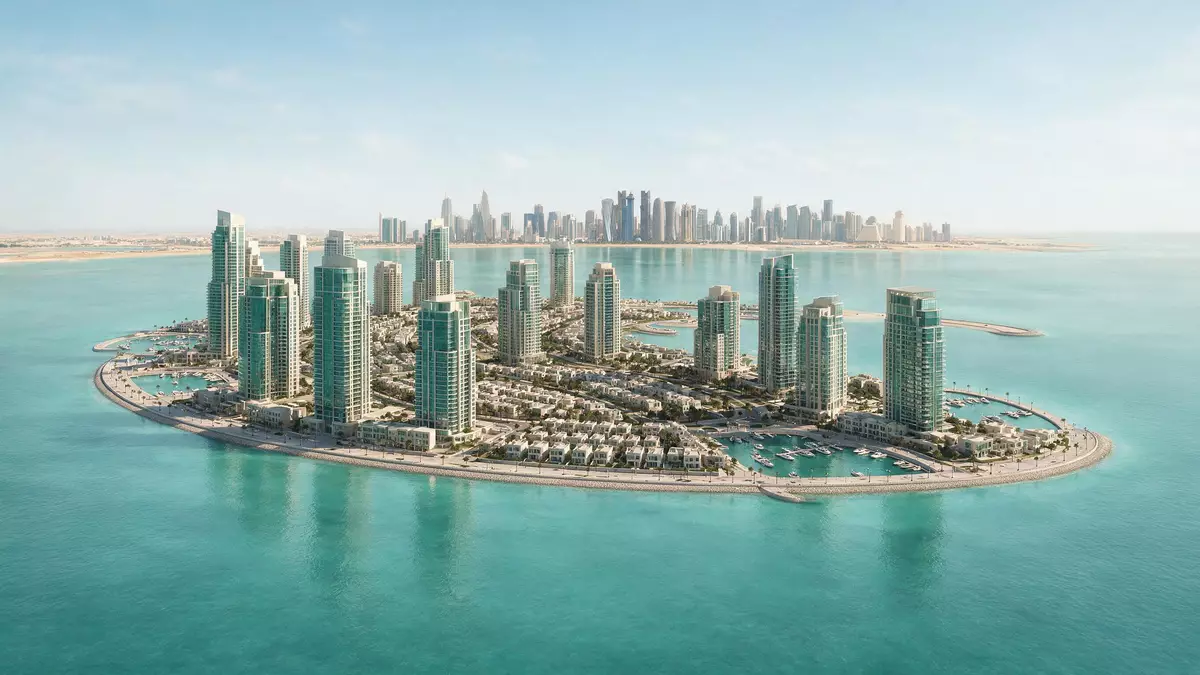
The Pearl-Qatar is a man-made island development off the northern shore of Doha in Qatar, built on reclaimed land in the Persian Gulf as a waterfront extension of the city. Spanning around four million square metres, it was announced and begun in the early 2000s and has grown into a mixed residential, commercial and leisure district on an offshore footprint.
An engineered island shaped like a string of pearls
The Pearl-Qatar takes the visible form of an artificial island projecting into the Gulf from Doha’s West Bay Lagoon area, its reclaimed land mass laid out in a sequence of curving districts and marinas that read from above as a stylised string of pearls. The core island spans nearly four square kilometres and has created tens of kilometres of new waterfront, framing canals, harbours and promenades against the open water of the Persian Gulf.artificial island spanning nearly four square kilometres The development sits a short distance offshore from the mainland, with highway bridges carrying road traffic from Doha into its neighbourhoods and back again.located 350 metres offshore of Doha's West Bay Lagoon area
The project was initiated by United Development Company in the early years of the twenty-first century, when plans for a new offshore district were announced with an initial build-out programme and budget in the billions of US dollars.UDC announced The Pearl-Qatar development in 2004 By the late 2010s the island was in use as a medium-density residential zone mixed with retail and commercial land uses, even as construction continued in some precincts.once completed, it will contain over 19,000 residences
Waterfront districts with Mediterranean and Arabic themes
The Pearl-Qatar is divided into a series of planned districts or precincts whose architecture and layout draw on various regional and international references, including Arabic, Mediterranean and broader European townscapes. These neighbourhoods combine apartment towers, townhouses and villas with ground-level shops, cafés and restaurants, giving many streets a continuous frontage of balconies, colonnades and terraces overlooking canals or open marinas.twelve precincts make up The Pearl-Qatar The waterfront is articulated through long promenades, broad quays and yacht berths, with residential buildings stepping down towards the water in some areas.
The island’s form recalls Qatar’s pearl-diving history, with deep canals cut around its districts and the overall geometry reflecting a string of pearls set against the sea.infrastructure was built to resemble a string of pearls To the east, a further group of artificial islands known as Isola Dana extends the development into a chain of private plots, each with its own beach and harbour, visible on satellite imagery as separate rounded forms beyond the main island.the string of nine artificial islands to the east is called Isola Dana Within the main precincts, the mix of built types ranges from high-rise towers clustered around central marinas to lower-scale streets with townhouses and courtyard villas.
From pearl-diving grounds to freehold waterfront living
The Pearl-Qatar takes its name from the fact that it stands on one of Qatar’s historical pearl-diving sites, in waters where Doha grew in the nineteenth century as a pearl fishing village.built on one of the country’s historical pearl diving sites In the early twenty-first century it became the first land in the country made available for freehold ownership by foreign nationals, marking a shift in property arrangements and opening the way for expatriate residents to purchase homes on the island.first land in Qatar to be available for freehold ownership by foreign nationals That legal change sits alongside the island’s physical transformation of part of Doha’s shoreline into a planned coastal city district.
Residential capacity has grown steadily, with tens of thousands of dwellings envisaged across the full project and a final resident population projected in the tens of thousands when the build-out is complete.nearly 19,000 dwellings and 45,000 residents As construction phases advanced through the 2000s and 2010s, completed areas of the island filled with residents and day visitors using its marina-side cafés, retail streets and leisure facilities, while other plots remained in various stages of development.a medium-density residential zone mixed with retail and commercial land uses
Visiting The Pearl-Qatar: what travellers from Western Europe should know
- The Pearl-Qatar lies off the northern edge of central Doha, near the West Bay Lagoon area, linked to the mainland by road bridges carrying traffic from the city.
- The terrain consists of level urban streets and promenades on reclaimed land, with broad paved waterfront walks and internal roads rather than steep natural gradients.
- The official language is Arabic and the currency is the Qatari riyal.
- Entry requirements depend on your nationality; UK travellers can check the FCDO travel advice at gov.uk/foreign-travel-advice, Irish travellers the Department of Foreign Affairs at ireland.ie.
Searching for The Pearl-Qatar on social platforms
These links open searches for The Pearl-Qatar on each platform.
Frequently asked questions about The Pearl-Qatar
Where is The Pearl-Qatar located?
The Pearl-Qatar is an artificial island off the coast of Doha in Qatar, set just offshore from the city’s West Bay Lagoon district and linked by road bridges.
What can visitors expect on a visit to The Pearl-Qatar?
Visitors encounter planned waterfront districts with marinas, canals, promenades, residential towers, villas and a mix of shops and cafés embedded in the streetscape.
What makes The Pearl-Qatar distinctive among Doha’s urban areas?
The Pearl-Qatar stands out as a purpose-built island city on reclaimed Gulf shoreline, combining freehold residential areas for foreigners with themed waterfront neighbourhoods.


