
The Alamo in San Antonio as mission, fortress and symbol
Published on 09/17/2026 at 22:41 | Editorial responsibility: Rafael Müller, Editor-in-Chief AD HOC NEWS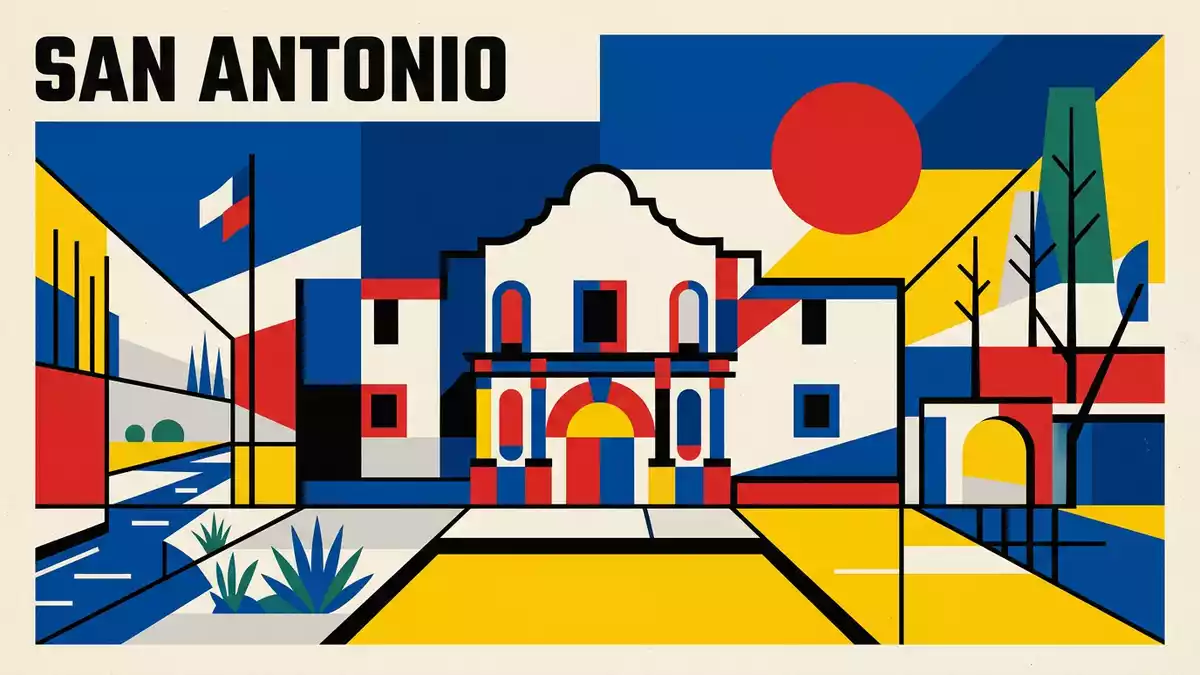
The Alamo in San Antonio is a compact former mission complex whose limestone chapel and surrounding grounds concentrate more than three centuries of Texan history into a single city block. Founded in the early eighteenth century as Mission San Antonio de Valero, it later became a fortified outpost and the battlefield most closely associated with the Texas Revolution of 1836.
From Spanish mission to fortified compound
Mission San Antonio de Valero was established in 1718 by Franciscan missionaries as part of Spain’s expansion into what is now south central Texas.Mission San Antonio de Valero The mission formed one of a chain of religious and agricultural communities along the San Antonio River, where friars sought to gather and convert local Indigenous groups while building a permanent settlement with stone structures and irrigated fields.Spanish mission community
The complex that became known as The Alamo took its present name from a cavalry unit stationed there in the early nineteenth century, whose home town name “Alamo de Parras” was adopted for the post.cavalry unit from Alamo de Parras Over time, the religious mission was secularised and its stone chapel and adjoining barracks evolved into a military compound, used successively by Spanish, Mexican and Texan forces as a defensive position and supply base.
The 1836 Battle of the Alamo
The Alamo is most closely associated with the Battle of the Alamo, a thirteen-day siege and assault in the Texas Revolution which ran from 23 February to 6 March 1836.thirteen-day siege Mexican troops under General Antonio López de Santa Anna surrounded the compound and ultimately overran it, killing or executing the Texan and Tejano defenders who had occupied the former mission as a defensive stronghold.assault under Santa Anna
Figures associated with the defence include commander William B. Travis, frontiersman Davy Crockett and James Bowie, whose names are now closely tied to The Alamo’s story.Travis, Crockett and Bowie The fall of the garrison fed directly into wider events of the Texas Revolution, and the phrase “Remember the Alamo” became a rallying cry later that year in the campaign that led to Texan independence.“Remember the Alamo” rallying cry
Architecture, setting and status today
The building widely recognised as The Alamo is the former stone chapel of Mission San Antonio de Valero, standing close to the centre of San Antonio’s modern street grid at Alamo Plaza.former mission chapel The chapel’s façade is marked by a distinctive curved parapet and heavy masonry walls, reflecting its eighteenth-century origins and later adaptation to military use.curved parapet on chapel façade Around it, remnants of the former mission compound and barracks, along with gardens and monuments, create an enclosed historic precinct within the wider downtown.
Over its long history the site has served many roles, including chapel, military garrison, hospital, warehouse and museum, and it is now managed as a historic shrine and educational site.many roles over three centuries The Alamo was designated a United States National Historic Landmark in 1960 and, in 2015, Mission San Antonio de Valero and the other San Antonio missions were inscribed together as Texas’s only UNESCO World Heritage Site.UNESCO World Heritage Site inscription This combination of compact scale, layered architecture and globally recognised historic status makes a visit to The Alamo a concentrated encounter with the political and cultural history of Texas.
Visiting The Alamo: what travellers from Western Europe should know
- The Alamo stands at Alamo Plaza in central San Antonio, Texas, within walking distance of the River Walk and other downtown landmarks.
- The historic chapel interior and surrounding grounds include stone floors, uneven surfaces and low thresholds, and some areas are reached by short staircases rather than ramps.
- Summers in San Antonio can be very hot, and The Alamo’s open courtyards and exposed stone walls offer limited shade compared with fully enclosed museum buildings.
- English is the official language and the currency is the United States dollar.
Searching for The Alamo on social platforms
These links open searches for The Alamo on each platform.Frequently asked questions about The Alamo
Where is The Alamo located?
The Alamo is in central San Antonio, Texas, at Alamo Plaza within the city’s downtown street grid.
What can visitors expect on a visit?
Visitors encounter the stone chapel, remnants of mission barracks and landscaped grounds with monuments, all set among the modern buildings of downtown San Antonio.
What makes The Alamo distinctive among historic sites?
The Alamo combines its origin as an eighteenth-century mission, its role in the 1836 Texas Revolution and its later recognition as a National Historic Landmark and UNESCO World Heritage Site.


