
Teotihuacan’s grand avenue of pyramids in the Valley of Mexico
Published on 09/10/2026 at 20:27 | Editorial responsibility: Rafael Müller, Editor-in-Chief AD HOC NEWS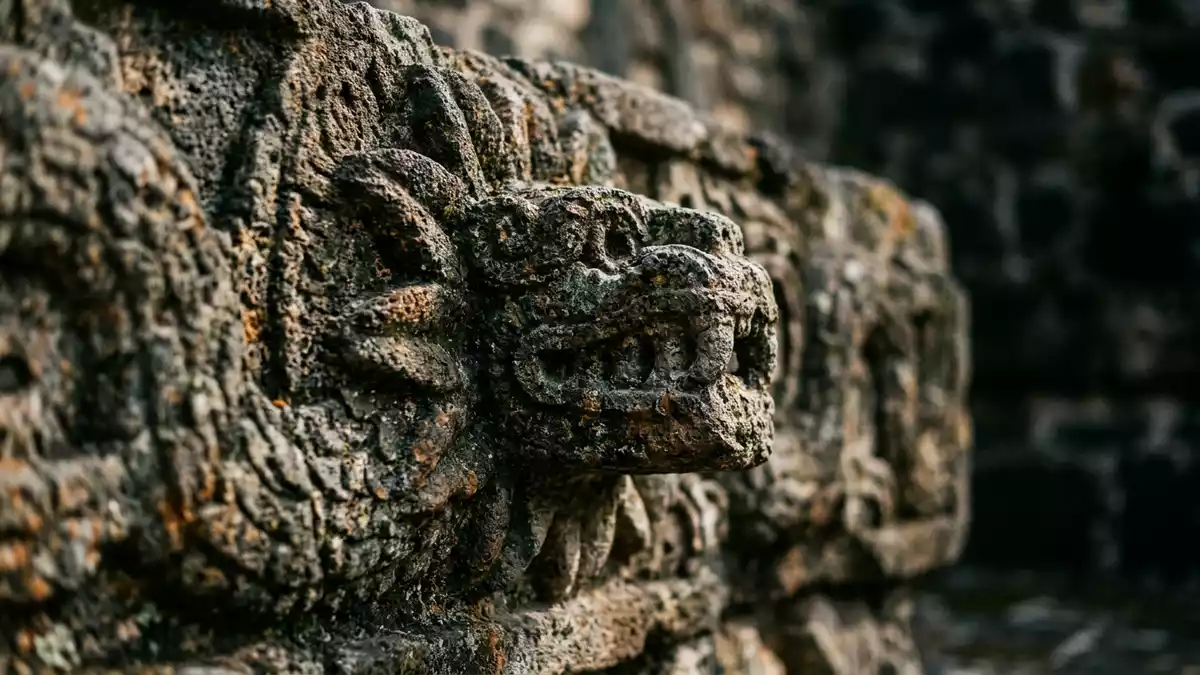
Teotihuacan in San Juan Teotihuacan in Mexico is an expansive pre-Hispanic city laid out around a straight ceremonial axis lined with pyramids and plazas. Built between the 1st and 7th centuries AD, it became one of Mesoamerica’s major urban centres and later gained UNESCO World Heritage status as the Pre-Hispanic City of Teotihuacan.
Avenue of the Dead and the city’s monumental plan
The heart of Teotihuacan is a broad processional route known as the Avenue of the Dead, a north–south spine bordered by platforms, plazas and residential compounds. The archaeological zone occupies part of a wider urban area that once covered several square kilometres in the Basin of Central Mexico, in a sub-valley of the larger Valley of Mexicoin the State of Mexico. Along the avenue stand the main ceremonial complexes, including the Pyramids of the Sun and the Moon and the Ciudadela, a vast enclosure that frames the Temple of Quetzalcoatl, also known as the Feathered Serpent.
The overall plan reflects geometric ordering: pyramids and platforms align with the central avenue and with cardinal directions and astronomical points described for the site. UNESCO describes Teotihuacan as “the place where the gods were created” and notes its development between the 1st and 7th centuries AD, when builders raised the enormous Temple of Quetzalcoatl and the two major pyramidson geometric and symbolic principles. The surviving remains include plazas paved in stone, staircases rising in broad flights to platforms, and clusters of apartment compounds flanking the ceremonial core.
Pyramid of the Sun: a man-made mountain of volcanic rock
East of the Avenue of the Dead, the Pyramid of the Sun dominates central Teotihuacan as the largest single structure in the city. Encyclopaedia Britannica describes it as a large pyramid built around 100 CE, rising about 66 m (216 ft) above ground level with a base roughly 220 m by 230 m (720 ft by 760 ft)on the east side of the avenue. Other architectural analyses describe a stepped mass of about five tiers, around 65 m (213 ft) high, with sides in the range of 220–225 m and a total volume in the order of a million cubic metres, formed of rubble and sun-dried adobe faced with stone and lime plasterraised over a cave. The core material includes local volcanic rock such as tezontle, a coarse red stone characteristic of the region.
The present pyramid stands as a stepped platform whose broad stairway climbs the western side towards what was once a summit temple, now lost. The faces show traces of repeated construction stages: sources describe an initial building phase around 100–200 AD, with later enlargement of the base and height during the Teotihuacan city’s flourishing periodbetween about 100 and 300 AD. The upper terraces and the platform edges form long horizontal lines, giving the pyramid the character of a raised mountain built from engineered layers rather than natural slopes.
Pyramid of the Moon, Ciudadela and mural-filled compounds
At the northern end of the Avenue of the Dead stands the Pyramid of the Moon, smaller in volume than the Pyramid of the Sun but set against low hills that echo its stepped profile. Travel and World Heritage descriptions give its height as over 40 m (around 43 m in some sources), rising above a plaza framed by platformswithin the ceremonial core. The pyramid’s base opens onto a broad square where processions along the Avenue of the Dead can be imagined crossing towards the northern complex, while subsidiary platforms form a sequence of smaller stairways and terraces.
South of the two great pyramids lies the Ciudadela, a rectangular enclosure containing the Temple of the Feathered Serpent, also known as the Temple of Quetzalcoatl. The Mexican National Institute of Anthropology and History (INAH) notes that the area open to visitors includes the Ciudadela, the Calzada de los Muertos (Avenue of the Dead), the Pyramids of the Sun and the Moon, and important palatial and residential complexes such as Quetzalpapálotl and several apartment compounds with mural paintingsincluding Tetitla, Atetelco, Tepantitla and La Ventilla. Within these compounds survive wall paintings with stylised figures, deities and geometric motifs, preserved on plastered surfaces in rooms that open onto small courtyards.
Visiting Teotihuacan: what travellers from Western Europe should know
- Teotihuacan lies north-east of Mexico City in the municipality of San Juan Teotihuacan in the State of Mexico, reached by road across the Basin of Central Mexico.
- The monumental zone is extensive, with long walks over stone-paved plazas and broad stairways on the pyramids and platforms; visiting involves climbing substantial flights of steps.
- The surrounding plateau sits at high altitude, and the exposed site offers limited shade across the main avenue and plazas.
- The official language is Spanish and the currency is the Mexican peso.
- Entry requirements depend on your nationality; UK travellers can check the FCDO travel advice at gov.uk/foreign-travel-advice, Irish travellers the Department of Foreign Affairs at ireland.ie.
Searching for Teotihuacan on social platforms
These links open searches for Teotihuacan on each platform.
Frequently asked questions about Teotihuacan
Where is Teotihuacan and what kind of site is it?
Teotihuacan is an ancient Mesoamerican city and archaeological zone in the municipality of San Juan Teotihuacan in the State of Mexico, north-east of Mexico City.
What should visitors expect during a visit?
The site centres on a long ceremonial avenue lined with plazas and large pyramids, with extensive walking over stone surfaces and the option to climb major stairways.
What makes Teotihuacan distinctive among ancient cities?
Its combination of a straight processional avenue, huge pyramids such as the Pyramid of the Sun and the Pyramid of the Moon, and apartment compounds with mural paintings creates a monumental urban landscape rare among pre-Hispanic sites.


