
Templo de A-Ma, Macau’s terraced sea goddess temple
Published on 09/15/2026 at 10:22 | Editorial responsibility: Rafael Müller, Editor-in-Chief AD HOC NEWS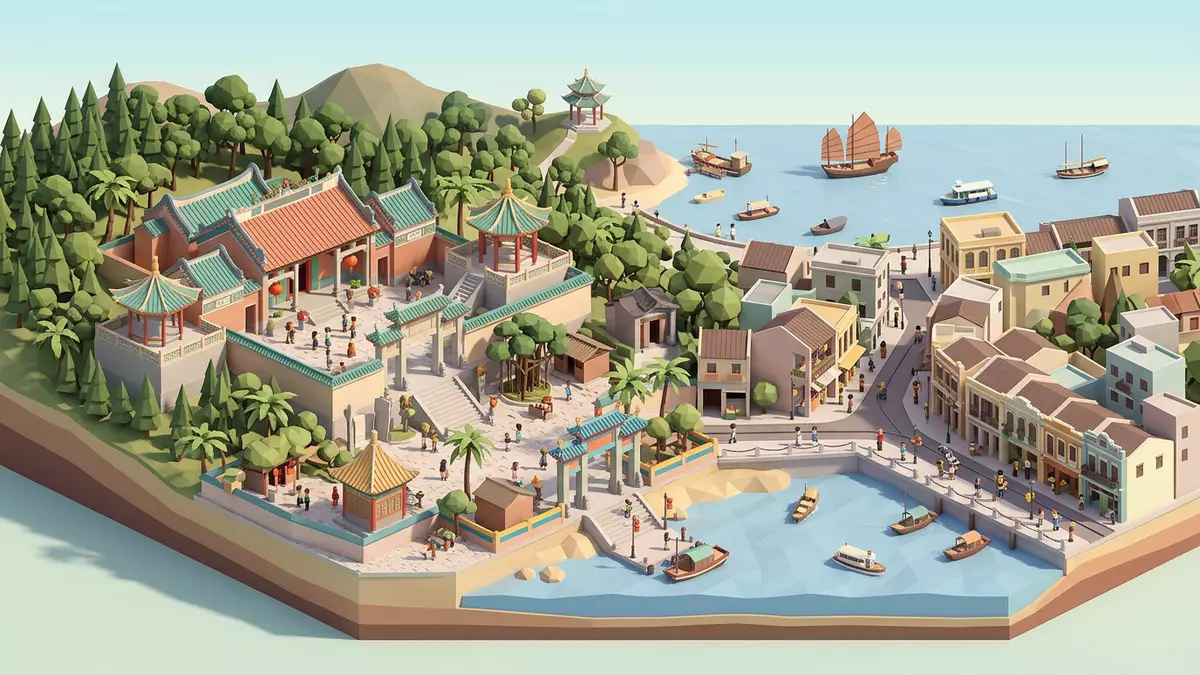
On the south-western edge of Macau Peninsula, Templo de A-Ma rises across the lower slopes of Barra Hill above the Inner Harbour, a terraced temple complex dedicated to the Chinese sea goddess Mazu. Built in 1488 during the Ming dynasty, it is regarded as one of Macau’s oldest surviving religious structures and later became part of the Historic Centre of Macau, recognised as a UNESCO World Heritage site in 2005.
A hillside temple shaped by sea and stone
Templo de A-MA, also known as A-Ma Temple or Barra Temple, occupies the western slope of Barra Hill where masonry walls, stairways and halls are set against exposed granite outcrops and boulder-like formations. The complex lies near the entrance to the Inner Harbour at the southern tip of the Macau Peninsula, facing the water and the working harbour below.Nestled on the slopes of Barra Hill the temple’s layout follows the hillside’s incline, so that its structures seem to step up from the shoreline towards the upper terraces.
Approaching from Barra Square, visitors encounter the lower courtyards framed by traditional Chinese gateways, where stone paving meets the base of the hill. From there, stairways climb towards a sequence of halls dedicated to different deities, with views opening out over the harbour between trees and roofs. The granite of Barra Hill appears within the complex itself, where natural rock surfaces stand beside built platforms and retaining walls, giving the impression that the temple has grown out of the hill rather than simply being placed upon it.The A-Ma Temple is Macau's oldest surviving temple and its hillside setting is integral to the way the different parts of the complex connect.
Mazu, maritime devotion and Ming-dynasty origins
The temple is dedicated to Mazu, also known as Tianhou, a maritime deity revered along the coasts of Fujian and Guangdong and among Chinese seafaring communities across East and Southeast Asia.The A-Ma Temple is a temple to the Chinese sea-goddess Mazu and its earliest structures date back to 1488 in the Ming dynasty, when local fishermen and sailors honoured the goddess who was believed to protect those at sea. Mazu’s cult links the site with maritime routes along the South China Sea and helps explain why a sea-facing slope became a focal point of religious practice.
Within the complex, different halls reflect layers of religious tradition. The Hall of Benevolence, associated with the earliest phase of the temple, stands close to the base of the hill and forms one of the older masonry pavilions.A prayer hall was added in 1605 and further structures followed in 1828, introducing spaces dedicated to Guan Yin and monastic buildings known as Zhengjue Chanlin. Taoist and Buddhist elements coexist on the hill, and incense spirals, shrines and altars line the courtyards and interior spaces, illustrating how different strands of Chinese religious practice share the same site.
Historic Centre of Macau and layered architecture
In 2005 A-Ma Temple was inscribed as part of the Historic Centre of Macau on the UNESCO World Heritage List, reflecting its role in the city’s urban and cultural history.A-Ma Temple is one of the core monuments of the Historic Centre of Macao, and Macau’s government had already classified it as an immovable monument in 1992. The temple’s age, association with Mazu and connection to Macau’s name all contribute to its recognised significance.
Architecturally, Templo de A-MA combines traditional Chinese roofing and timber structures with stone platforms and retaining walls that stabilise the slope. Roof ridges carry ceramic decorations, and painted timber beams and latticework line the interiors. Courtyards are relatively compact but varied in level, sometimes enclosed by walls and sometimes opening towards trees and the harbour. Rock surfaces within the complex bear carved inscriptions, while small shrines occupy recesses beside paths and staircases. Together these elements create a layered environment where built architecture, carving and natural geology are closely intertwined.
Visiting Templo de A-Ma: what travellers from Western Europe should know
- Templo de A-Ma stands on the south-western tip of the Macau Peninsula on the western slope of Barra Hill, near the Inner Harbour and Barra Square, reached by city bus routes serving Largo da Barra.
- The temple complex climbs a hillside, and visiting it involves walking up stone stairways, crossing uneven courtyards and navigating paths between rock outcrops and pavilions.
- The official language is Chinese and the currency is the Macanese pataca.
- Entry requirements depend on your nationality; UK travellers can check the FCDO travel advice at gov.uk/foreign-travel-advice, Irish travellers the Department of Foreign Affairs at ireland.ie.
Searching for Templo de A-Ma on social platforms
These links open searches for Templo de A-Ma on each platform.
Frequently asked questions about Templo de A-Ma
Where is Templo de A-Ma located in Macau?
Templo de A-Ma is on the south-western tip of the Macau Peninsula, on the western slope of Barra Hill above the Inner Harbour in the São Lourenço district.
What can visitors expect when exploring the temple complex?
Visitors walk through gateways, courtyards and halls that climb a granite hillside, with stone stairways, shrines and incense-filled interiors set beside exposed rock surfaces.
What makes Templo de A-Ma distinctive among Macau’s religious sites?
Its Ming-dynasty origins, dedication to the sea goddess Mazu, hillside layout integrating natural granite and its role within the UNESCO-listed Historic Centre of Macau give the temple a distinctive character.


