

Temple of Luxor begins paving works on 7 October
Published on 10/11/2026 at 05:48 | Editorial responsibility: Rafael Müller, Editor-in-Chief AD HOC NEWSKey points in brief
- Paving and improvement works around the Temple of Luxor began on 7 October 2026.
- The works cover Sidi Abu al-Haggag Square, surrounding roads and services near the Temple of Luxor in Luxor, Egypt.
- A separate October 2026 plan includes improvements to the entrance of the Temple of Luxor and electronic gates.
- The Temple of Luxor is an ancient sanctuary on the east bank of the Nile and forms part of Ancient Thebes, a UNESCO World Heritage site.
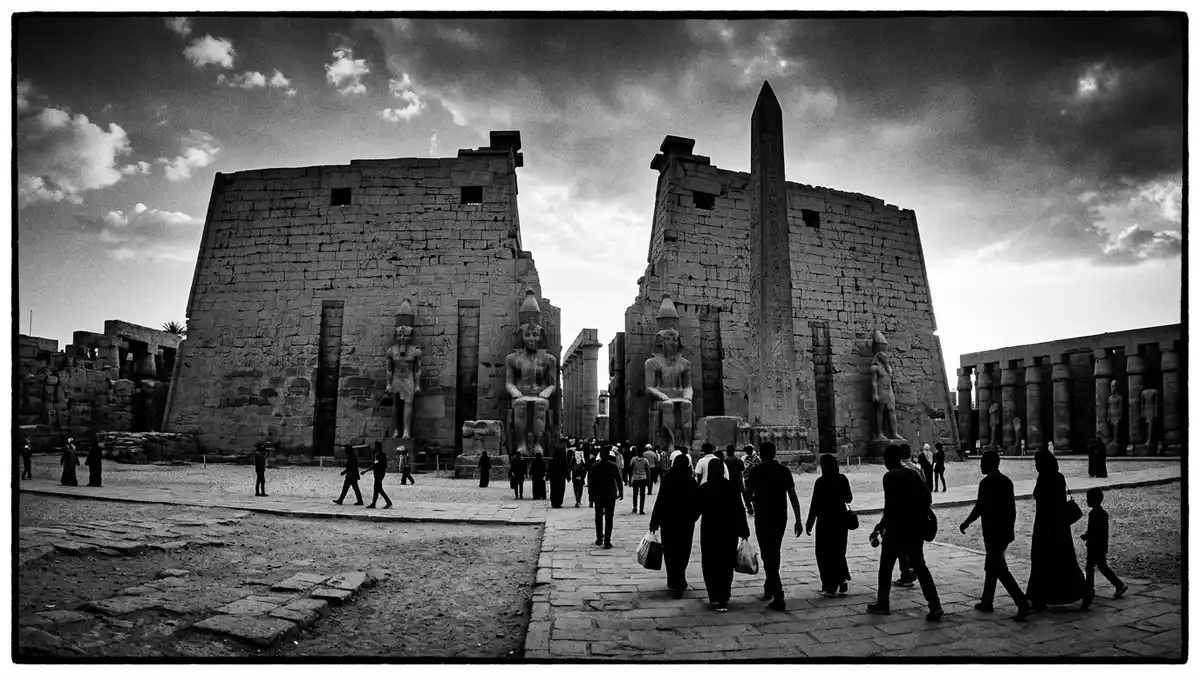
The Temple of Luxor (Ipet-resyt) in Luxor, Egypt, became the focus of paving and improvement works on 7 October 2026. The project covers Sidi Abu al-Haggag Square and areas around the ancient sanctuary as the city prepares for the new tourist season.
Paving works began around the Temple of Luxor on 7 October
Ali El-Sherbiny, head of Luxor City, announced the start of paving works in the square and around the temple on 7 October 2026. The programme includes removing old asphalt, levelling the road and reviewing water, sewage, gas, telecommunications and electricity networks before the final surfaces are laid.
The work forms part of a wider municipal plan to improve roads, public spaces and the visual identity of Luxor. The 7 October announcement says the works are intended to improve movement for residents and visitors, while maintaining the appearance of historic streets and squares.
Entrance upgrades connect the works with the ancient sanctuary
A second report published on 2 October 2026 described a broader city improvement plan that includes work on tourist routes, roads and temple approaches. It specifically listed development of the entrance to the Temple of Luxor and the installation of electronic gates. The city improvement plan places those changes alongside upgrades to utilities and roads across Luxor.
The connection between the two announcements is practical: paving around Sidi Abu al-Haggag Square addresses the approach outside the monument, while the entrance plan concerns the point where visitors pass into it. The reports describe improvement works and do not announce a closure of the archaeological site.
The Temple of Luxor links modern access to ancient processions
The monument stands on the east bank of the Nile in modern Luxor. It is around three kilometres south of Karnak, and the two sanctuaries were once linked by a processional way lined with sphinxes. That historic relationship gives the current approach works a specific setting rather than making them a general city upgrade.
The oldest evidence for the site belongs to the Eighteenth Dynasty, while the core was built under Amenhotep III. Hatshepsut, Tutankhamun, Horemheb and Ramesses II also shaped the complex. The Great Colonnade has two rows of seven colossal columns, and Ramesses II added a courtyard, a pylon and statues at the entrance.
The official monument record explains that the sanctuary was the destination of the ancient Opet procession from Karnak. The official monument record also places the site within ancient Thebes, which was added to the UNESCO World Heritage List in 1979.
Visiting Temple of Luxor: what travellers from Western Europe should know
- Paving and improvement works began on 7 October 2026 around Sidi Abu al-Haggag Square and the approaches to the Temple of Luxor.
- The announcements describe road, utility and entrance upgrades, including planned electronic gates, but do not announce a closure of the archaeological site.
- The monument is on the east bank of the Nile in central Luxor, near the Corniche and south of Karnak.
- Entry requirements depend on your nationality; UK travellers can check the FCDO travel advice at gov.uk/foreign-travel-advice, Irish travellers the Department of Foreign Affairs at ireland.ie.
- Arabic is Egypt's official language and the national currency is the Egyptian pound.
Searching for Temple of Luxor on social platforms
These links open searches for Temple of Luxor on each platform.
Frequently asked questions about Temple of Luxor
When did paving works begin at the Temple of Luxor?
The reported paving and improvement works began on 7 October 2026 around Sidi Abu al-Haggag Square and the surrounding area.
What is the Temple of Luxor?
It is an ancient Egyptian sanctuary on the east bank of the Nile, with major elements built during the Eighteenth Dynasty and later additions by Ramesses II.
Where is the Temple of Luxor and how do you get there?
It is in central Luxor on the east bank of the Nile, near the Corniche and around three kilometres south of Karnak.


