
Teatro Colon in Buenos Aires and its grand horseshoe of opera
Published on 09/03/2026 at 22:35 | Editorial responsibility: Rafael Müller, Editor-in-Chief AD HOC NEWS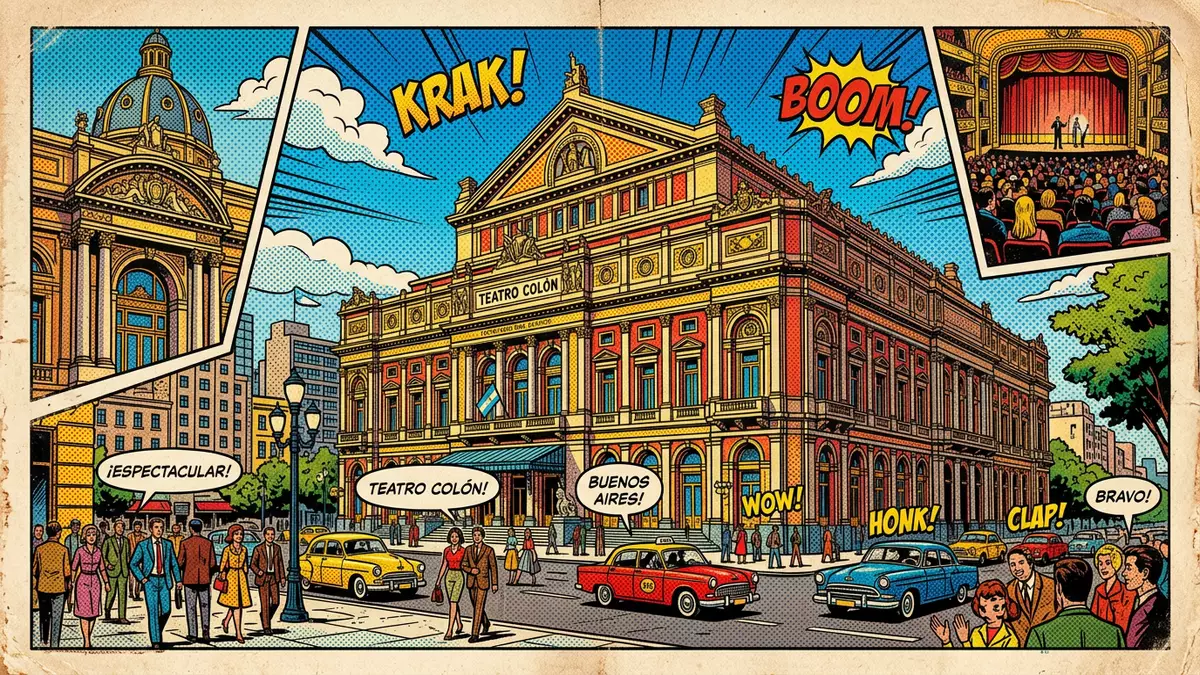
Teatro Colon in Buenos Aires is an early twentieth-century opera house whose vast horseshoe-shaped auditorium and layered European-inspired architecture make it one of the city’s defining cultural buildings. Opened on 25 May 1908 after a construction period of about two decades, it stands at the edge of Plaza Lavalle in central Buenos Aires as a monumental focus for opera, ballet and orchestral performance.
An opera house born from a long building process
The institution known as Teatro Colon has its roots in the nineteenth century, when the first theatre bearing the name opened in 1857 near Plaza de Mayo under architect Charles Henri Pellegrini.opened in 1857 near Plaza de Mayo That earlier building functioned for more than thirty years before closing in 1888 to make way for a new opera house on a different site.operated from 1857 to 1888
Construction of the present Teatro Colon began in the late nineteenth century and extended over roughly twenty years, reflecting the ambition to create a major opera venue for a capital city transforming under strong European architectural influence.construction over twenty years The new building opened on 25 May 1908 with Giuseppe Verdi’s opera “Aida”, a date still associated with its inauguration and with the moment it entered Argentina’s cultural history as a major opera house.opened on 25 May 1908 with Aida
Eclectic architecture shaped by several European designers
The current Teatro Colon brings together work by three European architects whose successive contributions give the building its layered authorship. Initial designs for the new theatre were prepared by Italian architect Francesco Tamburini in the late nineteenth century, setting out a grand opera house beside what became 9 de Julio Avenue.Francesco Tamburini’s initial design After Tamburini’s death, the project passed to architect Víctor Meano, and later Belgian architect Jules Dormal oversaw its completion, leaving the building with a combination of Italian, French and Central European influences.Tamburini, Meano and Dormal
The exterior shows elements related to Italian Renaissance revival and French decorative traditions, while certain aspects of its massing and plan reflect German-influenced thinking about large cultural buildings.Italian Renaissance and French style Inside, visitors encounter halls and foyers lined with rich materials and decorative detail before entering the main auditorium. The building has been recognised as a National Historic Monument in Argentina, a status that underlines its importance within the country’s architectural and cultural heritage.National Historic Monument designation
The grand horseshoe auditorium and performance tradition
At the heart of Teatro Colon lies its horseshoe-shaped auditorium, a classic form for an opera house that concentrates attention on the stage while surrounding it with tiers of boxes and galleries. This main hall seats thousands of spectators and is accompanied by extensive foyers, rehearsal rooms and backstage spaces that support opera, ballet and orchestral performance on a large scale.large horseshoe auditorium
Over the twentieth century Teatro Colon became a regular stage for many distinguished international conductors, singers and dancers, alongside Argentine ensembles and artists.twentieth-century performers The institution gradually developed its own stable orchestra, chorus and ballet in the 1920s, establishing permanent artistic bodies to accompany visiting performers and to sustain local productions of opera and dance.creation of orchestra, choir and ballet
Visiting Teatro Colon: what travellers from Western Europe should know
- Teatro Colon stands on Cerrito Street beside Plaza Lavalle in central Buenos Aires, within walking distance of major avenues such as 9 de Julio and near several Subte underground stations.
- Inside the building, movement between foyer levels and seats involves staircases and corridors, and the historic interior includes galleries and boxes arranged around the main auditorium.
- The official language is Spanish and the currency is the Argentine peso.
- Entry requirements depend on your nationality; UK travellers can check the FCDO travel advice at gov.uk/foreign-travel-advice, Irish travellers the Department of Foreign Affairs at ireland.ie.
Searching for Teatro Colon on social platforms
These links open searches for Teatro Colon on each platform.
Frequently asked questions about Teatro Colon
Where is Teatro Colon located in Buenos Aires?
Teatro Colon stands on Cerrito Street beside Plaza Lavalle in central Buenos Aires, close to major thoroughfares such as 9 de Julio Avenue.
What can visitors expect inside Teatro Colon?
Visitors encounter richly decorated foyers leading to a large horseshoe-shaped auditorium surrounded by tiers of boxes and galleries, along with backstage and rehearsal areas.
What makes Teatro Colon distinctive among opera houses?
The combination of its early twentieth-century construction, multi-architect European-influenced design and monumental horseshoe auditorium gives Teatro Colon a distinctive place among South American opera houses.


