
Tat Kuang Si and its limestone pools near Luang Prabang
Published on 09/23/2026 at 19:25 | Editorial responsibility: Rafael Müller, Editor-in-Chief AD HOC NEWS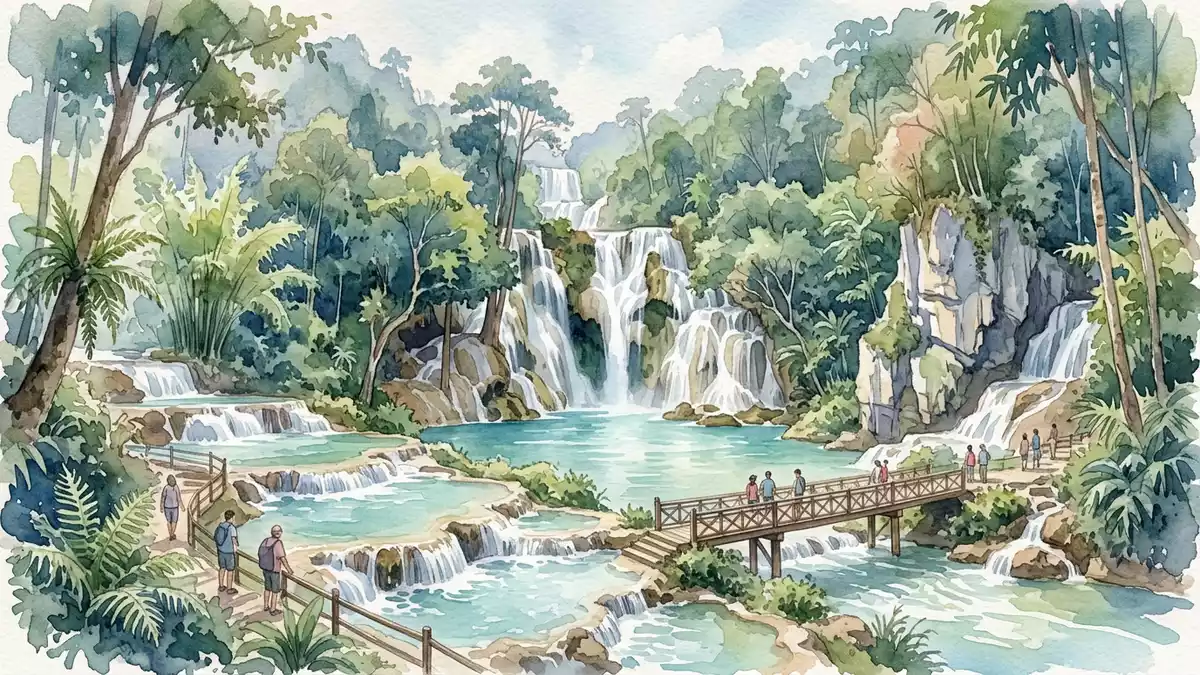
Tat Kuang Si is a multi-tiered waterfall in Luang Prabang Province, south-west of Luang Prabang in northern Laos. Its visible character comes from pale limestone terraces, shallow turquoise pools and a main cascade falling about 60 metres.
Tat Kuang Si: water across limestone terraces
The waterfall begins with water moving across a succession of shallow basins and ledges. The terraces are formed from limestone and travertine, a rock deposited by mineral-rich water. Their pale surfaces contrast with the blue-green pools below.
The main drop reaches about 60 metres (197 ft), while smaller cascades continue through the forested valley. This combination gives Tat Kuang Si a layered form: broad pools at one level, narrow channels at another, then the tall central fall. the 60-metre main cascade is the defining vertical feature of the site.
Limestone, minerals and the colour of the pools
Tat Kuang Si lies within the limestone landscape of Luang Prabang Province. Water passing through this geology carries calcium carbonate, which is deposited along the channels and contributes to the formation of the pale terraces.
The pools range from shallow upper basins to deeper turquoise areas beneath the cascades. Their colour changes with water and sediment conditions. In the dry season, the water may appear blue-green; during the wet season, it can take on a deeper green tone. the changing water colour is part of the waterfall’s natural appearance.
The surrounding vegetation is tropical forest, with trees rising around the limestone channels. The pools, rock rims and hanging water create a connected sequence rather than a single isolated plunge. the travertine pool system records the close relationship between water and mineral deposits.
From Luang Prabang Province to Tat Kuang Si Park
Tat Kuang Si is associated with Tat Kuang Si Park, a protected forest area in Luang Prabang Province. The falls lie about 30 kilometres (19 miles) south-west of Luang Prabang, placing a forested water landscape within the wider cultural region of the old royal city.
The name Tat Kuang Si combines the Lao word “Tat”, meaning waterfall, with the place name Kuang Si. The site belongs to the natural setting around Luang Prabang, whose historic town is recognised as a UNESCO World Heritage site. Tat Kuang Si Park is the local setting associated with the falls.
Paths connect the lower pools with higher sections of the cascade. Bridges, railings and cleared walkways appear beside parts of the stream, while the main visual elements remain water, limestone and forest. Tat Kuang Si is therefore read through its changing levels: a low series of pools, white rock ledges and the tall fall above them.
Visiting Tat Kuang Si: what travellers from Western Europe should know
- Tat Kuang Si lies south-west of Luang Prabang in Luang Prabang Province. It is reached by road from the town, with Tat Kuang Si Park as the destination.
- The approach follows forest paths beside limestone pools and cascading water. Uneven ground, steps and wet rock occur around the waterfall.
- The official language is Lao and the currency is the Lao kip.
- Entry requirements depend on your nationality; UK travellers can check the FCDO travel advice at gov.uk/foreign-travel-advice, Irish travellers the Department of Foreign Affairs at ireland.ie.
Searching for Tat Kuang Si on social platforms
These links open searches for Tat Kuang Si on each platform.
Frequently asked questions about Tat Kuang Si
Where is Tat Kuang Si?
Tat Kuang Si is in Luang Prabang Province, about 30 kilometres south-west of Luang Prabang in northern Laos. The waterfall forms part of Tat Kuang Si Park.
What can visitors expect at Tat Kuang Si?
The site contains forest paths, limestone terraces, shallow basins and cascading water. Uneven ground, steps and wet rock occur along parts of the approach.
What makes Tat Kuang Si distinctive?
The waterfall combines a main drop of about 60 metres with pale limestone ledges and turquoise pools. Calcium-carbonate deposits shape the stepped appearance of the watercourse.


