
Taman Nasional Komodo, where dragons meet volcanic seas
Published on 09/03/2026 at 09:25 | Editorial responsibility: Rafael Müller, Editor-in-Chief AD HOC NEWS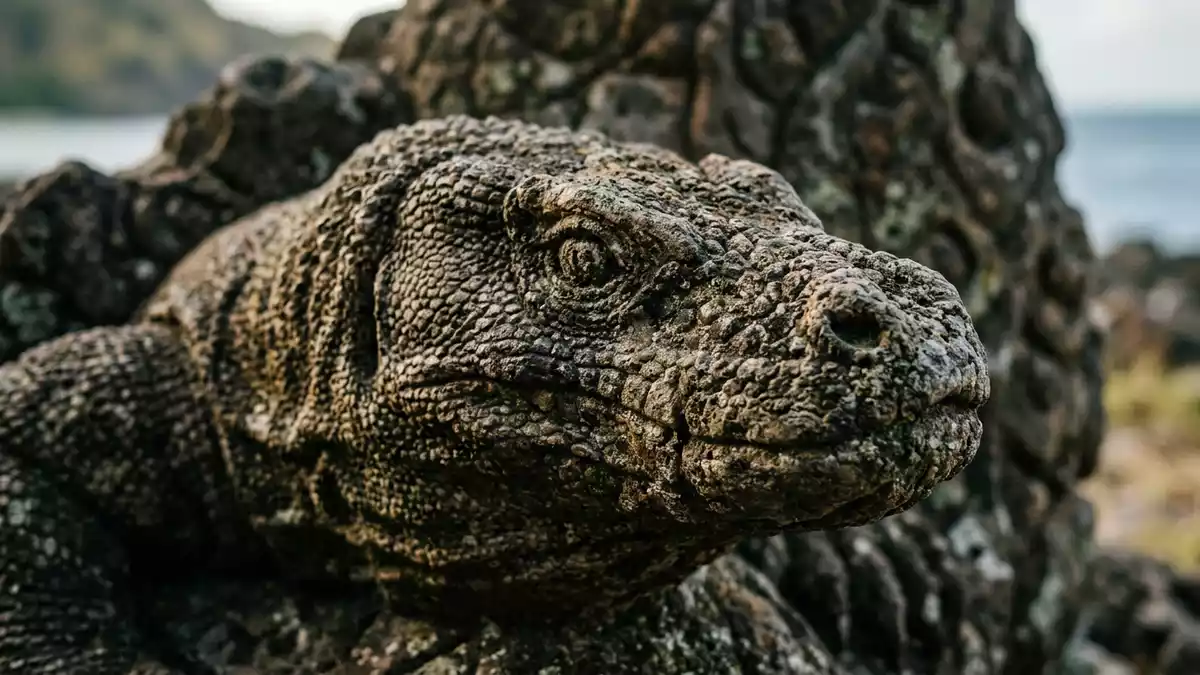
Taman Nasional Komodo, known internationally as Komodo National Park, spreads across a chain of volcanic islands between Sumbawa and Flores in eastern Indonesia. Established in 1980 to protect the Komodo dragon, it combines dry hills, savanna slopes and coral-rich seas in a protected landscape now recognised as a UNESCO World Heritage Site.
Volcanic islands shaped by land and sea
Taman Nasional Komodo lies within the Lesser Sunda Islands, in the border region between the provinces of East Nusa Tenggara and West Nusa Tenggara in eastern Indonesia.Lesser Sunda Islands location The park is centred on three major islands — Komodo, Rinca and Padar — surrounded by numerous smaller ones, all of volcanic origin rising steeply from the sea.three major islands and volcanic origin
Across land and water the protected area covers more than 1,700 km², combining terrestrial hillsides with extensive marine zones in the strait between Flores and Sumbawa.overall park area The islands carry rugged slopes and dry grasslands broken by pockets of woodland, while the surrounding seas form part of the wider Asia–Pacific Coral Triangle, a region known for concentrated marine biodiversity.location in the Coral Triangle
Komodo dragons and other wildlife
The park was created by the Indonesian government in 1980 with the specific aim of protecting the Komodo dragon, the largest living lizard on the planet.creation of the park in 1980 These monitor lizards inhabit several of the larger islands, including Komodo and Rinca, where open savanna and pockets of forest provide their hunting grounds for deer and other prey.dragons on the larger islands
Alongside the dragons, Taman Nasional Komodo shelters a wide array of terrestrial animals and an extensive marine community. Within its waters live more than 1,000 species of tropical fish and hundreds of coral species, together with marine mammals such as dugongs.tropical fish and corals The combination of exposed hills, mangroves, seagrass beds and reefs makes the park a compact illustration of eastern Indonesian ecosystems.
World Heritage recognition and the gateway at Labuan Bajo
In 1991 Komodo National Park was inscribed on the UNESCO World Heritage List under natural criteria, acknowledging its value for conserving Komodo dragons and its terrestrial and marine biodiversity.World Heritage inscription in 1991 The inscription covers islands and surrounding seas, forming a protected area where volcanic landforms and coral habitats are managed as a single conservation unit.extent of the World Heritage property
Access to Taman Nasional Komodo is centred on Labuan Bajo, a coastal town on the western tip of Flores that serves as the main harbour for boats entering the park.Labuan Bajo as nearest town From the bay, vessels cross the strait to reach island anchorages near Komodo, Rinca, Padar and smaller islets, linking the town’s waterfront naturally with the protected volcanic landscape.
Visiting Taman Nasional Komodo: what travellers from Western Europe should know
- Taman Nasional Komodo lies between Sumbawa and Flores in eastern Indonesia, with most boat departures starting from the harbour at Labuan Bajo on Flores Island.
- The terrain on the main islands combines steep hillsides and dry savanna slopes, with paths that climb exposed ridges and sections of stone steps on popular viewpoints.
- Landing sites within the park are set along beaches and small jetties, and access from boats may involve walking across sand before reaching marked trails inland.
- The official language is Indonesian and the currency is the Indonesian rupiah.
- Entry requirements depend on your nationality; UK travellers can check the FCDO travel advice at gov.uk/foreign-travel-advice, Irish travellers the Department of Foreign Affairs at ireland.ie.
Searching for Taman Nasional Komodo on social platforms
These links open searches for Taman Nasional Komodo on each platform.
Frequently asked questions about Taman Nasional Komodo
Where is Taman Nasional Komodo located?
Taman Nasional Komodo is in eastern Indonesia between Sumbawa and Flores, within the Lesser Sunda Islands and reached most directly from Labuan Bajo on Flores.
What should visitors expect on a trip into the park?
Visitors encounter dry volcanic islands with steep walking trails, savanna slopes and coastal landings, together with boat travel through narrow straits and coral-rich seas.
What makes Taman Nasional Komodo distinctive among national parks?
It combines habitat for the Komodo dragon, the largest living lizard, with protected volcanic islands and biodiverse marine environments recognised as a UNESCO World Heritage Site.


