
Taman Nasional Komodo’s volcanic islands and dragons
Published on 08/28/2026 at 22:32 | Editorial responsibility: Rafael Müller, Editor-in-Chief AD HOC NEWS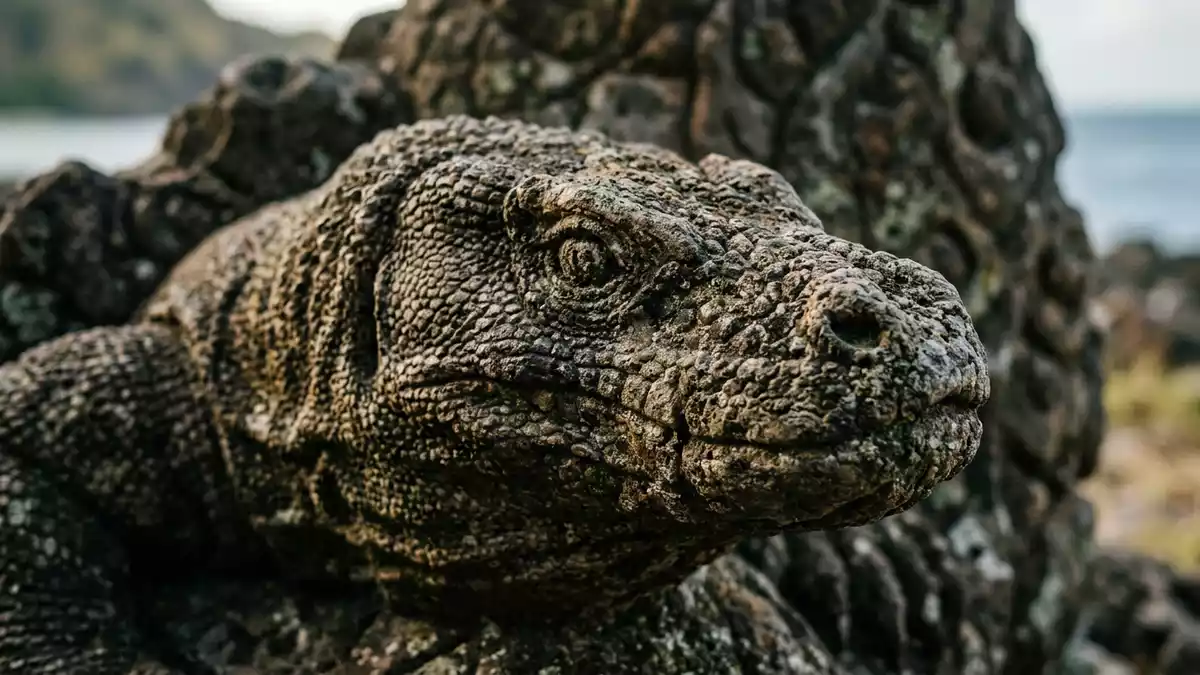
Taman Nasional Komodo, internationally known as Komodo National Park, is a protected island and marine landscape in eastern Indonesia where rugged volcanic hills rise directly from clear tropical seas and Komodo dragons roam the dry savanna slopes. Established as a national park in 1980 and recognised in 1991 as a UNESCO World Heritage Site, it anchors the wider Labuan Bajo area as a gateway to one of Indonesia’s most distinctive island groups.
Volcanic islands between Flores and Sumbawa
Komodo National Park lies in the Lesser Sunda Islands between Flores and Sumbawa, in the narrow Sape Strait that threads the central Indonesian archipelago. The park’s core terrestrial area consists of the larger islands of Komodo, Rinca and Padar along with a scatter of smaller islands and islets, all of volcanic origin that give the landscape its steep ridges and deeply indented bays.located between Sumbawa and Flores
Within the World Heritage boundary the protected surface covers over 200,000 ha, combining terrestrial terrain and extensive marine zones around the islands.the World Heritage property covers 219,322 ha The terrestrial portion includes the main islands and several smaller ones, while the surrounding seas encompass coral reefs, channels and coastal waters where swift tidal currents flow around the volcanic slopes.the park has terrestrial and marine zones
Komodo dragons and dry island savannas
The park was founded in 1980 with a clear conservation focus on the Komodo dragon, a giant lizard species formally known as Varanus komodoensis that has its main habitat on the islands of Komodo and Rinca and nearby smaller islands.the national park was founded in 1980 Komodo dragons can reach lengths of around 3 m, and their stocky bodies, powerful tails and heavy heads give them a striking presence when they move across the open slopes and dry riverbeds.the lizards can grow to 3 m in length
On land, the islands are largely covered by open grass-woodland savanna, with patches of forest in more sheltered valleys and pockets of scrub on the lower slopes.the islands are mostly covered by open grass-woodland savanna Deer and other prey animals share these landscapes with the dragons, and the combination of dry hillsides, small coastal plains and narrow inlets gives the terrestrial part of Taman Nasional Komodo a character distinct from the wetter volcanic islands elsewhere in Indonesia.Komodo dragons live primarily on Komodo, Rinca, Nusa Kode and Gili Motang
Coral-rich seas and UNESCO recognition
Surrounding the islands, the park’s marine environment shelters coral reefs, sea-grass beds and channels that form part of the broader Coral Triangle region of high tropical marine diversity.more than 1,000 species of tropical fish and 260 species of coral live within Komodo National Park Surveys have documented more than 1,000 species of tropical fish and hundreds of coral species in the park’s waters, along with marine mammals such as dugongs that rely on the protected coastal habitats.
In 1991 Komodo National Park was inscribed on the UNESCO World Heritage List under natural criteria, recognising both its dramatic volcanic seascapes and its importance as habitat for species with outstanding universal value, notably the Komodo dragon.inscribed on the World Heritage List in 1991 The same year, it was designated a biosphere reserve within UNESCO’s Man and the Biosphere Programme, linking the islands and surrounding seas into a wider framework for conserving the region’s ecosystems and monitoring human use.recognised as a biosphere reserve
Visiting Taman Nasional Komodo: what travellers from Western Europe should know
- Taman Nasional Komodo lies in East Nusa Tenggara province in south-central Indonesia, with Labuan Bajo on the western tip of Flores serving as a common departure harbour for boat trips into the park.
- On the islands, paths can involve ascents over dry, uneven ground with exposed ridges and descents towards sheltered bays, so walking sections may include slopes and stretches under strong sun.
- Within view of the park’s hills and channels lie other named landscapes of Flores, and the wider Labuan Bajo area combines island scenery with coastal settlement on the main island.
- The official language is Indonesian and the currency is the Indonesian rupiah.
- Entry requirements depend on your nationality; UK travellers can check the FCDO travel advice at gov.uk/foreign-travel-advice, Irish travellers the Department of Foreign Affairs at ireland.ie.
Searching for Taman Nasional Komodo on social platforms
These links open searches for Taman Nasional Komodo on each platform.
Frequently asked questions about Taman Nasional Komodo
Where is Taman Nasional Komodo located in Indonesia?
Taman Nasional Komodo lies in East Nusa Tenggara province between the islands of Flores and Sumbawa, in the Lesser Sunda Islands of Indonesia.
What can visitors expect on a visit to the park?
Visitors encounter dry volcanic island landscapes rising from the sea, walking routes on the main islands and views over coral-rich channels and bays.
What makes Taman Nasional Komodo distinctive among Indonesian protected areas?
The coexistence of Komodo dragons on open savanna slopes and highly diverse marine ecosystems around the islands makes Taman Nasional Komodo a singular protected landscape.


