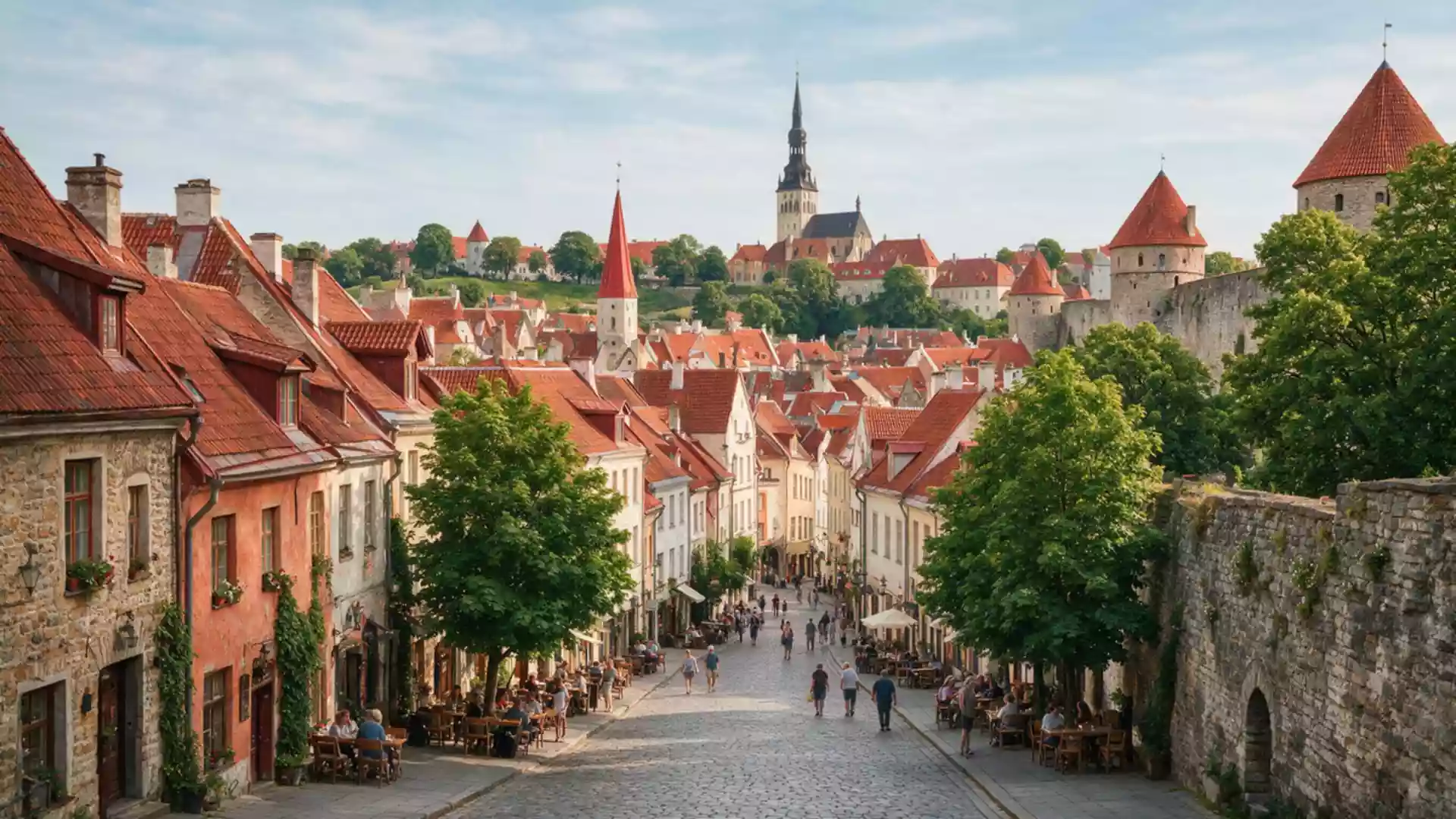
Tallinna vanalinn, Tallinn’s medieval stone labyrinth
Published on 09/14/2026 at 11:12 | Editorial responsibility: Rafael Müller, Editor-in-Chief AD HOC NEWS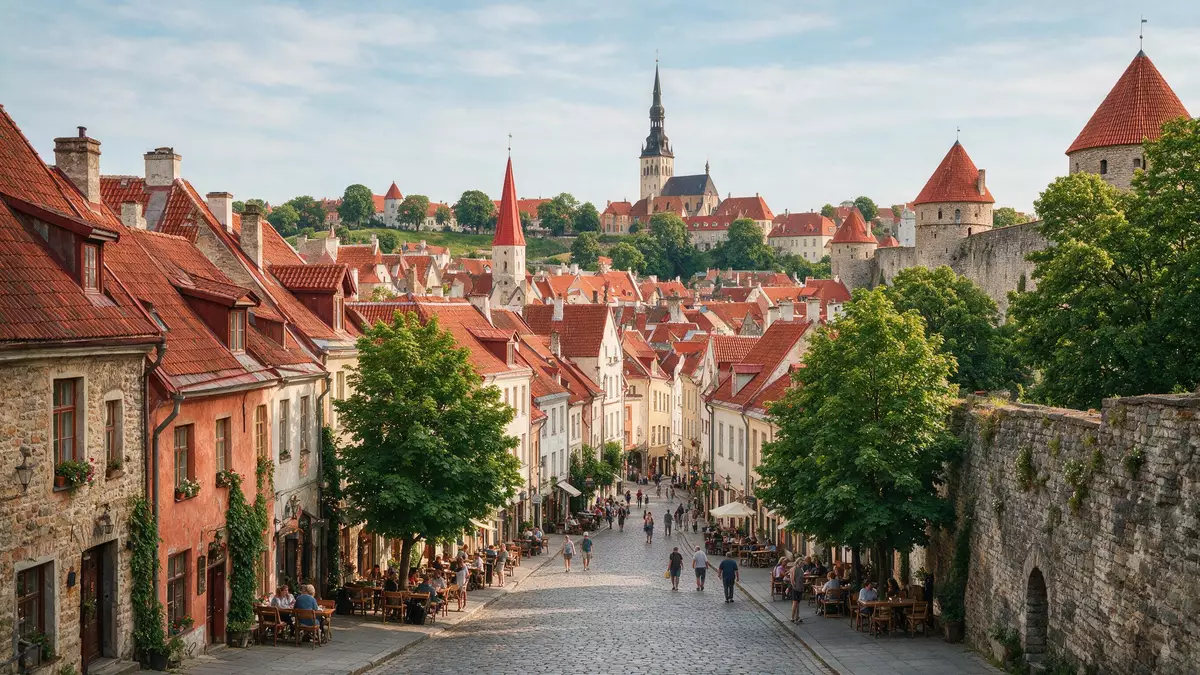
Tallinna vanalinn, the historic Old Town of Tallinn in Estonia, is a compact medieval quarter where limestone houses, fortifications and churches still follow a layout rooted in the thirteenth century. Within the city walls, streets and squares form a dense stone labyrinth that has earned the Historic Centre of Tallinn a place on the UNESCO World Heritage List since 1997.
Medieval city within preserved fortifications
Tallinna vanalinn occupies the oldest part of Tallinn, enclosed by fortifications that once defined the city’s defensive boundary on the Baltic Sea coast. The Old Town is recognised on the UNESCO World Heritage List as the “Historic Centre (Old Town) of Tallinn”, reflecting its status as an exceptionally complete medieval northern European trading city.Historic Centre of Tallinn Within this area, the streets, buildings and open spaces retain an urban structure originating in the Middle Ages, when Tallinn was an important member of the Hanseatic League.
The fortified character of Tallinna vanalinn is still visible in the town walls and defence towers that border the quarter. The Old Town is defined as a conservation area whose boundaries follow the line of historic fortifications, with the medieval core forming part of a wider protected zone.Tallinn Old Town Conservation Area Inside the walls, stone lanes descend from the high ground of Toompea towards the merchant streets and market spaces of the lower town, giving the quarter its characteristic layered topography.
Hanseatic townscape of limestone and gothic forms
The architecture of Tallinna vanalinn largely reflects the period from the thirteenth to the sixteenth century, when Tallinn, known historically as Reval, participated in Baltic trade as part of the Hanseatic League.architecture in Tallinn Local limestone is a defining construction material, giving churches, townhouses and guild buildings their pale, solid appearance. Gothic civic and ecclesiastical architecture is well represented in the Old Town, ranging from the Town Hall to the large medieval churches that rise above the roofs.
Within the streets of Tallinna vanalinn, merchants’ houses and guild buildings present façades shaped by Hanseatic architectural traditions, with gables facing the street and inner courtyards behind. The urban plan preserves a network of lanes and small squares that correspond closely to the thirteenth-century city plan.thirteenth century city plan The layering of styles over time adds further depth, with Renaissance and later classicist details appearing alongside earlier gothic forms without overwhelming the medieval character of the quarter.Middle Age architecture in Tallinn
Upper and lower town: civic and ecclesiastical power
A distinctive feature of Tallinna vanalinn is the relationship between the upper and lower parts of the town. On the hill of Toompea, the upper town developed as a centre of ecclesiastical and feudal authority, with a castle complex and cathedral concentrated on the high ground.Toompea stronghold Below, the lower town grew around the market areas and harbour approaches, controlled by civic institutions and merchants.
The contrast between Toompea and the streets of the lower town is visible in the layout of Tallinna vanalinn. Steep lanes connect the high plateau with the merchant quarters, while the central square serves as a focal point for civic buildings. Over time, this dual structure became a hallmark of Tallinn’s identity, and the Old Town’s conservation as a unified ensemble preserves both parts of the historic city.Old Town of Tallinn area
Visiting Tallinna vanalinn: what travellers from Western Europe should know
- Tallinna vanalinn lies in the central district of Tallinn on Estonia’s northern Baltic coast, immediately inland from the harbour and adjacent modern city streets.
- Within the Old Town, streets frequently follow steep gradients between the upper town on Toompea hill and the lower town, with cobbled surfaces and stairways on some approaches.
- The official language is Estonian and the currency is the euro.
- Several prominent churches and civic buildings stand within walking distance of each other, with viewpoints over the roofs from the higher parts of Toompea.
Searching for Tallinna vanalinn on social platforms
These links open searches for Tallinna vanalinn on each platform.
Frequently asked questions about Tallinna vanalinn
Where is Tallinna vanalinn located within Tallinn?
Tallinna vanalinn forms the historic centre of Tallinn on Estonia’s northern Baltic coast, enclosed by fortifications near the harbour and central districts.
What should visitors expect when walking through Tallinna vanalinn?
Visitors encounter cobbled streets, stone townhouses, churches and defence walls arranged in a medieval street network that climbs between the upper town on Toompea and the lower merchant quarters.
What makes Tallinna vanalinn distinctive among historic city centres?
The Old Town combines a well-preserved Hanseatic urban plan, limestone gothic architecture and a dual structure of upper and lower town, recognised collectively as a UNESCO World Heritage site.