
Tallinna vanalinn and the medieval city within its walls
Published on 09/24/2026 at 09:51 | Editorial responsibility: Rafael Müller, Editor-in-Chief AD HOC NEWS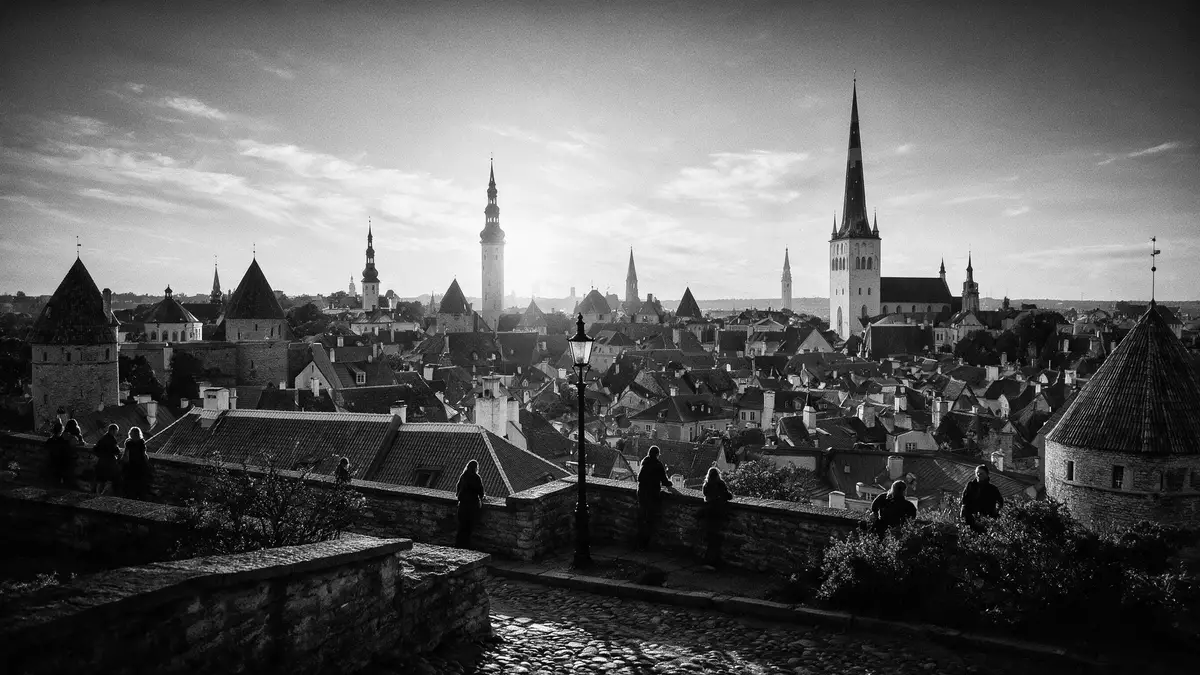
Tallinna vanalinn is a medieval city of two levels: Toompea rises above the lower town, while walls, towers, churches and merchant houses occupy the slopes below. The historic centre of Tallinn preserves this visible division in its streets, skyline and surviving urban fabric.
Toompea above Tallinn’s lower town
The upper town occupies a limestone hill above the lower town. Toompea contains the castle and St Mary’s Cathedral, and it remains the administrative centre of Estonia. From the hill, the red roofs and church spires of the lower town form a dense historic landscape.
The lower town preserves narrow winding streets, squares and building plots associated with the medieval trading city. The Town Hall, guild buildings, churches, merchant houses and the Town Hall Pharmacy belong to this urban fabric. Many streets retain medieval names, while the street plan preserves relationships established during the thirteenth and fourteenth centuries.
Walls, towers and the shape of a medieval trading city
Tallinna vanalinn developed as a significant centre of the Hanseatic League between the thirteenth and sixteenth centuries. The city’s public buildings and merchant houses record the wealth of that commercial period, while its fortifications define the boundary between the historic centre and the streets beyond.
Large sections of the town defences survive at their original length and height, rising above 15 m (49 ft) in places. The system includes walls, gates and defensive towers, with the best-known remains near Viru Gate and the northwest section around Nunna, Sauna and Kuldjala towers.
Churches, guilds and Tallinn’s layered history
Churches give Tallinna vanalinn its distinctive skyline. St Olaf’s Church rises from the lower town, while the Church of the Holy Spirit retains its fourteenth-century fabric and an exterior clock. St Mary’s Cathedral occupies Toompea, where its history reaches back to the thirteenth century.
The district also contains the Great Guild Hall, the House of the Brotherhood of the Blackheads, the Kiek in de Kök fortifications and the Niguliste Museum. Their different functions connect religious life, merchant organisation, military history and art within a compact urban area.
Tallinna vanalinn entered the UNESCO World Heritage List in 1997. The listed historic centre covers Toompea, the lower town inside the medieval walls and later fortifications around the old town, preserving a living district with domestic, commercial and religious uses.
Visiting Tallinna vanalinn: what travellers from Western Europe should know
- Tallinna vanalinn lies in central Tallinn. Viru Gate, Freedom Square and Tallinn railway station provide recognisable approaches to the historic centre.
- The old town rises from the lower streets to Toompea hill. Cobbled lanes, slopes, stairs and uneven surfaces shape movement between the two levels.
- The official language is Estonian and the currency is the euro.
- Estonian churches, guild halls, museums and fortifications occupy buildings with different historical functions, so the district is both an urban neighbourhood and a heritage area.
Searching for Tallinna vanalinn on social platforms
These links open searches for Tallinna vanalinn on each platform.
Frequently asked questions about Tallinna vanalinn
Where is Tallinna vanalinn?
Tallinna vanalinn is the historic centre of Tallinn, Estonia. It includes Toompea hill and the lower town within the medieval fortifications.
What can visitors expect in the old town?
Visitors encounter cobbled streets, sloping lanes, churches, guild halls, merchant houses, museums, squares and surviving walls. The district combines residential, religious, commercial and administrative uses.
What makes Tallinna vanalinn distinctive?
Its upper and lower towns remain legible as parts of one medieval trading city. The preserved street plan, fortifications, churches and merchant architecture explain its UNESCO World Heritage status.


