Taj Mahal: white marble, symmetry and Mughal memory
Published on 09/03/2026 at 08:22 | Editorial responsibility: Rafael Müller, Editor-in-Chief AD HOC NEWS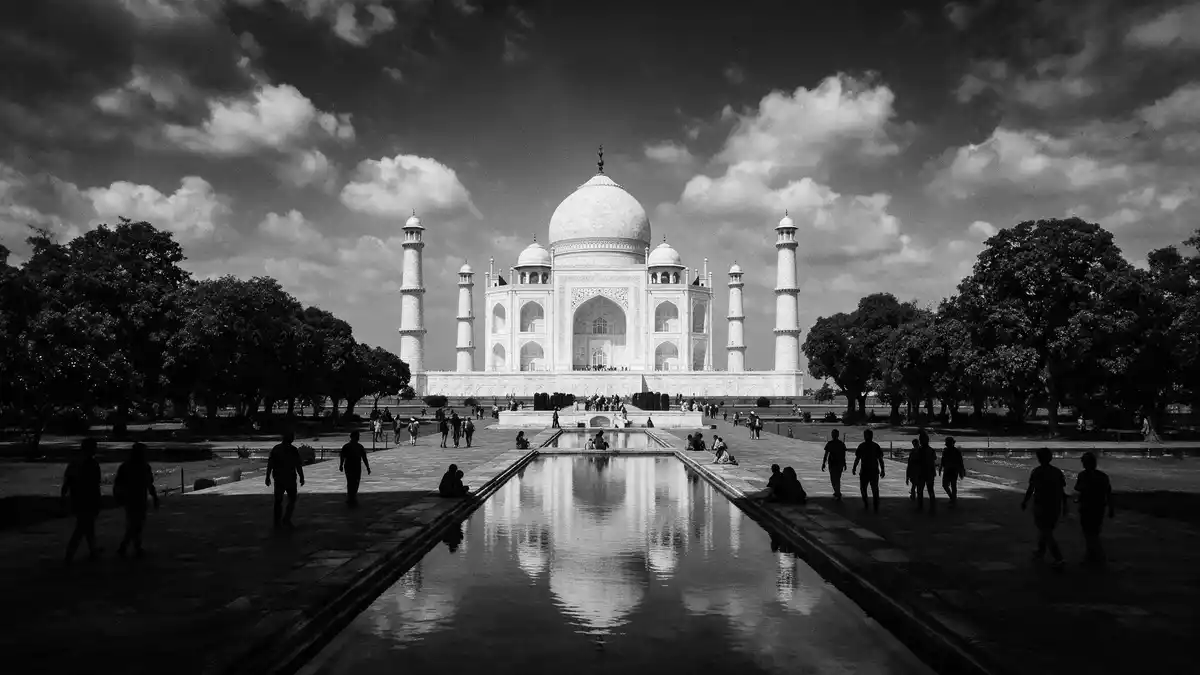
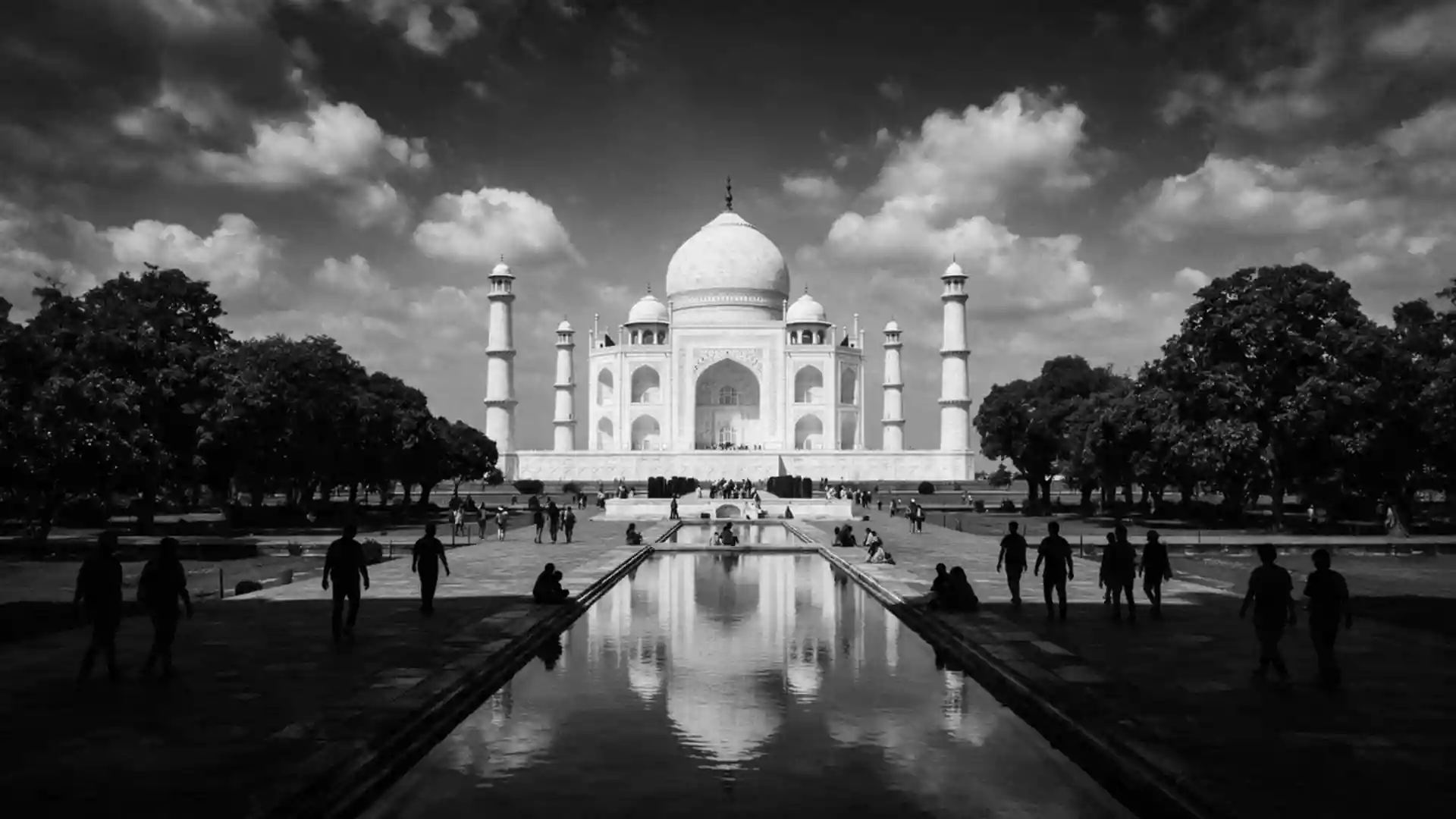
Taj Mahal in Agra is a white marble mausoleum on the Yamuna riverbank, commissioned by Shah Jahan. Built between 1631 and 1648, it pairs a central tomb with gardens, gate structures and flanking buildings.
White marble on a Mughal axis
The monument’s first impression comes from its material and balance. White marble covers the central tomb, while the surrounding complex extends in a strict, symmetrical arrangement.
The main gate, the garden divisions and the side buildings all sit on a central axis. The complex takes its place within the wider language of Mughal architecture, where geometry, marble and formal garden planning work together.
Shah Jahan, Mumtaz Mahal and the tomb
The building is linked to Shah Jahan and to Mumtaz Mahal, whose memory shaped the monument’s identity. The site remains a mausoleum, not only a landmark of Agra.
Its setting on the right bank of the Yamuna gives the complex a long river edge, and the garden lies in front of the tomb rather than behind it. The 1983 inscription adds formal recognition to a place already defined by its scale and material presence.
The garden, gateways and side buildings
The wider ensemble includes the main gate, a forecourt, garden quarters and paired buildings on the east and west sides. The mosque and the guest house are part of that arrangement, and they differ in material from the marble tomb.
That contrast between red sandstone and marble gives the complex clear visual layers. The whole site reads as a planned composition, with each part placed in relation to the others.
Visiting Taj Mahal: what travellers from Western Europe should know
- The monument stands in Agra, Uttar Pradesh, on the north bank of the Yamuna. Access is through the formal complex rather than directly to the tomb.
- The approach is across open grounds and paved surfaces. The site includes gates, terraces and garden divisions.
- English is not an official language in India, and the currency is the Indian rupee.
- Agra Fort is closely linked with the Taj Mahal’s broader Mughal setting.
Searching for Taj Mahal on social platforms
These links open searches for Taj Mahal on each platform.
Frequently asked questions about Taj Mahal
Where is Taj Mahal?
It stands in Agra, in Uttar Pradesh, on the right bank of the Yamuna. The monument forms part of a larger Mughal complex.
What does a visit involve?
The complex is laid out with gates, gardens and the main tomb, so the visit moves through a sequence of formal spaces. The marble mausoleum is the visual focus.
What makes Taj Mahal distinctive?
Its white marble, symmetry and river setting define it at once. The name of Shah Jahan remains tied to that composition.