Taj Mahal and the white marble form of Agra
Published on 09/11/2026 at 12:13 | Editorial responsibility: Rafael Müller, Editor-in-Chief AD HOC NEWS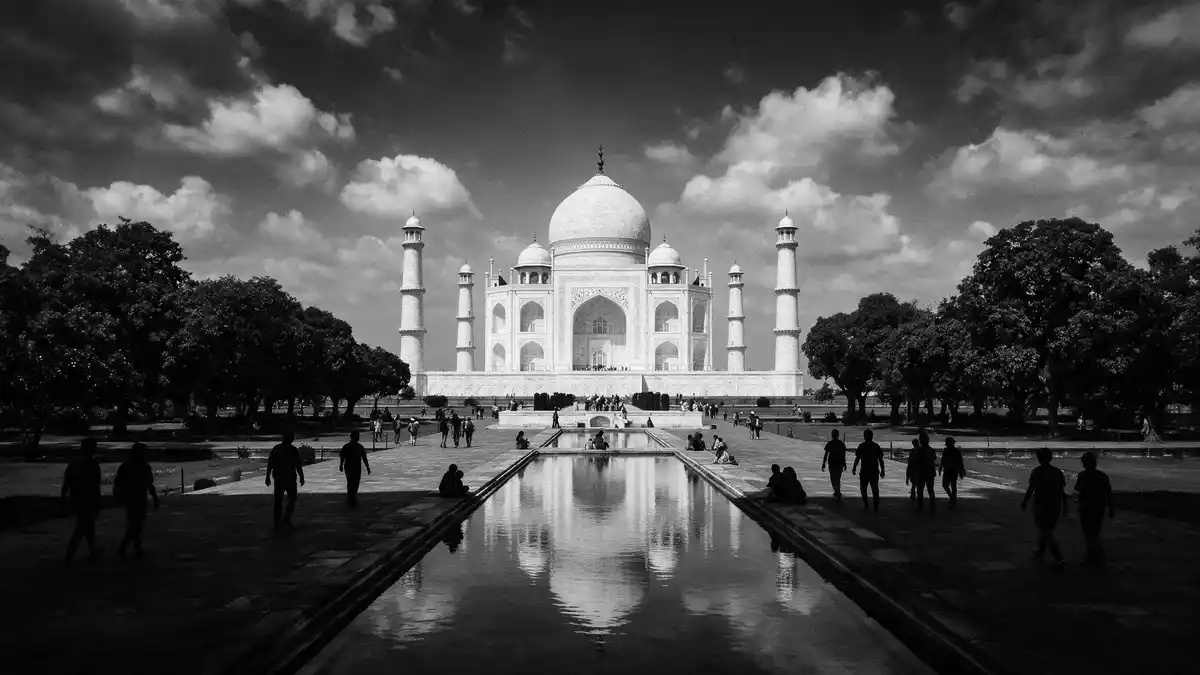
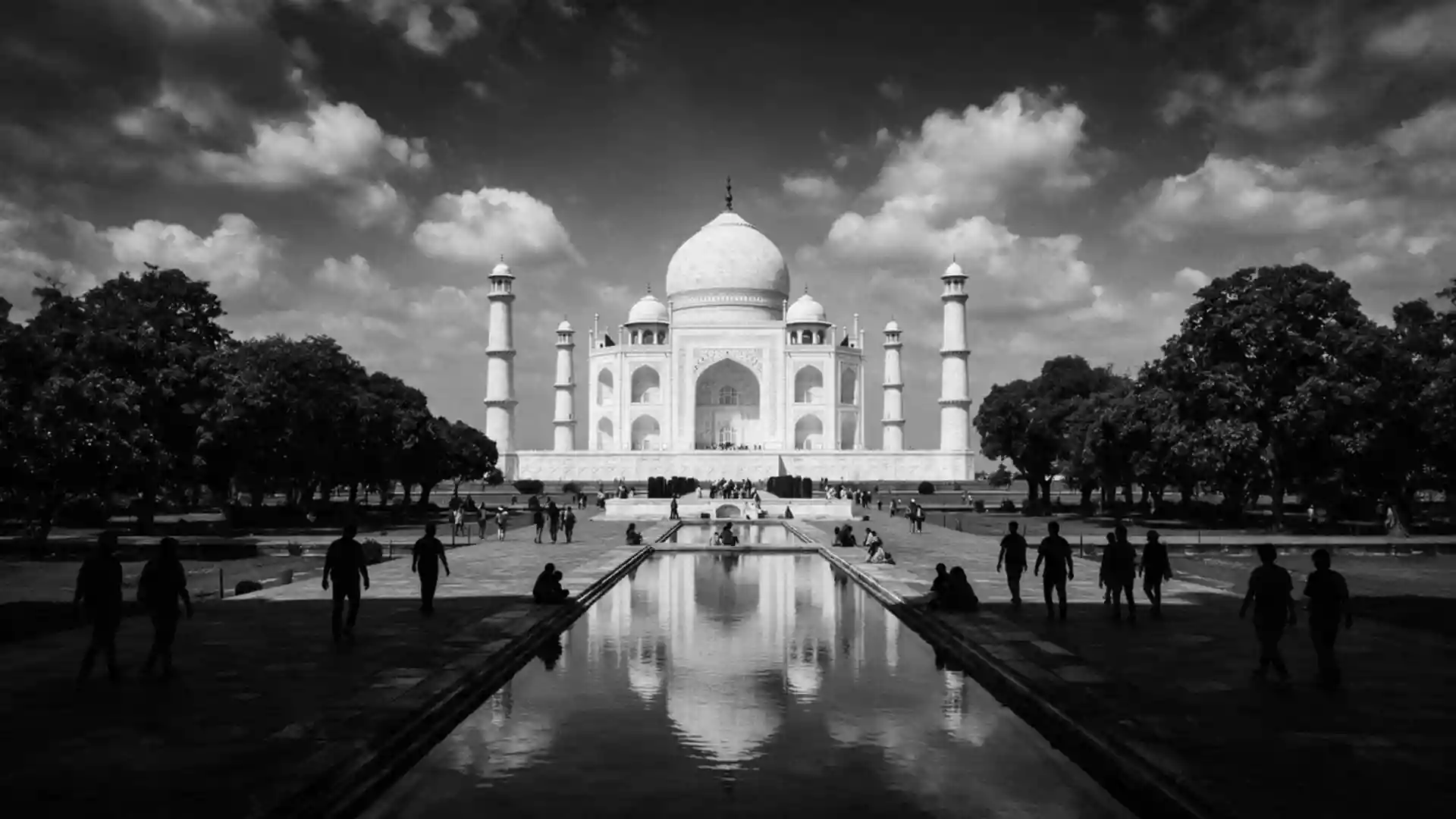
Taj Mahal in Agra is a white marble mausoleum complex from the Mughal period, completed under Shah Jahan in the seventeenth century. Its scale, material and setting on the Yamuna bank give the site its lasting visual force.
White marble, red sandstone and Mughal form
The central mausoleum is faced in white marble, while red sandstone appears in other buildings across the complex. That contrast is part of the place’s visual identity, alongside inlay work with semi-precious stones and formal garden planning.white marble
The complex was inscribed as a UNESCO World Heritage Site in 1983, and the designation places it among the best known monuments of Mughal architecture. Shah Jahan ordered the work, and the monument is tied to Mumtaz Mahal, the woman remembered in its history.UNESCO World Heritage
Shah Jahan, Mumtaz Mahal and the seventeenth century
The Taj Mahal was built in Agra between 1631 and 1648, with associated buildings completed by 1653. Those dates place the complex firmly in the reign of Shah Jahan, one of the major Mughal emperors.between 1631 and 1648
The monument is a mausoleum, not a palace, and its form is inseparable from its commemorative role. The name Mumtaz Mahal remains central to its story, while the building itself belongs to the broader language of Indo-Islamic design.Shah Jehan
The garden setting on the Yamuna
The Taj Mahal stands on the right bank of the Yamuna River in Agra District, Uttar Pradesh. Its garden setting, gateway, mosque and guest house form a planned ensemble rather than a solitary monument.right bank of the Yamuna River
Seen from the approach, the complex reads as a sequence of marble surfaces, garden geometry and subsidiary red sandstone structures. The effect comes from the relation between the buildings, the river edge and the open ground around them.Taj Mahal is a mausoleum complex
Visiting Taj Mahal: what travellers from Western Europe should know
- The monument stands in Agra, in Uttar Pradesh, on the east bank of the Yamuna. Rail and road links connect Agra with Delhi and other north Indian cities.
- The site is a large garden complex with long straight approaches, broad forecourts and several separate buildings. Marble, sandstone and inlay work are the main materials visible on site.
- The central tomb and the garden ensemble belong to the same historic complex. The mosque and the guest house stand beside the mausoleum as part of the plan.
- The official language is Hindi and the currency is the Indian rupee.
- Entry requirements depend on your nationality; UK travellers can check the FCDO travel advice at gov.uk/foreign-travel-advice, Irish travellers the Department of Foreign Affairs at ireland.ie.
Searching for Taj Mahal on social platforms
These links open searches for Taj Mahal on each platform.
Frequently asked questions about Taj Mahal
Where is Taj Mahal?
It stands in Agra, Uttar Pradesh, on the Yamuna River. The complex lies in the city’s historic Mughal landscape.
What does a visit involve?
The site combines a tomb, a mosque, a guest house and formal gardens. The main experience is architectural, not leisurely, with marble surfaces and long axial views.
What makes Taj Mahal distinctive?
White marble, inlaid decoration and the Mughal garden setting define it. The association with Shah Jahan and Mumtaz Mahal gives the monument its historical depth.