
Tai Shan, the sacred mountain rising above Tai'an
Published on 09/07/2026 at 07:47 | Editorial responsibility: Rafael Müller, Editor-in-Chief AD HOC NEWS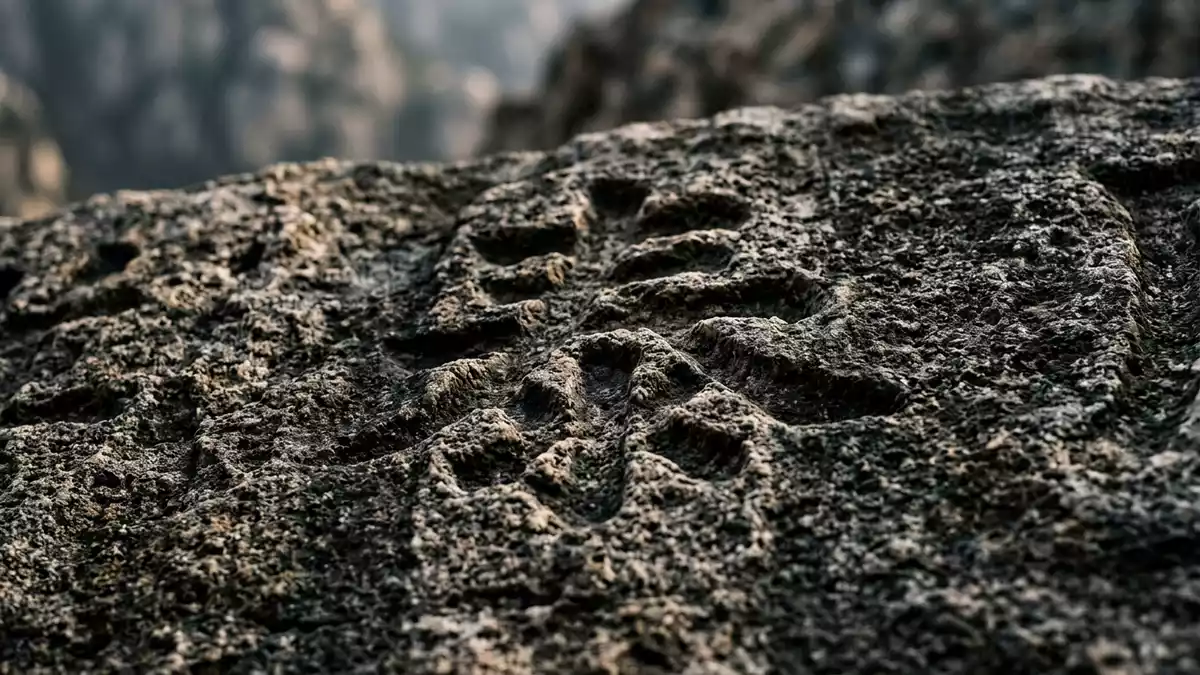
Tai Shan, known in English as Mount Tai, rises above the city of Tai'an in eastern China as a sacred mountain where cliffs, stairways and temples form a single vast landscape. Its main peak, Jade Emperor Peak, reaches about 1,545 m (5,069 ft), giving Tai Shan a commanding presence over the plains of Shandong and marking it as the highest point in the province.Jade Emperor Peak For more than three millennia, rulers and pilgrims have climbed Tai Shan, leaving inscriptions, gateways and ceremonial buildings along the routes.
A layered mountain of religion and power
Tai Shan stands immediately north of Tai'an in Shandong Province, forming a compact massif whose crest line runs roughly south-west to north-east above the North China Plain.Mount Taishan location The mountain has been associated with worship of heaven and earth since at least the Neolithic period, and became a place of imperial ritual during the Zhou and Qin eras.worshipped continuously Over the centuries, emperors travelled to Tai Shan to perform ceremonial sacrifices, tying the mountain into the authority of the throne.
Along the approaches and on the slopes, temples, stone gateways and pavilions mark different stages of the ascent. Many of these structures belong to the long history of Taoism and Chinese Buddhism at the mountain, which is counted as one of the Five Great Mountains of China and revered as the eastern peak.Five Great Mountains Carved cliff faces bear thousands of inscriptions in stone, including imperial edicts and poems, so that the rock itself reads like a vertical archive of Chinese political and literary life.
Landscape scale: from foothills to high summit
The massif of Tai Shan covers a large area, with estimates around 426 km² (164 sq mi) at its base, and rises from foothills near 150 m (492 ft) to the crest of Jade Emperor Peak at about 1,545 m (5,069 ft).extent and elevation The mountain stretches more than 200 km from east to west and about 50 km from north to south, forming a broad highland within central Shandong Province.mountain stretches Lower slopes carry forest and cultivated land, while higher levels expose grey rock, terraces and clusters of buildings.
Visitors moving up the mountain encounter long flights of stone steps, traditional gateways and rest platforms that follow the natural contours. One classic stairway route is counted in thousands of stone steps from the lower “First Gate to Heaven” up to the “South Gate to Heaven” near the summit, with a vertical gain of around 1,400 m (4,593 ft).stone stairway route From the upper temples and platforms around Jade Emperor Peak, the view opens over the plains and nearby ranges, underlining why Tai Shan has long been a vantage point for ruling over the surrounding territories.
UNESCO mountain of culture and geology
Tai Shan holds a rare dual status as both a cultural and natural site on the UNESCO World Heritage List, inscribed in 1987 for fulfilling all seven cultural and natural criteria then in use.mixed World Heritage site The inscription recognised the combination of sacred architecture, inscriptions and ceremonial spaces with the geological form of the mountain itself. In the same period, part of the mountain area was designated a UNESCO Global Geopark, emphasising its scientific and landscape value.Global Geopark designation
The mountain is also registered within China as a national forest park and carries high-level scenic area classifications in the country’s tourism grading system.Taishan Mountain Scenic Area This formal framework sits alongside the enduring religious significance of Tai Shan, where temple complexes, ritual platforms and historic paths continue to be used in ways shaped by centuries of practice.
Visiting Tai Shan: what travellers from Western Europe should know
- Tai Shan rises immediately north of Tai'an in Shandong Province in eastern China, and is reached from Tai'an by road links and mountain access routes.
- The climb on the classic stone stairway route involves a sustained ascent on narrow steps and paths with substantial height gain.
- Higher parts of the mountain sit well above 1,000 m (3,281 ft), so weather conditions at the summit can differ markedly from those on the plains.
- The official language is Chinese and the currency is the renminbi (yuan).
- Entry requirements depend on your nationality; UK travellers can check the FCDO travel advice at gov.uk/foreign-travel-advice, Irish travellers the Department of Foreign Affairs at ireland.ie.
Searching for Tai Shan on social platforms
These links open searches for Tai Shan on each platform.Frequently asked questions about Tai Shan
Where is Tai Shan located?
Tai Shan is in central Shandong Province in eastern China, immediately north of the city of Tai'an and south of the provincial capital Jinan.
What should visitors expect on a visit to Tai Shan?
Visitors encounter extensive stone stairways, historic temples, carved cliff inscriptions and wide views from the upper platforms and summit area.
What makes Tai Shan distinctive among Chinese mountains?
Tai Shan combines a high summit with a long tradition of imperial ritual, religious significance and inscription-covered rock, recognised in its mixed UNESCO World Heritage status.


