
Tai Shan, the sacred mountain above Tai'an
Published on 09/12/2026 at 22:18 | Editorial responsibility: Rafael Müller, Editor-in-Chief AD HOC NEWS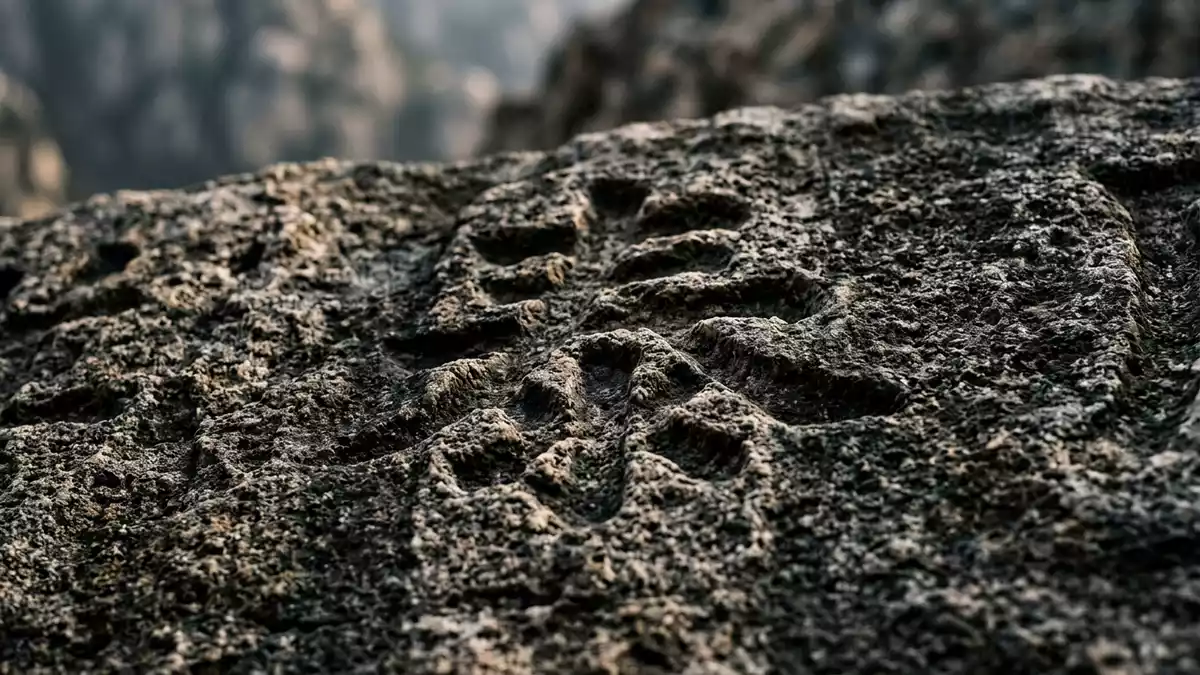
Tai Shan, known in English as Mount Tai, rises immediately north of Tai'an in eastern China as a sacred mountain where stone paths, temples and cliffs covered in inscriptions climb towards a high crest. Its main summit, Jade Emperor Peak, reaches around 1,545 m (5,069 ft), making this massif the highest point in Shandong province and a landmark that has anchored Chinese religious and cultural life since the Qin dynasty in the third century BC.
A mountain of worship and imperial ritual
Tai Shan has long been counted among the Five Great Mountains of China as the eastern peak, associated in Chinese tradition with beginnings and renewal.Five Great Mountains of China Emperors of successive dynasties travelled here to perform grand sacrifices to heaven and earth, treating the mountain as a bridge between the human realm and the cosmic order.imperial ritual place Among the many titles attached to the mountain, “Dongyue” names it as the eastern of these revered peaks, reflecting its role within a wider sacred geography of China.eastern sacred peak
The religious life of Tai Shan spans more than 2,000 years and crosses boundaries between Daoism, Buddhism and imperial state cults.imperial cult for nearly 2,000 years Daoist tradition ranks it as one of the five holy mountains of that faith, while numerous Buddhist temples stand along the routes and near the summit. At the foot of the massif, the extensive Dai Temple forms a kind of counterpart to the summit shrines, laid out as a major complex with courtyards and halls where emperors once prepared for ceremonies on the heights.Dai Temple and Azure Clouds Temple
Stone paths, temples and carved cliffs
The ascent of Tai Shan follows stone stairways that climb from the outskirts of Tai'an through forested slopes, ravines and terraces lined with monuments. One well-known route runs from the so?called Red Gate area, where the first flights of steps rise past pavilions and stelae embedded in the rock.Red Gate route address Farther up, the path passes through named gates such as the First Gate to Heaven and South Gate to Heaven, punctuating the climb with thresholds that mark progress towards the summit plateau.First Gate to Heaven and South Gate to Heaven
Along these stairways and terraces, the cliffs carry thousands of inscriptions carved directly into the rock. They range from large-scale calligraphic panels naming the mountain and recording imperial visits to smaller dedicatory texts scattered beside the path.artistic masterpieces in harmony Temples and halls stand at key points, including shrines near the summit that form a dense cluster of tiled roofs, courtyards and altars against the backdrop of bare stone and distant plains.historic and cultural sites on Mount Taishan
Landscape, geology and world heritage status
Geologically, Tai Shan is a fault-block mountain composed largely of crystalline shales and granites, with bands of ancient limestone exposed in the cliffs.crystalline shales and granites The massif rises from around 150 m (492 ft) to over 1,500 m (4,921 ft) above sea level, forming a compact block that extends across hundreds of square kilometres at its base.150–1,545 m and 426 km2 Its highest area is known as Jade Emperor Peak, a rocky prominence that gives wide views over the North China Plain and the surrounding ranges.
The international recognition of Tai Shan reflects both its landscape and its cultural record. In 1987 it was inscribed on the UNESCO World Heritage List as a mixed natural and cultural site, highlighting the way monuments and inscriptions sit within the mountain terrain.UNESCO World Heritage inscription It is also designated as a UNESCO Global Geopark, part of a network that emphasises geological heritage and educational value.Taishan UNESCO Global Geopark These formal protections sit alongside national designations as a forest park and scenic area, underlining the mountain’s significance for conservation as well as for pilgrimage.
Visiting Tai Shan: what travellers from Western Europe should know
- Tai Shan stands just north of Tai'an in Shandong province, reached from the city by local transport or by starting directly from districts such as the Red Gate area.
- The main ascent follows long flights of stone steps that climb through several gateways; the route demands sustained uphill walking on hard surfaces and includes narrow stair sections near the summit.
- Several approach routes are signposted from Tai'an, including paths beginning on Hongmen Road and other streets that lead towards the lower temple complexes at the foot of the massif.
- The official language is Chinese and the currency is the renminbi yuan.
- Entry requirements depend on your nationality; UK travellers can check the FCDO travel advice at gov.uk/foreign-travel-advice, Irish travellers the Department of Foreign Affairs at ireland.ie.
Searching for Tai Shan on social platforms
These links open searches for Tai Shan on each platform.
Frequently asked questions about Tai Shan
Where is Tai Shan located?
Tai Shan stands just north of the city of Tai'an in Shandong province in eastern China, forming a prominent massif above the North China Plain.
What can visitors expect on a visit to Tai Shan?
Visitors encounter long stone stairways, historic temples and cliffs covered with inscriptions, with summit areas that combine shrines, courtyards and wide views over surrounding countryside.
What makes Tai Shan distinctive among Chinese mountains?
Tai Shan combines geological scale with an exceptionally rich record of religious monuments and imperial inscriptions, recognised through its status as a mixed UNESCO World Heritage site.


