
Tai Shan, sacred summit above Tai'an
Published on 09/01/2026 at 15:24 | Editorial responsibility: Rafael Müller, Editor-in-Chief AD HOC NEWS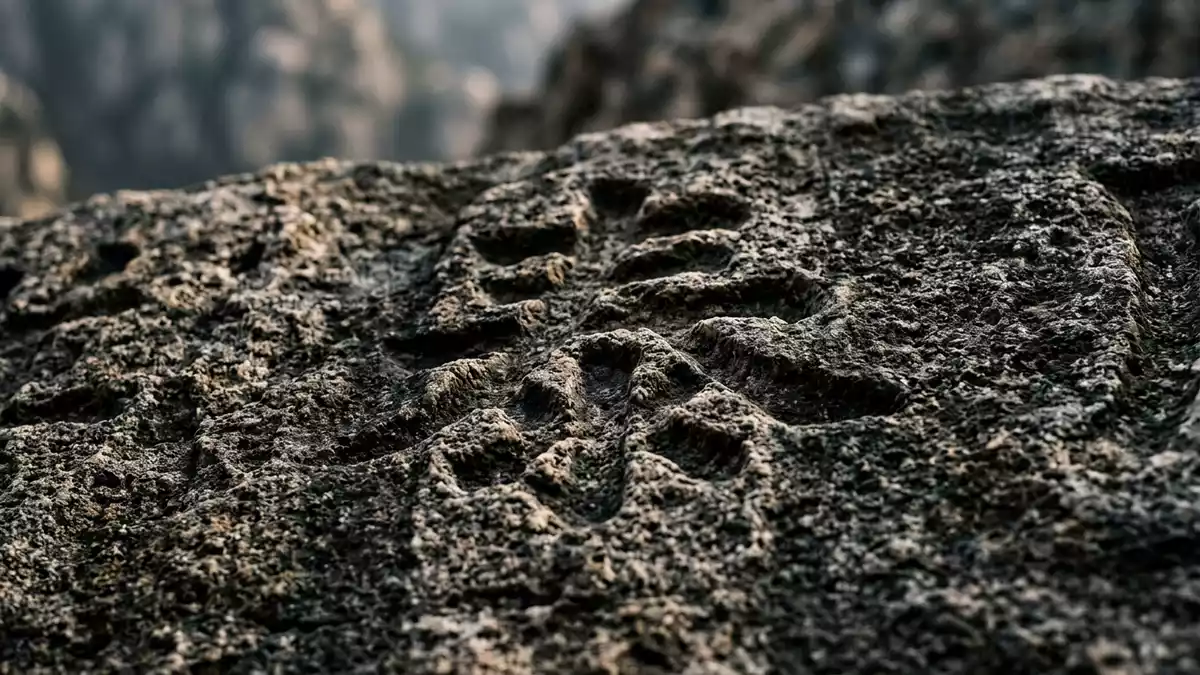
Tai Shan, also known as Mount Tai, is a sacred mountain massif rising just north of Tai'an in Shandong, eastern China. The mountain has been a place of worship for at least 3,000 years and was inscribed as a mixed cultural and natural UNESCO World Heritage Site in 1987, reflecting its long-standing role in Chinese history and religion.Mount Tai overview
Stone stairways into the sky
The most immediate experience of Tai Shan is the climb itself, following stone stairways that rise from the outskirts of Tai'an towards the main ridge. The ascent traditionally begins near the Red Gate area at the foot of the mountain, where urban streets give way to temple courtyards, gateways and the first long flights of steps.Red Gate starting point
As the stairway climbs, it passes numerous pavilions, stone inscriptions and temple complexes built along natural terraces and ledges. The path works its way through dense vegetation and exposed rock, gradually revealing wider views across the plains around Tai'an. Higher up, the route approaches the main summit area dominated by Jade Emperor Peak, whose elevation is commonly reported at around 1,545 m (5,069 ft), although official figures also cite 1,532.7 m (5,028.5 ft).Jade Emperor Peak elevation
Temples, inscriptions and imperial rituals
Tai Shan is counted among the Five Great Mountains of China and has long been associated with the east and with ideas of renewal and stability.Five Great Mountains Its slopes and summit are dotted with temples, shrines and stone steles recording visits by emperors, officials and scholars from successive dynasties. The concentration of religious structures reflects the mountain’s role as a centre of Daoist and other traditional practices, with Tai Shan recognised as one of the five sacred Daoist mountains.Daoist sacred mountain
Among the structures encountered on the climb are temple complexes dedicated to various deities, halls for ritual offerings and gateways marking stages of the ascent. Many rock faces bear carved inscriptions in Chinese characters, commemorating imperial sacrifices and significant visits. The mountain’s religious landscape stretches from the lower slopes to the summit plateau, where further temples and stone platforms stand close to the highest peaks, integrating built structures with exposed rock and weathered boulders.
A mountain woven into Shandong’s landscape
Geographically, Tai Shan rises from the plains of western Shandong as a compact massif with several peaks aligned roughly along a southwest–northeast axis.Mountain mass description The mountain stands just north of Tai'an and south of Jinan, occupying an area of about 426 square kilometres at its base.Mountain area and setting From lower elevations near 150 m, the slopes rise steeply to the summit region, where weathered granite outcrops and thin soils support hardy trees and shrubs.
Tai Shan’s status as a mixed cultural and natural World Heritage Site reflects both its physical form and the human structures layered upon it.UNESCO inscription details The massif forms a prominent landmark in the regional landscape, visible from Tai'an and from stretches of the surrounding plateau. At different levels of the mountain, small settlements, service areas and viewpoints sit alongside temple precincts, while the highest paths traverse rocky terrain with abrupt drops and extensive views across Shandong.
Visiting Tai Shan: what travellers from Western Europe should know
- Tai Shan rises north of Tai'an in Shandong province, with access routes beginning on the edge of the city and dedicated transport serving the mountain area.
- The main stairway ascent involves long flights of stone steps over a considerable height gain, with sections passing through rocky terrain and temple precincts.
- Tai Shan lies in eastern China, where the official language is Chinese and the currency is the renminbi (yuan).
- Entry requirements depend on your nationality; UK travellers can check the FCDO travel advice at gov.uk/foreign-travel-advice, Irish travellers the Department of Foreign Affairs at ireland.ie.
Searching for Tai Shan on social platforms
These links open searches for Tai Shan on each platform.
Frequently asked questions about Tai Shan
Where is Tai Shan located?
Tai Shan is in Shandong province in eastern China, rising just north of the city of Tai'an and south of the provincial capital Jinan.Location in Shandong
What should travellers expect on a visit to Tai Shan?
Travellers encounter a mountain landscape combining long stone stairways, rocky slopes, temples, shrines and extensive views across the surrounding plains.
What makes Tai Shan distinctive among China’s mountains?
Tai Shan’s distinction lies in its role as one of China’s Five Great Mountains, its dense concentration of temples and inscriptions, and its dual cultural and natural World Heritage status.Five Mountains and heritage


