
Tafelberg: Cape Town’s flat-topped mountain above the sea
Published on 09/05/2026 at 20:30 | Editorial responsibility: Rafael Müller, Editor-in-Chief AD HOC NEWS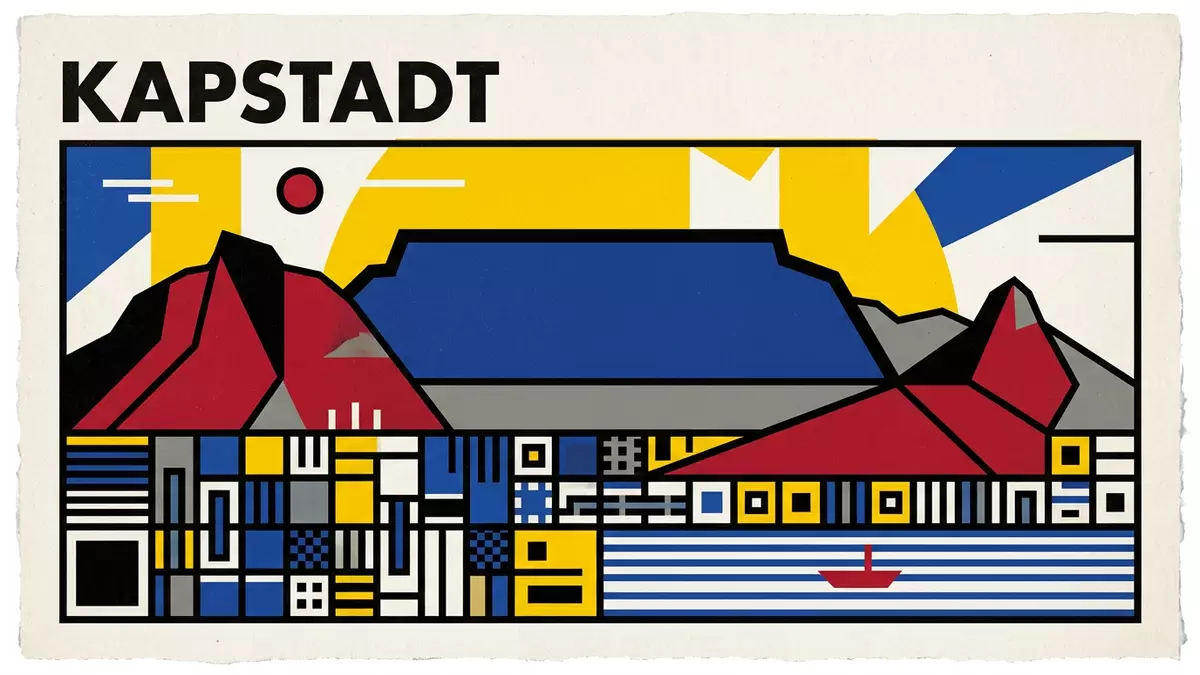
Tafelberg, known in English as Table Mountain, is a flat-topped sandstone massif that rises directly behind Kapstadt and Table Bay, creating a steep natural wall between the city and the Cape Peninsula plateau.
The flat summit plateau above Kapstadt
The defining feature of Tafelberg is its broad, level summit plateau, which runs in a long horizontal line above the central districts of Kapstadt and the harbour at Table Bay.flat-topped mountain From the city, streets and buildings appear to press up against sheer cliffs, giving the mountain the character of a vast, tabular barrier at the northern end of the high, rocky Cape Peninsula.forms part of the Table Mountain National Park The summit lies at an elevation of around 1,084 m (3,563 ft) above sea level, with Maclear’s Beacon marking the highest point on the plateau.
The cliff faces below the plateau expose almost horizontal layers of Table Mountain Sandstone resting on older rocks including granite, a relationship that is visible in outcrops around the base of the massif.sandstone and granite These resistant sandstone strata have been shaped over long periods by wind and water erosion into the bold, blocky profiles that frame the city centre. On the slopes and the summit plateau, native fynbos vegetation, part of the Cape Floristic Region, grows in pockets of shallow soil and in more sheltered gullies.
Geology, ecology and the Cape Floristic Region
Tafelberg belongs to the Cape Peninsula mountain chain and sits within Table Mountain National Park, a protected area established in the late twentieth century to conserve the landscapes and biodiversity of the peninsula.natural park status in 1998 The Cape Floristic Region, which includes the mountain, is recognised as a UNESCO World Heritage Site for its remarkable concentration of plant species, many of them endemic to the region.Cape Floristic Region declared a UNESCO World Heritage Site On the plateau and surrounding slopes, visitors encounter hardy shrubs, proteas and other fynbos plants adapted to the thin soils and maritime climate.
The geological history of the mountain reaches back hundreds of millions of years, with the horizontal sandstone layers forming a kind of structural table over underlying rocks. Erosion has carved valleys and ravines into the plateau edge, creating distinct side peaks such as Devil’s Peak to the east and Lion’s Head to the west that together frame the city bowl below.Devils Peak flanks the east side Reservoirs constructed on the back table in the late nineteenth and early twentieth centuries, including the Woodhead and Hely-Hutchinson dams, remain visible as historic infrastructure amid the natural landscape.
History, routes and the cableway
Long before European ships rounded the Cape, indigenous Khoi and San communities lived around the mountain and referred to it with names such as Hoerikwaggo, meaning “Mountain in the Sea”.Horikwaggo, Mountain at the Sea The Portuguese navigator António de Saldanha made the first recorded ascent in 1503, and his climb during a voyage along the South African coast gave the mountain its table imagery in European records.first recorded ascent in 1503 Over subsequent centuries, the massif served as a visual marker for seafarers approaching Table Bay and as a backdrop to the growth of Kapstadt from a refreshment station into a major city.
On the plateau, a series of dams were built between the late 1890s and early 1900s to supplement the water supply of Kapstadt, and a small Waterworks Museum near the Hely-Hutchinson dam keeps artefacts from this period, including a preserved steam locomotive used during construction.five dams opened on the Back Table In 1929 a cableway to the summit opened, providing an alternative to the steep footpaths and climbing routes that thread up ravines and along ridges.cable car opened in 1929 The current cableway, upgraded in the late twentieth century, carries rotating cabins from the lower station on the city slopes to the upper station on the plateau, where networks of marked paths lead to viewpoints over Table Bay, the Atlantic seaboard and the Cape Peninsula.
Visiting Tafelberg: what travellers from Western Europe should know
- Tafelberg rises immediately behind central Kapstadt on the Cape Peninsula; the lower cableway station and trailheads are reached by road from the city and its districts.
- Routes on the mountain range from short walks on the summit plateau to long, steep hiking paths that climb through rocky ravines and up exposed slopes, with sections of uneven stone steps.
- Devil’s Peak and Lion’s Head stand close by and frame the city bowl; paths on these neighbouring peaks connect visually and topographically with Tafelberg and offer different perspectives on Kapstadt and Table Bay.
- The official language is Afrikaans and the currency is the South African rand.
- Entry requirements depend on your nationality; UK travellers can check the FCDO travel advice at gov.uk/foreign-travel-advice, Irish travellers the Department of Foreign Affairs at ireland.ie.
Searching for Tafelberg on social platforms
These links open searches for Tafelberg on each platform.Frequently asked questions about Tafelberg
Where is Tafelberg and what does it overlook?
Tafelberg stands at the northern end of the Cape Peninsula in South Africa, rising above Kapstadt and overlooking Table Bay and the city bowl.
What should visitors expect on a visit to Tafelberg?
Visitors encounter steep rocky slopes, a broad summit plateau with marked paths, and extensive views over Kapstadt, Table Bay and the wider Cape Peninsula landscape.
What makes Tafelberg distinctive among mountains?
The combination of its flat-topped sandstone plateau, direct backdrop to Kapstadt, cableway access and location within the biodiverse Cape Floristic Region makes Tafelberg distinctive.


