
Tafelberg and the flat top above Kapstadt
Published on 09/17/2026 at 15:43 | Editorial responsibility: Rafael Müller, Editor-in-Chief AD HOC NEWS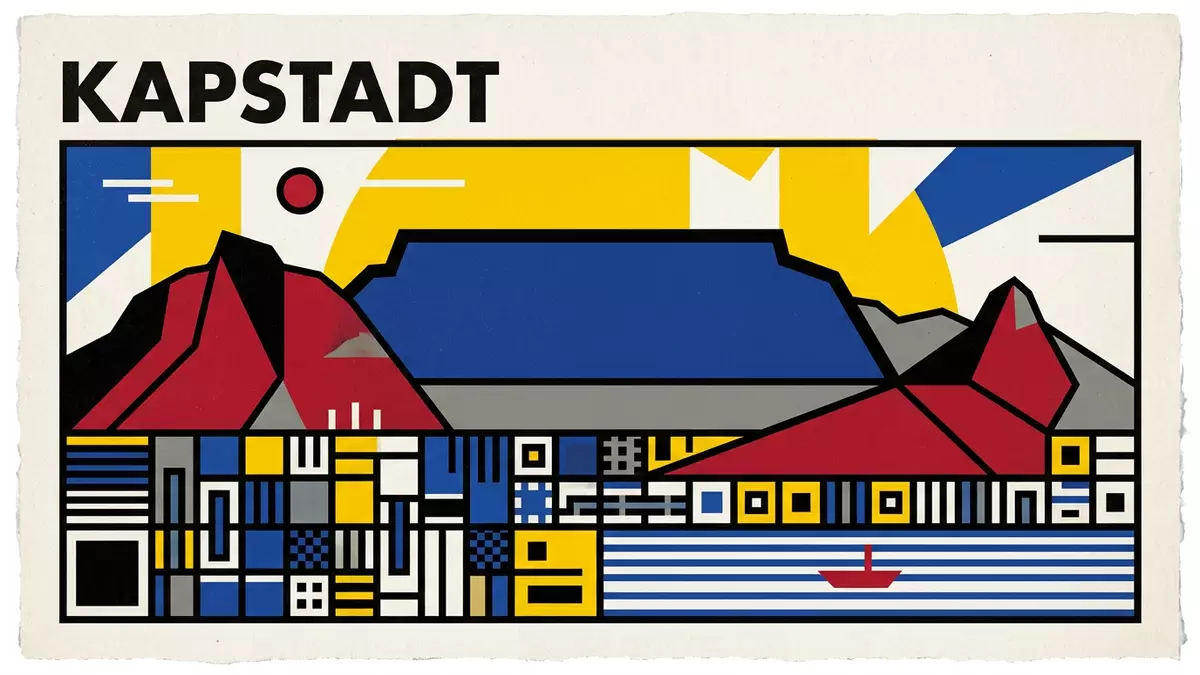
Tafelberg rises above Kapstadt as a flat-topped sandstone massif, and that profile is the first thing many visitors register from the city below. It sits on the Cape Peninsula in South Africa and forms a hard-edged landmark above the harbour and central districts.
The flat plateau above the city
The mountain is known in English as Table Mountain and in Afrikaans as Tafelberg, a name that matches its broad, table-like top. Its highest point is marked by Maclear’s Beacon, a nineteenth-century survey cairn on the eastern side of the plateauMaclear’s Beacon.
Devil’s Peak and Lion’s Head stand beside it and help frame the city bowl. The broad summit sits above steep rock faces, with gullies, ledges and weathered surfaces giving the mountain a rugged outline rather than a smooth ridgeDevil’s Peak and Lion’s Head.
Sandstone, granite and deep geological time
Tafelberg is made largely of Table Mountain Sandstone, with older granite and related rocks beneath parts of the massif. The rock layers belong to the Cape Supergroup, and their exposed strata give the mountain its pale cliffs and blocky texturesTable Mountain Sandstone.
The same rock name appears in geological writing as Peninsula Formation Sandstone, a formal term for the formation often called Table Mountain Sandstone. The massif belongs to a much older mountain system on the Cape Peninsula, and the present shape reflects long erosion rather than a single dramatic eventPeninsula Formation Sandstone.
Names, parkland and the mountain’s wider setting
The mountain forms part of Table Mountain National Park, which was proclaimed on 29 May 1998 and later renamed from Cape Peninsula National Park. The same protected landscape includes fynbos vegetation and the Cape of Good Hope, tying the mountain to a wider peninsula systemTable Mountain National Park.
In English-language writing and local use, Tafelberg and Table Mountain refer to the same landmark. The mountain is also linked with the city’s skyline in a way that makes it one of the most recognisable features of Kapstadtthe city’s skyline.
Visiting Tafelberg: what travellers from Western Europe should know
- The mountain rises directly behind central Kapstadt. Access is by road towards the lower cableway station or on mountain paths from the city side.
- The terrain includes steep gradients, exposed rock and stone steps. The plateau surface is uneven, with cliffs and abrupt edges in several directions.
- Table Mountain National Park covers the mountain and neighbouring parts of the Cape Peninsula. The official language is Afrikaans and the currency is the South African rand.
- Entry requirements depend on your nationality; UK travellers can check the FCDO travel advice at gov.uk/foreign-travel-advice, Irish travellers the Department of Foreign Affairs at ireland.ie.
Searching for Tafelberg on social platforms
These links open searches for Tafelberg on each platform.
Frequently asked questions about Tafelberg
Where is Tafelberg?
Tafelberg stands on the Cape Peninsula above Kapstadt in South Africa. It overlooks the city bowl and Table Bay.
What does a visit involve?
A visit means steep approaches, rough sandstone underfoot and a plateau cut by cliffs and ledges. The mountain can be approached by path or by road to the cableway area.
What makes Tafelberg distinctive?
Its flat summit and sheer sides give it a clear profile above the city. The combination of sandstone geology, named peaks and protected parkland shapes its identity.


