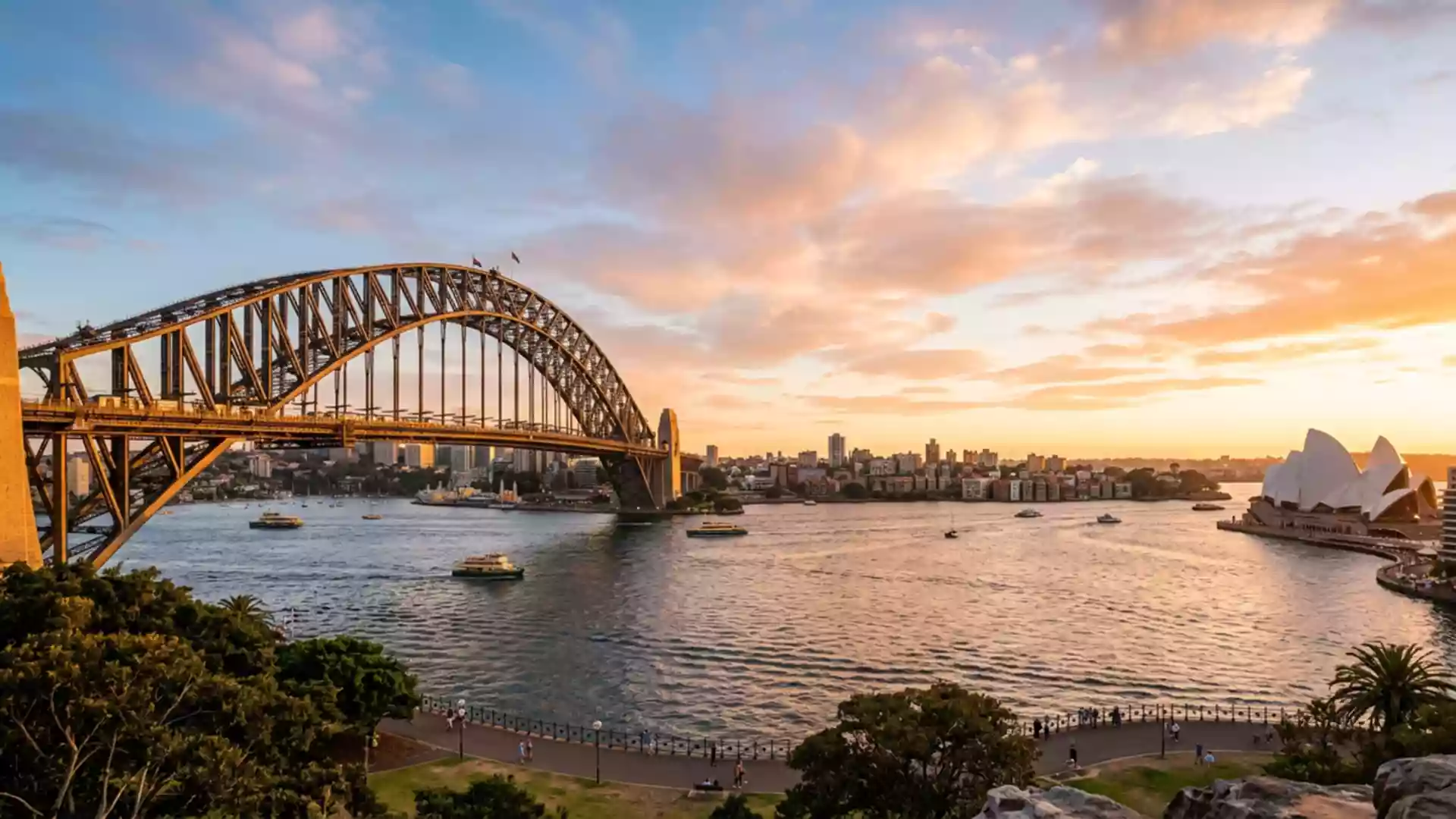
Sydney Harbour Bridge and its great steel arch
Published on 09/11/2026 at 20:41 | Editorial responsibility: Rafael Müller, Editor-in-Chief AD HOC NEWS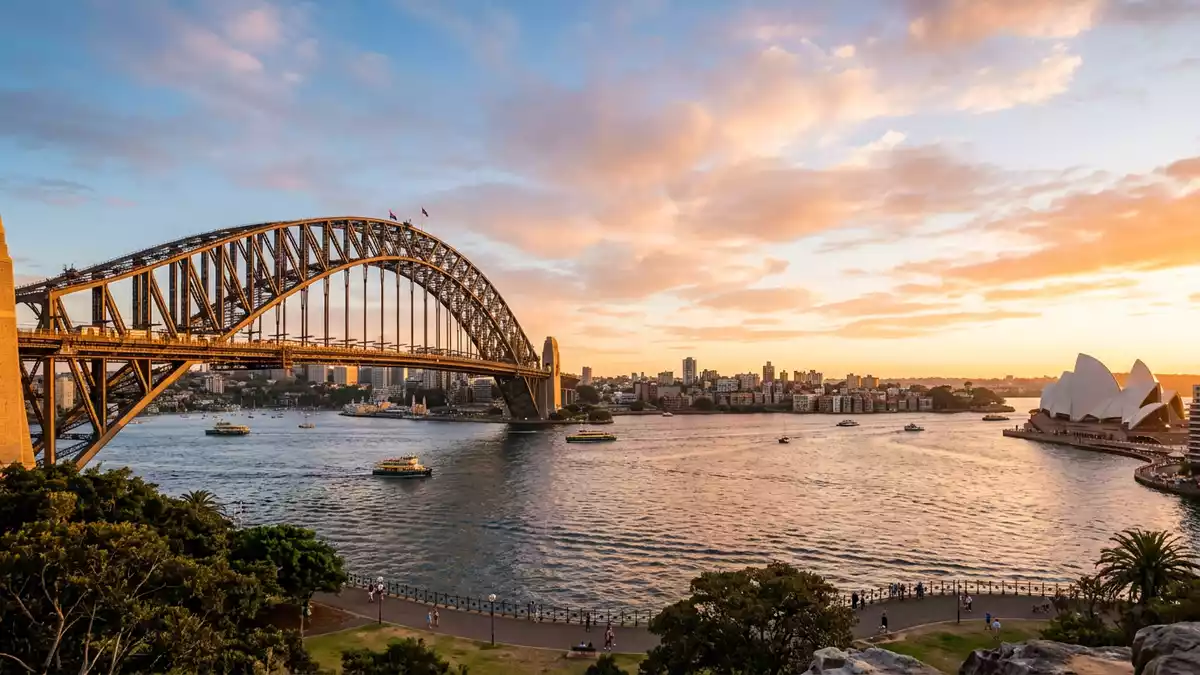
Sydney Harbour Bridge in Sydney is defined above all by its great steel arch, a sweeping span that carries road, rail and pedestrian routes between the city centre and the North Shore. Completed in 1932, it became one of the major engineering works of interwar Australia and an enduring symbol of the country’s largest city.
A steel through-arch over the main harbour
Sydney Harbour Bridge is a steel through-arch bridge crossing the main inlet of Sydney Harbour, linking Dawes Point on the southern shore with Milsons Point on the northern side.steel through-arch bridge The structure runs roughly north–south just west of Sydney Opera House and the sheltered waters of Circular Quay, tying the historic waterfront district of The Rocks to the residential and commercial districts of Kirribilli and North Sydney.linking Dawes Point and Milsons Point
The bridge’s main arch span is documented at 503 m (1,650 ft), rising to a height of about 134 m (440 ft) above the harbour waterline at its crest.503 m main span Including its approaches, the overall length of the bridge and associated spans extends for several kilometres across the harbour and adjacent shoreline.arch span and approaches The deck carries multiple road lanes, railway tracks and pathways within a single structural envelope, with the steel arch rising above and the traffic lines suspended beneath.
Interwar engineering and the people behind the bridge
The idea of a fixed crossing between the northern and southern shores of Sydney Harbour had been raised repeatedly during the nineteenth century, including a proposal put forward in 1815 by architect Francis Greenway to Governor Lachlan Macquarie.Francis Greenway proposal in 1815 Concrete planning for the present bridge gathered pace in the early twentieth century, when civil engineer John Bradfield of the New South Wales Department of Public Works prepared schemes for a major harbour crossing and was appointed to lead the project.John Bradfield appointed
Funding was formally authorised by the Sydney Harbour Bridge Act of 1922, and construction work began in the mid-1920s under Bradfield’s supervision.Sydney Harbour Bridge Act of 1922 The detailed design of the steel arch was carried out by Sir Ralph Freeman of the British firm Dorman Long & Company of Middlesbrough, which held the construction contract.Dorman Long and Sir Ralph Freeman Work on the arch progressed outward from each shore because the deep harbour waters made temporary supports impractical, with the two halves meeting in mid-air in 1930.arch completed in 1930 The bridge was officially opened to traffic on 19 March 1932, with celebrations recognising both its engineering achievement and its role in linking the expanding city.opened on 19 March 1932
Crossing the arch: traffic, pylons and viewpoints
Sydney Harbour Bridge carries a dense flow of everyday movement between central Sydney and its northern suburbs, with road lanes, rail tracks and footpaths sharing the deck beneath the arch.primary transportation link At each corner of the main span stand large masonry pylons, faced in granite and shaped as monumental towers that frame views along the harbour and towards the city skyline.granite pylons
Pedestrians use the walkway on the eastern side of the deck, which offers long vistas over Sydney Harbour, including the curve of the shoreline, the white shells of Sydney Opera House and the ferries moving to and from Circular Quay. Trains on the rail tracks pass close to the roadway, while the steel framework overhead is visible as a repeating pattern of girders, braces and riveted connections. The bridge’s nickname “The Coathanger” reflects the arch’s outline in the cityscape, with the steel curve rising above the deck and descending to the pylons on either shore.“The Coathanger” nickname
Visiting Sydney Harbour Bridge: what travellers from Western Europe should know
- Sydney Harbour Bridge spans the main harbour between The Rocks and Circular Quay on the southern side and Milsons Point and North Sydney on the northern shore, and is reached on foot or by public transport from central Sydney.
- The pedestrian walkway runs beside moving road traffic and railway lines on the bridge deck, with long sections exposed above the water and approached by stairways and ramps from the surrounding streets.
- The harbour setting means that strong winds and changing weather can affect conditions on the exposed parts of the bridge, particularly on the elevated walkways and viewpoints.
- The official language is English and the currency is the Australian dollar.
- Entry requirements depend on your nationality; UK travellers can check the FCDO travel advice at gov.uk/foreign-travel-advice, Irish travellers the Department of Foreign Affairs at ireland.ie.
Searching for Sydney Harbour Bridge on social platforms
These links open searches for Sydney Harbour Bridge on each platform.Frequently asked questions about Sydney Harbour Bridge
Where is Sydney Harbour Bridge located within Sydney?
Sydney Harbour Bridge crosses the main harbour between Dawes Point and The Rocks near Circular Quay on the southern side and Milsons Point close to North Sydney on the northern shore.
What should visitors expect when crossing the bridge?
Visitors encounter a busy multi-modal deck with road traffic, railway lines and a pedestrian walkway, all framed by a large steel arch and masonry pylons that rise above the harbour.
What makes Sydney Harbour Bridge distinctive among major bridges?
The bridge is distinguished by its long steel arch span, its combination of road, rail and pedestrian routes on a single deck, and its prominent position beside Sydney Opera House on the city’s waterfront.