Suwon Hwaseong and the walls of late Joseon Suwon
Published on 08/27/2026 at 18:06 | Editorial responsibility: Rafael Müller, Editor-in-Chief AD HOC NEWS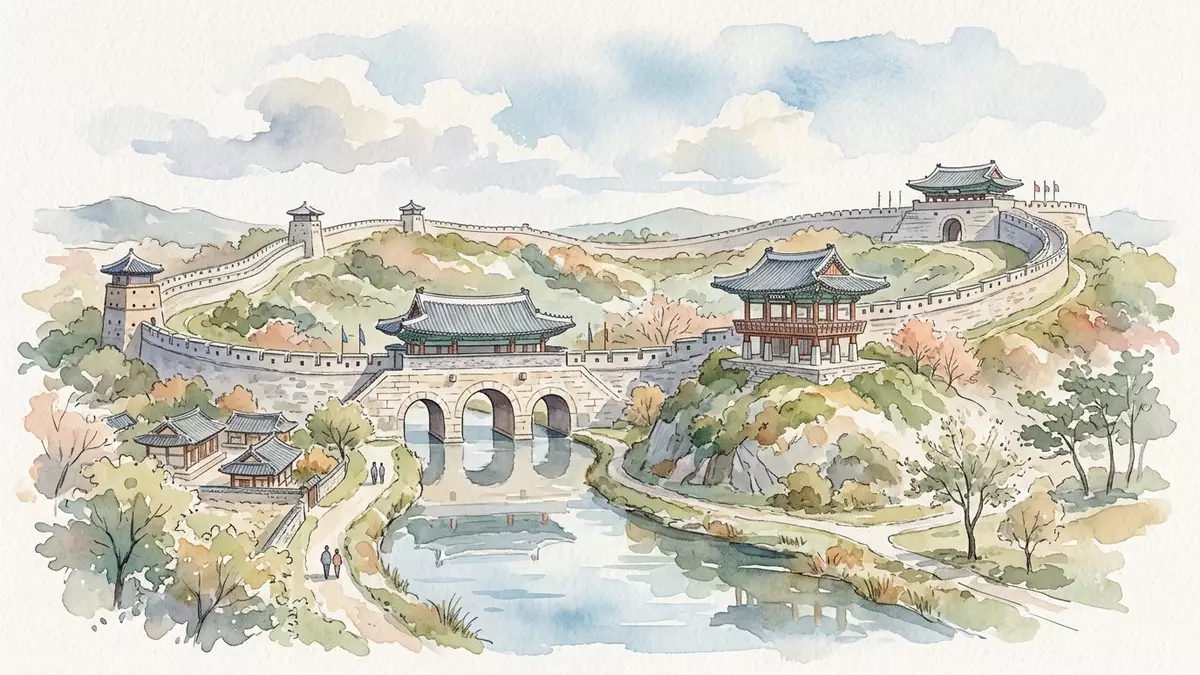
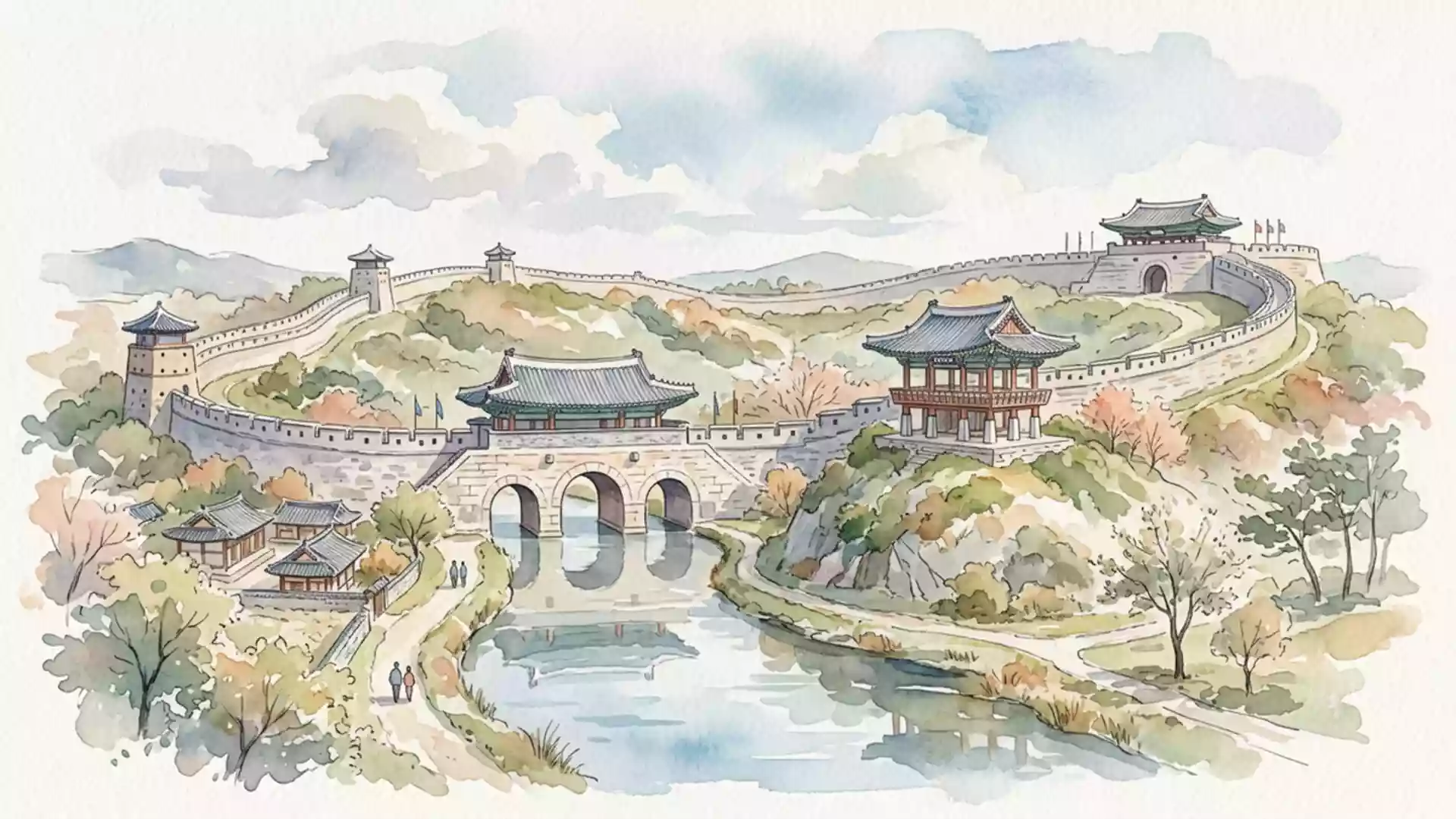
Suwon Hwaseong circles the centre of Suwon in South Korea as a stone-and-brick fortress from the late Joseon dynasty. Its walls run for 5.74 km (3.58 miles), and UNESCO lists the site as World Heritage reference 817.
Late Joseon walls around Suwon
Built in the late eighteenth century under King Jeongjo, the fortress belongs to the final century of the Joseon dynasty’s political life. The walls enclose an area of 130 ha and follow the contours of the land, with sections crossing flatter ground and the slopes of Paldal Mountain.
The fortress is closely tied to the royal history of the period and to the city’s historic core. Its recorded scale and layout make the ensemble more than a single wall: it is a planned urban enclosure with gates, towers and supporting structures across the line of defence.UNESCO lists the site
Stone, brick and military geometry
The visible character of Suwon Hwaseong comes from the mixture of piled stone and brick. That combination gives the fortress a firmer, more layered appearance than a wall made from one material alone.
Its main line is interrupted by gates, pavilions and defensive features that break the long circuit into distinct parts. The result is an urban fortification that can be read piece by piece, from one stretch of wall to the next.stone and brick fortress
King Jeongjo and the fortress legacy
King Jeongjo commissioned the fortress in the 1790s, and construction ran from 1794 to 1796. The site is part of the same royal landscape that shaped late Joseon court politics and memorial culture.
UNESCO describes it as an outstanding example of eighteenth-century military architecture, and that judgement reflects both its scale and its preservation. The fortress remains one of the clearest large-scale statements of Joseon statecraft in a city setting.King Jeongjo
Visiting Suwon Hwaseong: what travellers from Western Europe should know
- The fortress stands in Suwon, south of Seoul. Suwon Station on Line 1 is the main rail reference for the city centre.
- Parts of the route run along walls, slopes and stairways. The circuit includes gates and bastions rather than a single level promenade.
- The official language is Korean and the currency is the South Korean won.
- Some stretches look across the older city fabric and the Paldal Mountain area. The walls form a continuous historic edge around the centre.
Searching for Suwon Hwaseong on social platforms
These links open searches for Suwon Hwaseong on each platform.
Frequently asked questions about Suwon Hwaseong
Where is Suwon Hwaseong?
It stands in Suwon in Gyeonggi-do, South Korea, around the historic centre of the city. The fortress forms a large enclosing wall around that core.
What does a visit involve?
The site is an urban fortress with walls, gates and slopes. Expect a route that changes level as it passes through the historic enclosure.
What makes Suwon Hwaseong distinctive?
The fortress combines stone and brick construction with a measured late Joseon layout. UNESCO recognises it as World Heritage reference 817, and King Jeongjo is central to its history.