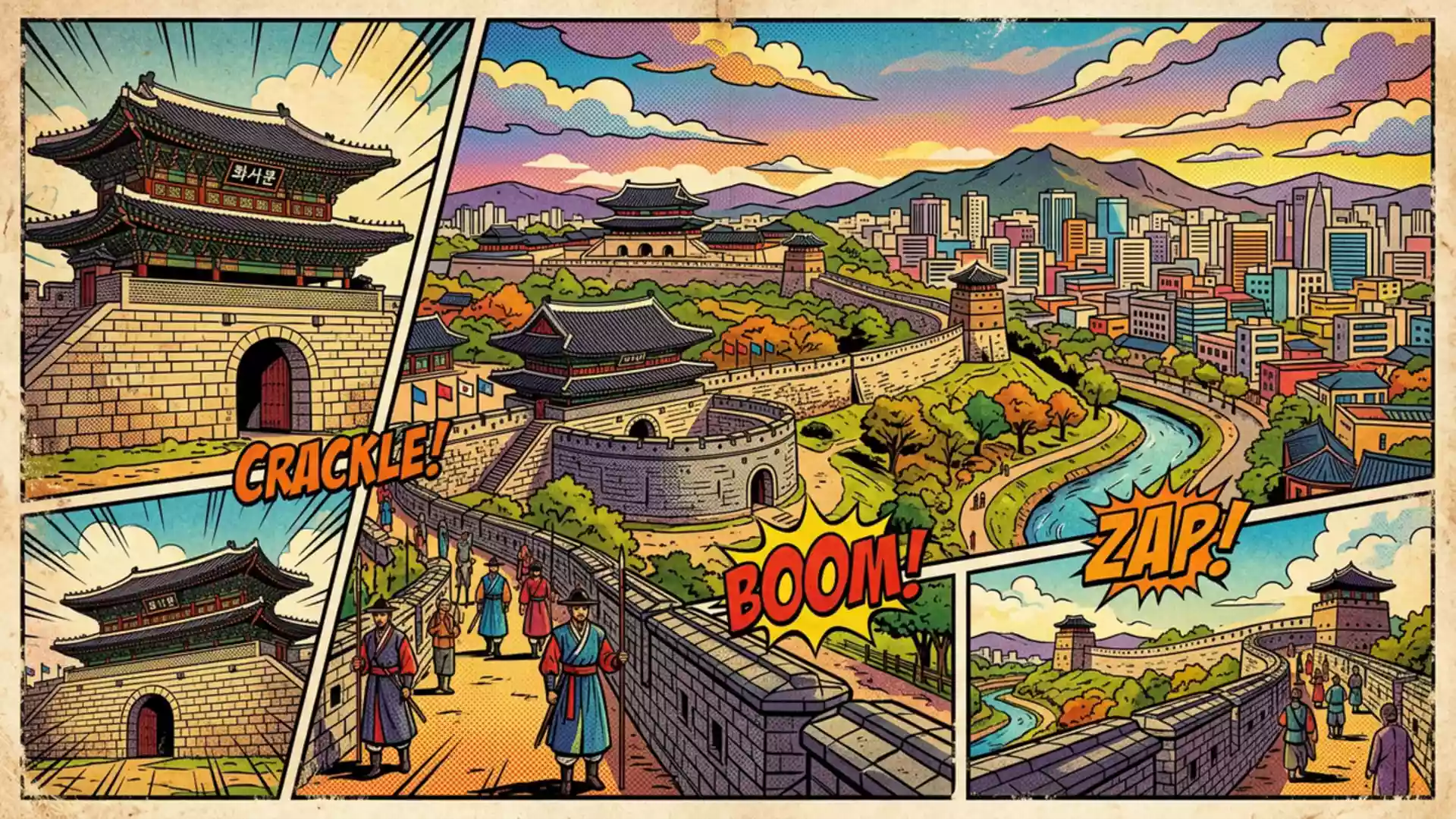
Suwon Hwaseong and its 18th?century fortress ring
Published on 09/05/2026 at 09:44 | Editorial responsibility: Rafael Müller, Editor-in-Chief AD HOC NEWS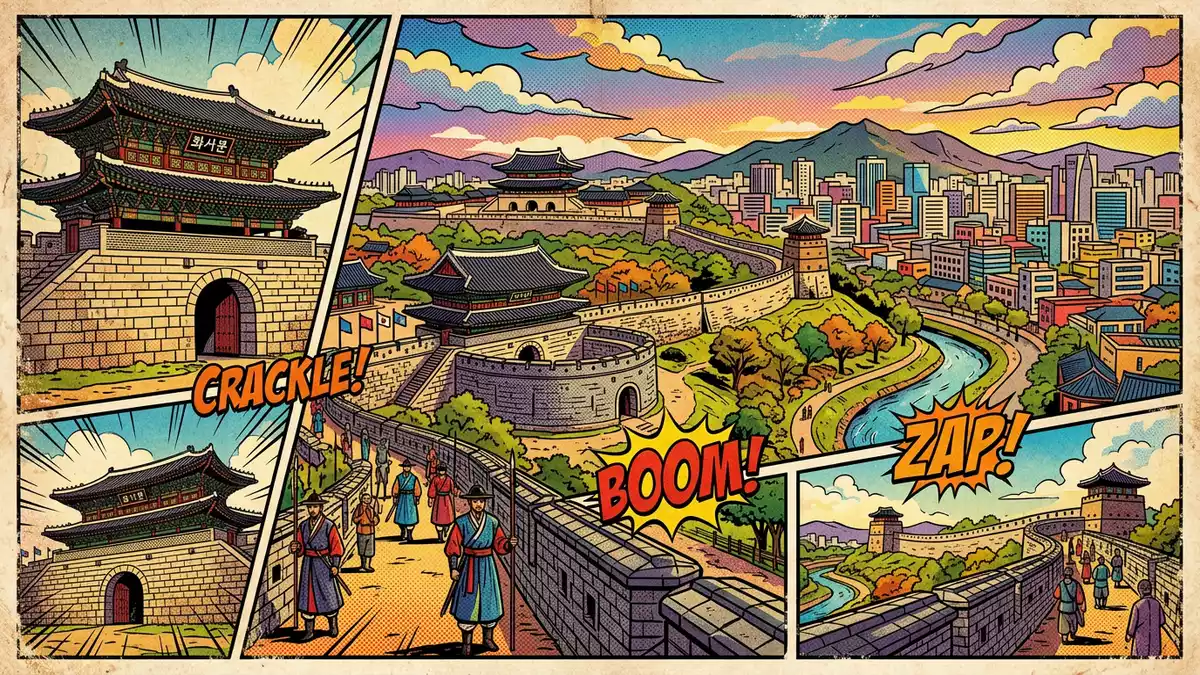
Suwon Hwaseong is a late eighteenth?century fortress encircling the historic centre of Suwon in South Korea, combining massive defensive walls with refined palace architecture from the Joseon dynasty.
The fortress that became Suwon’s defining ring
Hwaseong Fortress, often referred to as Suwon Hwaseong, surrounds the old city centre with continuous walls that follow the natural slopes around Paldalsan and neighbouring hills. The fortification turns the landscape into a broad ring, enclosing streets, gates and a royal residence inside its circuit. It was built under King Jeongjo, the twenty?second ruler of the Joseon dynasty, with construction running from 1794 to 1796, giving the fortress a clear anchoring in the late eighteenth century.construction from 1794 to 1796 The finished walls run for just under 6 km (about 3.7 miles) around Suwon, forming a continuous circuit with stone and brick sections stepping up and down the terrain.walls 5.74 km in length
The fortress was planned as both a defensive structure and a framework for a new city aligned with royal priorities. Inside Suwon Hwaseong stands a temporary palace complex known as Hwaseong Haenggung, built as a place for King Jeongjo to stay when visiting his father’s tomb and the surrounding area.palace within the fortress The ring of walls and their attached facilities created a fortified urban environment, with gates and bastions controlling access to the streets and markets in the valley below Paldalsan.
Joseon?era engineering and architecture in stone and brick
Suwon Hwaseong is notable for its use of both piled stone and brick, reflecting the military engineering knowledge available in Korea in the late Joseon period. The walls incorporate masonry foundations with brickwork reinforcing sections exposed to attack, and they carry a sequence of defensive facilities such as turrets, command posts and guard platforms, many of which survive or have been carefully reconstructed. At the time of completion, records describe dozens of facilities integrated into the circuit, demonstrating a dense layering of structural elements along the route of the wall.fortress facilities along the walls
The engineering behind Hwaseong drew on scholarship at the royal academy and on technical manuals that compared East Asian and European fortification methods. The official construction record “Seonghwajuryak” by Jeong Yak?yong set out the design and building techniques for the fortress, guiding workers in the use of lifting devices, prefabricated elements and systematic planning.Seonghwajuryak by Jeong Yak?yong Architecturally, the fortress combines robust parapets and embrasures with traditional Korean timber pavilions on major features, so that command posts and gatehouses carry intricate wooden roofs and painted decorative details typical of late Joseon palace design.
Royal memory and World Heritage recognition
The origins of Suwon Hwaseong are tied to King Jeongjo’s decision to relocate the tomb of his father, Crown Prince Sado, to the Suwon area in 1789. The fortress and its enclosed palace formed a setting around this relocated grave site, giving the king a politically significant and symbolically charged place south of the capital. The project reflects an era when the Suwon region was regarded as auspicious in geomantic terms and when fortification, urban planning and royal ceremony were closely connected.relocation of Prince Sado’s tomb
Suwon Hwaseong was inscribed on the UNESCO World Heritage List in 1997 as a cultural site recognised for its outstanding universal value. UNESCO’s documentation highlights Hwaseong Fortress as an exemplary achievement of eighteenth?century military architecture, combining scientific design principles with aesthetic considerations and urban planning.UNESCO World Heritage inscription in 1997 The fortress also holds protected status within South Korea’s own heritage system, where it is listed as a State?designated Cultural Heritage and its main gates and surrounding area receive additional designation.
Visiting Suwon Hwaseong: what travellers from Western Europe should know
- Suwon Hwaseong surrounds central Suwon in Gyeonggi Province, south of Seoul, and is reached by rail services to Suwon Station followed by local transport towards the fortress area.
- The fortress circuit runs over hilly terrain, with sections climbing Paldalsan and neighbouring slopes, and includes stairways and ramped paths on stone and earth.
- The loop of walls passes several distinct gates and pavilions, so a visit on foot can involve extended walking between features along paved streets and paths.
- The official language is Korean and the currency is the South Korean won.
- Entry requirements depend on your nationality; UK travellers can check the FCDO travel advice at gov.uk/foreign-travel-advice, Irish travellers the Department of Foreign Affairs at ireland.ie.
Searching for Suwon Hwaseong on social platforms
These links open searches for Suwon Hwaseong on each platform.Frequently asked questions about Suwon Hwaseong
Where is Suwon Hwaseong located?
Suwon Hwaseong surrounds the historic centre of Suwon, the provincial capital of Gyeonggi Province in South Korea, south of Seoul.
What can visitors expect when walking the fortress?
Visitors encounter stone and brick walls with gates, pavilions and other defensive facilities along a circuit that climbs and descends over hilly ground.
What makes Suwon Hwaseong distinctive among Korean fortresses?
Suwon Hwaseong stands out for its late eighteenth?century construction under King Jeongjo, its combination of scientific military design and palace architecture, and its UNESCO World Heritage status.