
Suomenlinna and the fortress spread across Helsinki’s islands
Published on 09/23/2026 at 07:48 | Editorial responsibility: Rafael Müller, Editor-in-Chief AD HOC NEWS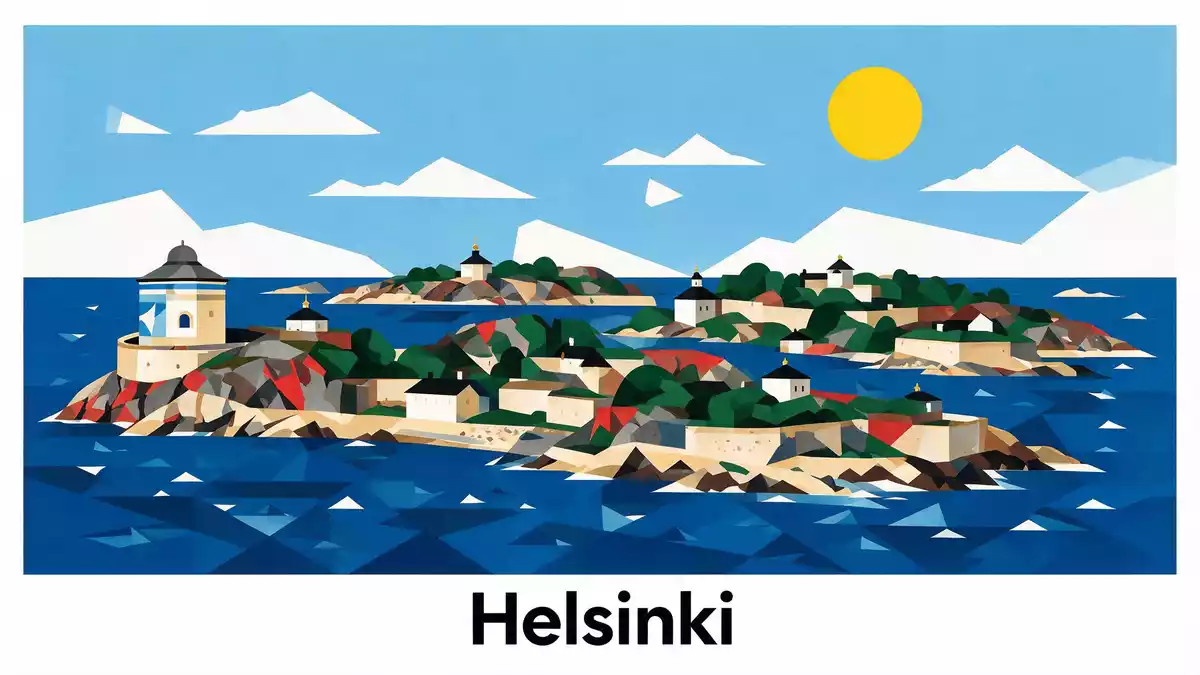
Suomenlinna is a sea fortress spread across islands at the entrance to Helsinki’s harbour. Its visible character comes from the meeting of defensive walls, open sea, courtyards and a living island district, all within a site begun in 1748 under Swedish rule.
Suomenlinna: a fortress shaped across islands
Construction began in 1748, when Sweden established a maritime fortress and naval base in the Helsinki archipelago. Swedish Admiral Augustin Ehrensvärd supervised the work, adapting European bastion principles to the rocky island setting.
The fortifications extend across six islands and include walls, bastions, tunnels, yards, buildings and harbour structures. Local rock forms part of the defensive landscape, while the sea remains visible between sections of the fortress. A sea fortress on Helsinki’s islands is the site’s defining architectural fact.
Swedish, Russian and Finnish layers
Suomenlinna has served under the Kingdom of Sweden, the Russian Empire and the Republic of Finland. Its name and buildings record those changes without reducing the site to a single historical period.
The fortress was known as Sveaborg during Swedish rule and Viapori in Finnish usage. It became a Russian military base after the surrender of 1808, then received the name Suomenlinna in 1918, following Finnish independence.
The site entered civilian administration in 1973. Its buildings and fortifications now form a residential district with museums, studios, visitor services and spaces connected with maritime and military history. The three sovereign states represented in its history remain legible in the layered architecture.
Walls, tunnels and a living island district
Suomenlinna is more than a line of ramparts. Paths cross open defensive works and built-up courtyards, while tunnels connect parts of the fortress through the rock. The dry dock belongs to the site’s original maritime function.
Several museums present the fortress, its naval history and the lives connected with the islands. The Suomenlinna Museum provides the main historical overview, while other museums focus on military equipment, toys, customs and submarine history.
Residential buildings stand beside bastions and museums. This combination gives Suomenlinna a distinct spatial character: military architecture occupies the same islands as homes, workshops, public paths and working harbour facilities.
Suomenlinna became a UNESCO World Heritage Site in 1991. The designation recognises its European military architecture, its historical layers and its position as a cultural landscape across the Helsinki archipelago. The World Heritage designation belongs to the site’s formal identity.
Visiting Suomenlinna: what travellers from Western Europe should know
- Suomenlinna lies off Helsinki’s southern harbour. The HSL passenger ferry leaves from the eastern side of Market Square and arrives at the main pier on Iso Mustasaari.
- The island route includes uneven ground, exposed rock, slopes, steps and fortress passages. Tunnels may be dark, and some paths cross open defensive areas.
- Suomenlinna forms a group of islands rather than a single compact building. Museums, courtyards, ramparts, residential streets and harbour spaces appear along the walking routes.
- The official language is Finnish and Swedish, and the currency is the euro.
Searching for Suomenlinna on social platforms
These links open searches for Suomenlinna on each platform.Frequently asked questions about Suomenlinna
Where is Suomenlinna?
Suomenlinna lies on islands off Helsinki’s harbour entrance in Finland. The ferry from Market Square reaches the main pier on Iso Mustasaari.
What can visitors expect there?
The site combines fortress walls, bastions, tunnels, museums, courtyards, harbour structures and residential streets. Paths include steps, slopes, uneven surfaces and exposed rock.
What makes Suomenlinna distinctive?
Its architecture records Swedish, Russian and Finnish periods across a connected island landscape. Construction began in 1748, and the fortress became a UNESCO World Heritage Site in 1991.


